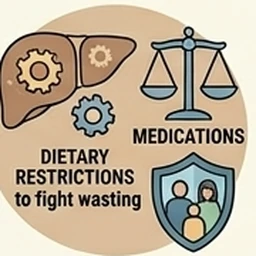
Chăm sóc người thân mắc cirrhosis
Caring for someone with cirrhosis
Cirrhosis is the late stage of liver disease, and it changes a family's life in ways most aren't prepared for. The medical management is unusual — dietary restrictions that fight muscle wasting, medications that prevent confusion episodes, the constant watch for variceal bleeding. The transplant evaluation is its own gauntlet. Here's the orientation.
Điều gì thay đổi đối với gia đình
Cirrhosis (advanced scarring of the liver from chronic disease — alcohol, hepatitis, fatty liver, autoimmune) is a chronic-disease management problem with episodic crises. The day-to-day work centers on three patterns: a high-protein but low-sodium diet (the opposite of what most chronic diseases call for; cirrhosis patients often suffer muscle wasting that protein restriction worsens), the medication regimen (lactulose + rifaximin to prevent hepatic encephalopathy, diuretics for ascites, beta-blockers for varices, multiple supplements), and the constant readiness for an exacerbation. The exacerbations are real and frightening: hepatic encephalopathy (confusion that can come on over hours, often mistaken for dementia or stroke), variceal bleeding (vomiting blood — medical emergency), spontaneous bacterial peritonitis. The transplant evaluation is a multi-month process most families don't fully understand; the MELD score that determines wait-list priority changes weekly. And the alcohol-related-cirrhosis subset adds complex family dynamics — sobriety is required for most transplant programs, often after years of relapse + recovery.
Những điều nên sắp xếp sớm
Khoảng thời gian ngay sau khi có chẩn đoán là lúc quý vị có nhiều dư địa nhất để dựng nên cấu trúc mà cả chặng đường phía sau sẽ tựa vào. Quý vị càng trì hoãn, một số việc dưới đây càng trở nên khó khăn hơn.
- A hepatology referral (not just GI) if the patient isn't already with one. Outcomes are measurably better with hepatologist care for cirrhosis; many academic medical centers have a dedicated cirrhosis or liver clinic.
- A transplant evaluation referral early. Wait times average 1-3 years depending on region + blood type + MELD score; preemptive listing (before complications) widens the patient's options. The evaluation itself is multi-month + intensive.
- A renal dietitian relationship (yes, the kidney specialist — cirrhosis nutrition is closer to renal nutrition than general nutrition). Generic "low-sodium" or "healthy" diet advice can worsen cirrhosis-specific issues. Most hepatology programs have one on the team.
- A clear understanding of the medication regimen — especially lactulose dosing, which the patient titrates themselves based on bowel movements (the inverse of how most medications work). Confusion about lactulose dosing is a leading cause of preventable hepatic encephalopathy hospitalizations.
- A written action plan for hepatic encephalopathy. Subtle confusion is often the first sign; families who recognize it and adjust lactulose at home prevent most hospitalizations. Most hepatology teams give one; if yours hasn't, ask.
- Legal documents while cognition is intact: durable POA, healthcare POA, advance directive. Hepatic encephalopathy can intermittently impair capacity for years before it permanently does; getting the paperwork done early matters.
Những khoảnh khắc khó khăn nhất
Những khoảnh khắc mà các gia đình mô tả là khó khăn nhất thường là những khoảnh khắc không ai báo trước cho họ. Biết được điều gì có khả năng xảy ra không làm cho bất kỳ khoảnh khắc nào trong đó dễ chịu hơn — nhưng có một cái tên cho chúng, và có một không gian làm việc giúp đưa gia đình trở lại bên nhau khi chúng xảy ra, thì sẽ đỡ hơn nhiều.
- The first hepatic encephalopathy episode. The patient who was lucid an hour ago is suddenly confused, agitated, sometimes hallucinating. The family's ability to recognize and respond (extra lactulose, hospital if severe) determines whether it stays a kitchen incident or becomes a 5-day admission.
- A variceal bleed. Vomiting blood is one of the most frightening symptoms in medicine. Emergency endoscopy with banding can stop it; the immediate threat is well-managed in tertiary centers; the recurrence risk shapes the next year.
- The transplant decision — listed vs. not, accepting vs. declining an organ offer at 3 AM. For alcohol-related cirrhosis, the sobriety question adds a layer most families weren't expecting: most programs require 6 months of documented sobriety, some require more.
- The conversation about stopping aggressive treatment. End-stage liver disease has clear inflection points; comfort-focused care is increasingly accepted in hepatology but rarely offered without the family asking. Palliative care consults early are widely recommended and widely under-utilized.
Các hướng dẫn liên quan đến tình trạng này
Các hướng dẫn của Kintaria là từng bước cho những khoảnh khắc cụ thể xuất hiện trong hành trình chăm sóc này. Mỗi hướng dẫn sẽ mở ra trong không gian làm việc của quý vị và được cá nhân hoá theo câu trả lời của quý vị.
- Foundation · One-time setupGet the legal paperwork in order.
- Hospital · 48-hour windowYour parent was just discharged from a hospital.
- Spouse · OngoingWhen you are the caregiver-spouse.
- Transition · HospiceYou think your parent may be approaching the end of life.
- Parent · This is real nowYour parent is in the ER for the first time.
Các tổ chức quốc gia và đường dây hỗ trợ
Đây là những tổ chức được giới chuyên môn xem là điểm khởi đầu chuẩn mực. Tất cả đều miễn phí, và tất cả đều có người trực tổng đài (đường dây trợ giúp người chăm sóc do AI vận hành là một thể loại khác — ở đây là những người đã được đào tạo cụ thể về tình trạng này).
- Helpline · 1-800-465-4837
The largest patient + family liver-disease organization. Free helpline, support groups (in-person + online), patient education on cirrhosis specifically, advocacy on access to transplant + new therapies.
International patient-advocacy organization. Strong on the policy + research side, useful for families navigating insurance coverage decisions or pursuing access to emerging therapies. Patient-and-family newsletters.
- 1-800-489-3863
Helps patients and families fundraise for transplant-related costs (medications, lodging during evaluation, post-transplant care). Most transplant centers refer families to NFT for the financial side.
For viral-hepatitis-related cirrhosis specifically. The Hep B Foundation's patient + family resources are the best in the category; hepatitis-C-related cirrhosis remains common despite cure rates because patients diagnosed before treatment availability often present with advanced disease.
Clinician-society resources translated for patients. Strong cirrhosis-specific guides; useful when the family wants to understand what the hepatology team is doing + why.
Authoritative US government plain-language overview. Free, comprehensive, available in English + Spanish.
Không gian làm việc Kintaria giúp được gì
Kintaria là một không gian gia đình chung, dịu dàng, được dựng lên cho khối công việc mà chẩn đoán này sắp tạo ra. Danh sách thuốc nằm ở một chỗ (để người em thứ ba bay về vào cuối tuần không phải học lại từ đầu xem có gì thay đổi). Lịch khám được chia sẻ (để gia đình không đặt trùng lịch hoặc bỏ sót buổi tái khám với chuyên khoa thấp khớp). Dòng hoạt động nói thật về việc ai đã làm gì (để người chăm sóc chính không lặng lẽ gánh hết). Và không gian này song ngữ — người bệnh đọc bằng ngôn ngữ họ thấy dễ chịu hơn, còn gia đình đọc bằng tiếng Anh — điều mà mọi người thường đánh giá thấp tầm quan trọng cho đến khi chẩn đoán đã khiến mọi thứ rối loạn.
Dùng thử miễn phí 1 năm dành cho 500 gia đình sáng lập đầu tiên. Không cần thẻ tín dụng.
Một lời nhắc về Kintaria là gì (và không phải là gì)
Kintaria không phải là công cụ lâm sàng, không thay thế cho quyết định y khoa, và không thay thế cho đội ngũ chăm sóc cirrhosis. Nội dung trên trang này dành cho các gia đình đang phối hợp việc chăm sóc; những quyết định lâm sàng cụ thể cần được bác sĩ của người bệnh đưa ra. Các dấu hiệu cần báo cáo khẩn cấp xuất hiện xuyên suốt không gian làm việc đều trung thực về ranh giới đó.
Các thuật ngữ chăm sóc xuất hiện trên trang này
Những từ quý vị có thể muốn tra nghĩa trong khi đọc. Mỗi từ sẽ mở ra trang riêng với phần định nghĩa bằng ngôn ngữ dễ hiểu và cách từ đó xuất hiện trong việc chăm sóc.
- Palliative care — Specialty care focused on quality of life and symptom relief for people with serious illness.
- Power of attorney — A legal document where one person (the "principal") authorizes another person (the "agent" or "attorney-in-fact") to act on their behalf in financial matters.
- Healthcare proxy — A legal document naming a person to make medical decisions if the patient cannot.
- Advance directive — A written document specifying a patient's wishes for end-of-life medical care — typically covering CPR, mechanical ventilation, artificial nutrition, and other interventions when recovery is unlikely.
- Comfort care — A care approach focused entirely on symptom relief and dignity rather than disease treatment.
Xem thêm: tất cả các tình trạng · tất cả các hướng dẫn · từ điển dành cho người chăm sóc · danh bạ tài nguyên toàn quốc