Caring for a loved one with a specific diagnosis
The first months after a diagnosis are when families have the most leverage and the least information. These pages are the orientation we wish someone had handed us — what changes for the family, what to set up while you can, the hardest moments to expect, and the organizations that actually help. Filter by what your family is navigating.
Distinct from playbooks (step-by-step for a specific moment) and resources (national directory). This is the diagnosis-shaped surface.

Caring for someone with dementia
Dementia is the diagnosis families fear most and prepare for least. The arc is long, the changes are uneven, and the support infrastructure assumes someone has explained it to you …
Read →Cardiovascular
Caring for someone after a stroke
A stroke compresses years of caregiving change into ninety days. The patient who came home from the hospital is partly the person you knew and partly someone whose abilities will t…
Read →Cancer & chronic disease
Caring for a spouse or parent with cancer
The first 30 days after a cancer diagnosis are dominated by appointment cascade and treatment-plan decisions. The marriage or family relationship suddenly has to function as a clin…
Read →Cognitive
Caring for someone with Parkinson's disease
Parkinson's is a long, slow disease with distinct stages and a treatment landscape that changes faster than most caregivers expect. The medication arc is the single most important …
Read →Cardiovascular
Caring for someone with heart failure
Heart failure is a chronic-disease management problem more than a single-moment crisis. The work is steady, repetitive, and load-bearing — daily weights, sodium tracking, medicatio…
Read →Cognitive
Caring for someone with ALS
ALS moves fast. The decisions that take a year in most diseases — equipment, communication aids, feeding, hospice — often need to happen in the first six months. The families who d…
Read →Cancer & chronic disease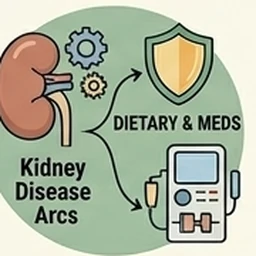
Caring for someone with kidney disease
Kidney disease has two distinct caregiving arcs: the slow, mostly invisible chronic-kidney-disease (CKD) years where the work is dietary and medication management, and the much-mor…
Read →Cancer & chronic disease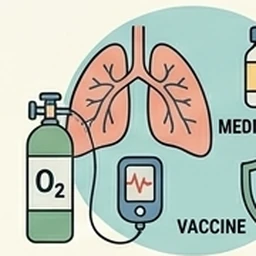
Caring for someone with COPD
COPD is a slow-progressing disease punctuated by sudden, frightening exacerbations. The work of caregiving sits between those two paces — steady daily management (medications, oxyg…
Read →Cognitive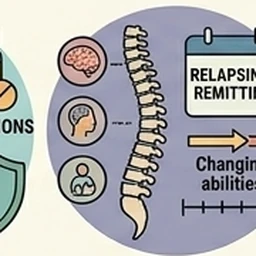
Caring for someone with multiple sclerosis
MS is the most variable of the major chronic neurologic diseases — some patients live decades with mild symptoms, others progress quickly, and the relapsing-remitting course can lo…
Read →Cancer & chronic disease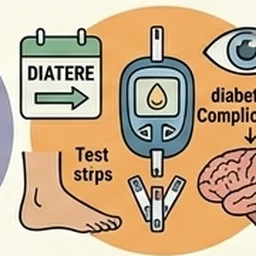
Caring for an older adult with diabetes
Diabetes in an older adult is two stories at once: the medical management of blood sugar, and the long-tail of complications — vision, kidney function, foot care, the diabetes-deme…
Read →Mental health & pain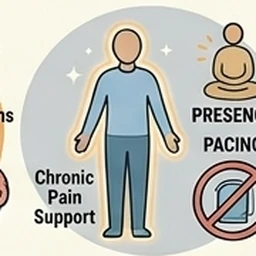
Caring for someone with chronic pain
Chronic pain is the most prevalent and most invisible chronic condition in the US — ~50 million adults, no scan that confirms it, no clean treatment arc. The work for the family is…
Read →Cognitive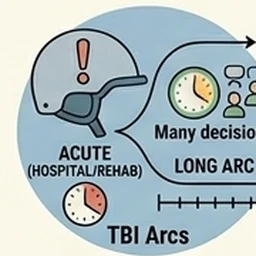
Caring for someone with a traumatic brain injury
TBI is two very different caregiving stories — the acute hospital + rehab phase that compresses years of decision-making into weeks, and the long arc of recovery (or non-recovery) …
Read →Cancer & chronic disease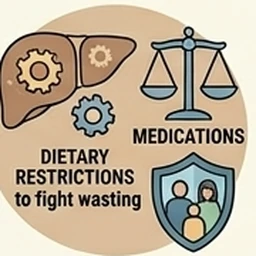
Caring for someone with cirrhosis
Cirrhosis is the late stage of liver disease, and it changes a family's life in ways most aren't prepared for. The medical management is unusual — dietary restrictions that fight m…
Read →Mental health & pain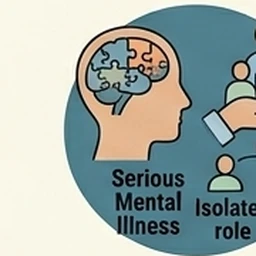
Caring for a family member with serious mental illness
Serious mental illness — schizophrenia, bipolar I, severe major depression with psychotic features — is one of the most isolating caregiving roles in the US. The patient is often a…
Read →Autoimmune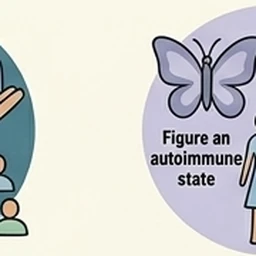
Caring for someone with lupus
Lupus is an autoimmune disease that's episodic, unpredictable, and almost entirely invisible to people who don't live with it. The caregiver role is mostly about presence during fl…
Read →Autoimmune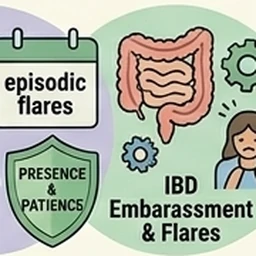
Caring for someone with IBD (Crohn's or ulcerative colitis)
IBD is the chronic illness that families often don't talk about — partly because the symptoms are embarrassing, partly because the disease is unpredictable, partly because most pat…
Read →Autoimmune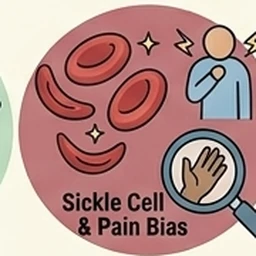
Caring for someone with sickle cell disease
Sickle cell disease is the most common inherited blood disorder in the US, affecting ~100,000 Americans — almost all of African, Caribbean, or Latin American descent. It's also the…
Read →Mental health & pain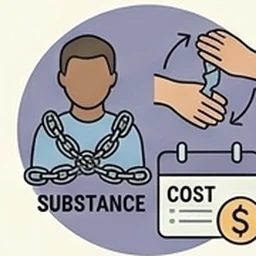
Caring for a family member with substance use disorder
Substance use disorder reshapes a family in ways most caregiver frameworks don't cover. The patient is often resistant to treatment, the medical system isn't built to coordinate wi…
Read →Cancer & chronic disease
Caring for someone with long COVID
Long COVID is the chronic illness most family caregivers weren't expecting. It looks different in every patient — the cardiologist sees one thing, the neurologist sees another, the…
Read →Autoimmune
Caring for someone with rheumatoid arthritis
Rheumatoid arthritis is more disabling than the name "arthritis" suggests to anyone who hasn't lived with it. It is a systemic autoimmune disease, not just joint pain — it flares u…
Read →Mental health & pain
Supporting a family member with an eating disorder
Eating disorders are the most lethal psychiatric conditions and the most family-dependent on recovery. The family is not the cause and the family is not optional — every evidence-b…
Read →Mental health & pain
Supporting a family member with major depression
Major depression is the most common serious mental health condition in the US and one of the most under-discussed in families. The patient often hides it from the people closest to…
Read →You’re a Caregiver Now includes condition notes for 23 diagnoses in print — dementia, heart failure, stroke, Parkinson’s, and more.
More conditions coming. If your family is navigating a diagnosis we don't cover yet, email info@kintaria.com and tell us which. We prioritize the data file from real family requests.