Chăm sóc người thân mắc ALS
Caring for someone with ALS
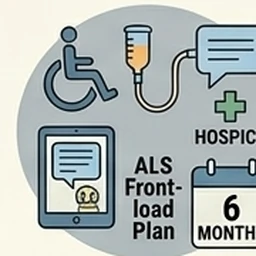
ALS moves fast. The decisions that take a year in most diseases — equipment, communication aids, feeding, hospice — often need to happen in the first six months. The families who do this well front-load the conversations while the patient can still drive them. Here's the orientation.
Điều gì thay đổi đối với gia đình
ALS (also called Lou Gehrig's disease or motor neuron disease) is a progressive paralysis of voluntary muscle while cognition is mostly preserved. Median survival from diagnosis is 2-5 years; some patients live decades, some less than a year. The work for the family compresses the typical caregiving arc: equipment decisions (wheelchair, communication device, feeding tube, breathing support) that would take years in other diseases often need to happen in months. The patient is usually fully cognitively present through most of the trajectory — meaning they participate in their own care decisions in ways most progressive-disease patients can't. The caregiver role intensifies fast: the spouse who started as a partner becomes a 24/7 caregiver inside 18 months in many cases, and the financial weight (lost income on both sides, $200K+ in out-of-pocket costs is common) is a constant pressure. The ALS community — clinicians, organizations, peer families — is one of the most generous and well-organized in any disease.
Những điều nên sắp xếp sớm
Khoảng thời gian ngay sau khi có chẩn đoán là lúc quý vị có nhiều dư địa nhất để dựng nên cấu trúc mà cả chặng đường phía sau sẽ tựa vào. Quý vị càng trì hoãn, một số việc dưới đây càng trở nên khó khăn hơn.
- A referral to an ALS Association Certified Clinic or ALS multidisciplinary clinic. Outcomes are measurably better in these settings (where neurology, pulmonology, PT, OT, SLP, nutrition, and social work see the patient on the same visit). The ALS Association clinic locator finds the nearest one.
- Legal documents immediately. Durable POA, healthcare POA, advance directive, will. ALS can affect speech early — getting these signed while signing + speaking is unambiguous matters more here than in almost any other condition.
- A communication-device evaluation early, even before it's needed. Speech-generating devices (SGDs) take weeks to procure and customize; setting up the voice banking app on the patient's phone in the first month captures the patient's own voice for synthesis later.
- A conversation about ventilation. Most ALS patients eventually face a decision about non-invasive (BiPAP) and ultimately invasive (tracheostomy) ventilation. These are deeply personal decisions; they go better when discussed before they're needed.
- A conversation about feeding tube (PEG) placement. Recommended earlier rather than later in ALS — most clinicians suggest placement before vital capacity drops below 50%. The decision is reversible; the procedure is harder when respiratory function is worse.
- Connection with a local ALS Association chapter for equipment loans, support groups, and family-services social work. The chapter network is one of the field's most generous — wheelchairs, communication devices, and equipment frequently available at no cost.
Những khoảnh khắc khó khăn nhất
Những khoảnh khắc mà các gia đình mô tả là khó khăn nhất thường là những khoảnh khắc không ai báo trước cho họ. Biết được điều gì có khả năng xảy ra không làm cho bất kỳ khoảnh khắc nào trong đó dễ chịu hơn — nhưng có một cái tên cho chúng, và có một không gian làm việc giúp đưa gia đình trở lại bên nhau khi chúng xảy ra, thì sẽ đỡ hơn nhiều.
- The diagnostic process. ALS is diagnosed by ruling out other things, often over 9-12 months. Many families describe the period before the diagnosis is given as harder than the day it lands.
- The first major equipment transition — usually power wheelchair, BiPAP, or communication device. Each transition is symbolic of progression as much as practical, and emotional load matters more than families expect.
- The decision about a tracheostomy + invasive ventilation. The decision determines whether the patient lives months or years longer and shapes the caregiving demand fundamentally. There is no "right answer"; the patient's values lead.
- The moment speech is gone but the patient is fully cognitively present. The grief of being unable to talk while still having things to say is one of the cruelest features of the disease; communication-device training matters enormously.
- The hospice transition. ALS hospice is well-developed (because the trajectory is predictable). Most families wish they had started hospice earlier than they did.
Các hướng dẫn liên quan đến tình trạng này
Các hướng dẫn của Kintaria là từng bước cho những khoảnh khắc cụ thể xuất hiện trong hành trình chăm sóc này. Mỗi hướng dẫn sẽ mở ra trong không gian làm việc của quý vị và được cá nhân hoá theo câu trả lời của quý vị.
- Foundation · One-time setupGet the legal paperwork in order.
- Transition · HospiceYou think your parent may be approaching the end of life.
- Planning · First few weeksYou're ready to bring in a home health aide.
- Spouse · OngoingWhen you are the caregiver-spouse.
- Hospital · 48-hour windowYour parent was just discharged from a hospital.
Các tổ chức quốc gia và đường dây hỗ trợ
Đây là những tổ chức được giới chuyên môn xem là điểm khởi đầu chuẩn mực. Tất cả đều miễn phí, và tất cả đều có người trực tổng đài (đường dây trợ giúp người chăm sóc do AI vận hành là một thể loại khác — ở đây là những người đã được đào tạo cụ thể về tình trạng này).
- Helpline · 1-800-782-4747
The largest ALS-focused organization in the US. Certified Clinic network (the gold standard for ALS care), local chapters with equipment loan programs + support groups, the Connecting ALS podcast, and Care Services + Resource Connect for case-management-style help.
Patient-led organization founded by Brian Wallach. Strong emphasis on community, peer support, and policy advocacy. Newly-diagnosed welcome packet, regional meet-ups, online community.
- Helpline · 1-888-ALS-1107
Chicago-area focused but serves families nationally. Strong social-work + care-coordination program, equipment program, multi-disciplinary clinic at Northwestern.
- 1-833-ASK-MDA1
MDA Care Centers across the US treat ALS alongside other neuromuscular diseases. Useful where The ALS Association's clinic network has a gap; equipment loan + support services through MDA.
Founded by NFL player Steve Gleason. Focused specifically on technology + assistive equipment grants for ALS patients — eye-gaze devices, smart-home tech, communication systems. Application-based, can supply equipment that insurance doesn't cover.
Authoritative US government plain-language overview. Free, comprehensive.
Không gian làm việc Kintaria giúp được gì
Kintaria là một không gian gia đình chung, dịu dàng, được dựng lên cho khối công việc mà chẩn đoán này sắp tạo ra. Danh sách thuốc nằm ở một chỗ (để người em thứ ba bay về vào cuối tuần không phải học lại từ đầu xem có gì thay đổi). Lịch khám được chia sẻ (để gia đình không đặt trùng lịch hoặc bỏ sót buổi tái khám với chuyên khoa thấp khớp). Dòng hoạt động nói thật về việc ai đã làm gì (để người chăm sóc chính không lặng lẽ gánh hết). Và không gian này song ngữ — người bệnh đọc bằng ngôn ngữ họ thấy dễ chịu hơn, còn gia đình đọc bằng tiếng Anh — điều mà mọi người thường đánh giá thấp tầm quan trọng cho đến khi chẩn đoán đã khiến mọi thứ rối loạn.
Dùng thử miễn phí 1 năm dành cho 500 gia đình sáng lập đầu tiên. Không cần thẻ tín dụng.
Một lời nhắc về Kintaria là gì (và không phải là gì)
Kintaria không phải là công cụ lâm sàng, không thay thế cho quyết định y khoa, và không thay thế cho đội ngũ chăm sóc ALS. Nội dung trên trang này dành cho các gia đình đang phối hợp việc chăm sóc; những quyết định lâm sàng cụ thể cần được bác sĩ của người bệnh đưa ra. Các dấu hiệu cần báo cáo khẩn cấp xuất hiện xuyên suốt không gian làm việc đều trung thực về ranh giới đó.
Các thuật ngữ chăm sóc xuất hiện trên trang này
Những từ quý vị có thể muốn tra nghĩa trong khi đọc. Mỗi từ sẽ mở ra trang riêng với phần định nghĩa bằng ngôn ngữ dễ hiểu và cách từ đó xuất hiện trong việc chăm sóc.
- Hospice — A type of care for people with a life expectancy of about 6 months or less, focused entirely on comfort rather than cure.
- Power of attorney — A legal document where one person (the "principal") authorizes another person (the "agent" or "attorney-in-fact") to act on their behalf in financial matters.
- Healthcare proxy — A legal document naming a person to make medical decisions if the patient cannot.
- Advance directive — A written document specifying a patient's wishes for end-of-life medical care — typically covering CPR, mechanical ventilation, artificial nutrition, and other interventions when recovery is unlikely.
Xem thêm: tất cả các tình trạng · tất cả các hướng dẫn · từ điển dành cho người chăm sóc · danh bạ tài nguyên toàn quốc