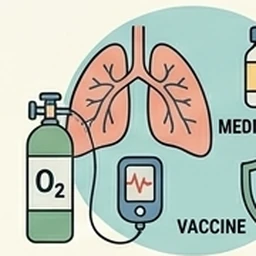
照护患有COPD的亲人
Caring for someone with COPD
COPD is a slow-progressing disease punctuated by sudden, frightening exacerbations. The work of caregiving sits between those two paces — steady daily management (medications, oxygen, energy budgeting, vaccine adherence) and the always-possible 2 AM call when breathing gets worse. The families who do this well prevent most of the hospitalizations. Here's the orientation.
家庭会发生什么变化
Chronic obstructive pulmonary disease (COPD) — emphysema, chronic bronchitis, or both — reorganizes a family around energy and breath. Patients learn to choose between walking to the bathroom and eating dinner; between talking on the phone and getting dressed. The caregiver becomes the manager of an unusual budget: oxygen tank scheduling, inhaler technique, the pulmonary-rehab attendance that's measurably the single highest-leverage intervention. Exacerbations — viral infections, cold air, smoke exposure — drop lung function fast and often require hospitalization; the difference between a 2-day urgent-care visit and a 10-day ICU stay is often whether the family caught the early signs. Late-stage COPD brings decisions about non-invasive ventilation (BiPAP), oxygen at higher flows, and the conversation about goals of care that most pulmonologists are surprisingly good at having when invited.
需要尽早安排的事情
诊断之后的窗口期,是您的家庭最有余地去搭建后续整个旅程将依靠的结构的时刻。您拖得越久,其中一些事情就越难处理。
- Pulmonary rehab if eligible. This is the single most evidence-based intervention for quality of life in COPD and the most under-prescribed. 8-12 weeks of supervised exercise + education; results are dramatic. Ask if it wasn't offered.
- Smoking cessation — for the patient if still smoking, and for everyone in the household. Secondhand smoke meaningfully accelerates COPD progression. Free quit support at 1-800-QUIT-NOW.
- Annual flu shot + the pneumococcal series (PCV15 or PCV20 + PPSV23) + RSV vaccine for adults 60+ + updated COVID booster. Vaccine-preventable lung infections cause a disproportionate share of COPD hospitalizations.
- A written COPD action plan from the pulmonologist — green/yellow/red zones based on symptoms, with what to do at each. Most pulm teams give one; if yours hasn't, ask. Catching exacerbations early prevents most hospitalizations.
- Oxygen-equipment setup and a relationship with the home-oxygen company. Liquid vs concentrator vs portable tanks have very different daily ergonomics; the choice matters more than insurance reps acknowledge.
- A goals-of-care conversation while the patient is stable. Advanced COPD brings questions about intubation, ICU, and whether the patient wants comfort-focused care; talking about it before a crisis is far easier than during one.
最艰难的时刻
家庭描述为最艰难的时刻,往往是没有人提前提醒过他们的那些时刻。知道接下来可能发生什么,并不会让任何一刻变得容易——但能给这些时刻一个名字,并拥有一个在它们发生时能让家人重新聚拢起来的工作空间,会有帮助。
- The first exacerbation that lands them in the hospital. The patient is usually frightened (air hunger is one of the most distressing symptoms in medicine); the family is unprepared for how steep the recovery is. Post-hospitalization functional decline is a common pattern.
- The shift from "still active" to "needs oxygen 24/7." The day the cannula stays in around the house is one families describe as harder than the diagnosis itself — visible, identity-shifting.
- The exertion-vs-everything trade-off. Patients have to choose between physical effort and oxygen reserves on a daily basis; family members who don't understand this can interpret slowed-down behavior as depression rather than what it is.
- The end-of-life trajectory. COPD has a less-predictable end-stage than diseases like ALS or advanced cancer; the recurrent-exacerbation pattern can continue for years, making it hard to know when to consider hospice. Most pulmonologists wish families would ask about palliative care earlier.
与此相关的指南
Kintaria 的指南是针对这条照护路径上具体时刻的分步说明。每一份都会在您的工作空间中打开,并根据您的回答进行个性化调整。
- Hospital · 48-hour windowYour parent was just discharged from a hospital.
- Foundation · One-time setupGet the legal paperwork in order.
- Spouse · OngoingWhen you are the caregiver-spouse.
- Parent · This is real nowYour parent is in the ER for the first time.
- Transition · HospiceYou think your parent may be approaching the end of life.
全国性组织与求助热线
这些是业内公认的标准起点。全部免费,并且都是真人接听的求助热线(针对照护者的 AI 电话热线属于另一类——这里指的是接受过该具体疾病培训的人员)。
- C.O.P.D. Information Line · 1-866-316-2673
The patient + family organization specifically for COPD. Free education (the "COPD Pocket Consultant Guide" is the best plain-language primer in the field), peer-support groups (in-person + online), and the COPD360social community for patients + caregivers.
- Lung HelpLine · 1-800-586-4872
Free helpline staffed by registered nurses and respiratory therapists. "Better Breathers Club" support groups across the country, smoking-cessation programs, "Living with COPD" patient + family guides.
For patients + families who want to participate in research. Free to join; the registry has informed multiple FDA-approved therapies.
Find a certified pulmonary rehab program near you. Coverage details vary by Medicare/Medicaid + private insurance; the program intake walks you through them.
Authoritative US government plain-language overview. Free, comprehensive, available in English + Spanish.
Kintaria 工作空间如何提供帮助
Kintaria 是一个为这次诊断即将带来的工作而设计的、平静的、共享的家庭工作空间。用药清单集中在一个地方(这样周末飞回来的第三个兄弟姐妹就不必重新弄清楚有什么变化)。就诊日历是共享的(这样家人就不会重复预约或漏掉风湿科的复诊)。活动记录如实记录谁做了什么(这样主要照护者就不会默默承担一切)。并且工作空间是双语的——患者用自己更习惯的语言阅读,家人用英语阅读——当诊断本身已经让人手足无措时,这一点比人们以为的更重要。
前 500 个创始家庭可享 1 年免费试用。无需信用卡。
关于 Kintaria 是什么(以及不是什么)的说明
Kintaria 不是临床工具,不能替代医学决定,也不能取代COPD的照护团队。本页的内容是面向协调照护工作的家庭的导览;具体的临床决定需要由患者的医生作出。整个工作空间中的升级提示对这一界线是诚实的。
本页中的照护术语
您在阅读时可能希望先了解定义的词。每一个都会打开一个独立页面,提供平实的含义说明以及在照护中如何出现。
- Palliative care — Specialty care focused on quality of life and symptom relief for people with serious illness.
- Hospice — A type of care for people with a life expectancy of about 6 months or less, focused entirely on comfort rather than cure.
- Comfort care — A care approach focused entirely on symptom relief and dignity rather than disease treatment.