照护患有ALS的亲人
Caring for someone with ALS
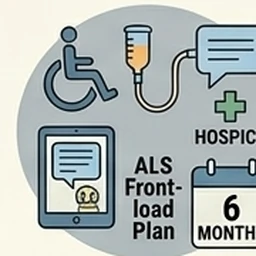
ALS moves fast. The decisions that take a year in most diseases — equipment, communication aids, feeding, hospice — often need to happen in the first six months. The families who do this well front-load the conversations while the patient can still drive them. Here's the orientation.
家庭会发生什么变化
ALS (also called Lou Gehrig's disease or motor neuron disease) is a progressive paralysis of voluntary muscle while cognition is mostly preserved. Median survival from diagnosis is 2-5 years; some patients live decades, some less than a year. The work for the family compresses the typical caregiving arc: equipment decisions (wheelchair, communication device, feeding tube, breathing support) that would take years in other diseases often need to happen in months. The patient is usually fully cognitively present through most of the trajectory — meaning they participate in their own care decisions in ways most progressive-disease patients can't. The caregiver role intensifies fast: the spouse who started as a partner becomes a 24/7 caregiver inside 18 months in many cases, and the financial weight (lost income on both sides, $200K+ in out-of-pocket costs is common) is a constant pressure. The ALS community — clinicians, organizations, peer families — is one of the most generous and well-organized in any disease.
需要尽早安排的事情
诊断之后的窗口期,是您的家庭最有余地去搭建后续整个旅程将依靠的结构的时刻。您拖得越久,其中一些事情就越难处理。
- A referral to an ALS Association Certified Clinic or ALS multidisciplinary clinic. Outcomes are measurably better in these settings (where neurology, pulmonology, PT, OT, SLP, nutrition, and social work see the patient on the same visit). The ALS Association clinic locator finds the nearest one.
- Legal documents immediately. Durable POA, healthcare POA, advance directive, will. ALS can affect speech early — getting these signed while signing + speaking is unambiguous matters more here than in almost any other condition.
- A communication-device evaluation early, even before it's needed. Speech-generating devices (SGDs) take weeks to procure and customize; setting up the voice banking app on the patient's phone in the first month captures the patient's own voice for synthesis later.
- A conversation about ventilation. Most ALS patients eventually face a decision about non-invasive (BiPAP) and ultimately invasive (tracheostomy) ventilation. These are deeply personal decisions; they go better when discussed before they're needed.
- A conversation about feeding tube (PEG) placement. Recommended earlier rather than later in ALS — most clinicians suggest placement before vital capacity drops below 50%. The decision is reversible; the procedure is harder when respiratory function is worse.
- Connection with a local ALS Association chapter for equipment loans, support groups, and family-services social work. The chapter network is one of the field's most generous — wheelchairs, communication devices, and equipment frequently available at no cost.
最艰难的时刻
家庭描述为最艰难的时刻,往往是没有人提前提醒过他们的那些时刻。知道接下来可能发生什么,并不会让任何一刻变得容易——但能给这些时刻一个名字,并拥有一个在它们发生时能让家人重新聚拢起来的工作空间,会有帮助。
- The diagnostic process. ALS is diagnosed by ruling out other things, often over 9-12 months. Many families describe the period before the diagnosis is given as harder than the day it lands.
- The first major equipment transition — usually power wheelchair, BiPAP, or communication device. Each transition is symbolic of progression as much as practical, and emotional load matters more than families expect.
- The decision about a tracheostomy + invasive ventilation. The decision determines whether the patient lives months or years longer and shapes the caregiving demand fundamentally. There is no "right answer"; the patient's values lead.
- The moment speech is gone but the patient is fully cognitively present. The grief of being unable to talk while still having things to say is one of the cruelest features of the disease; communication-device training matters enormously.
- The hospice transition. ALS hospice is well-developed (because the trajectory is predictable). Most families wish they had started hospice earlier than they did.
与此相关的指南
Kintaria 的指南是针对这条照护路径上具体时刻的分步说明。每一份都会在您的工作空间中打开,并根据您的回答进行个性化调整。
- Foundation · One-time setupGet the legal paperwork in order.
- Transition · HospiceYou think your parent may be approaching the end of life.
- Planning · First few weeksYou're ready to bring in a home health aide.
- Spouse · OngoingWhen you are the caregiver-spouse.
- Hospital · 48-hour windowYour parent was just discharged from a hospital.
全国性组织与求助热线
这些是业内公认的标准起点。全部免费,并且都是真人接听的求助热线(针对照护者的 AI 电话热线属于另一类——这里指的是接受过该具体疾病培训的人员)。
- Helpline · 1-800-782-4747
The largest ALS-focused organization in the US. Certified Clinic network (the gold standard for ALS care), local chapters with equipment loan programs + support groups, the Connecting ALS podcast, and Care Services + Resource Connect for case-management-style help.
Patient-led organization founded by Brian Wallach. Strong emphasis on community, peer support, and policy advocacy. Newly-diagnosed welcome packet, regional meet-ups, online community.
- Helpline · 1-888-ALS-1107
Chicago-area focused but serves families nationally. Strong social-work + care-coordination program, equipment program, multi-disciplinary clinic at Northwestern.
- 1-833-ASK-MDA1
MDA Care Centers across the US treat ALS alongside other neuromuscular diseases. Useful where The ALS Association's clinic network has a gap; equipment loan + support services through MDA.
Founded by NFL player Steve Gleason. Focused specifically on technology + assistive equipment grants for ALS patients — eye-gaze devices, smart-home tech, communication systems. Application-based, can supply equipment that insurance doesn't cover.
Authoritative US government plain-language overview. Free, comprehensive.
Kintaria 工作空间如何提供帮助
Kintaria 是一个为这次诊断即将带来的工作而设计的、平静的、共享的家庭工作空间。用药清单集中在一个地方(这样周末飞回来的第三个兄弟姐妹就不必重新弄清楚有什么变化)。就诊日历是共享的(这样家人就不会重复预约或漏掉风湿科的复诊)。活动记录如实记录谁做了什么(这样主要照护者就不会默默承担一切)。并且工作空间是双语的——患者用自己更习惯的语言阅读,家人用英语阅读——当诊断本身已经让人手足无措时,这一点比人们以为的更重要。
前 500 个创始家庭可享 1 年免费试用。无需信用卡。
关于 Kintaria 是什么(以及不是什么)的说明
Kintaria 不是临床工具,不能替代医学决定,也不能取代ALS的照护团队。本页的内容是面向协调照护工作的家庭的导览;具体的临床决定需要由患者的医生作出。整个工作空间中的升级提示对这一界线是诚实的。
本页中的照护术语
您在阅读时可能希望先了解定义的词。每一个都会打开一个独立页面,提供平实的含义说明以及在照护中如何出现。
- Hospice — A type of care for people with a life expectancy of about 6 months or less, focused entirely on comfort rather than cure.
- Power of attorney — A legal document where one person (the "principal") authorizes another person (the "agent" or "attorney-in-fact") to act on their behalf in financial matters.
- Healthcare proxy — A legal document naming a person to make medical decisions if the patient cannot.
- Advance directive — A written document specifying a patient's wishes for end-of-life medical care — typically covering CPR, mechanical ventilation, artificial nutrition, and other interventions when recovery is unlikely.