cirrhosisを抱えるご家族の介護
Caring for someone with cirrhosis
Cirrhosis is the late stage of liver disease, and it changes a family's life in ways most aren't prepared for. The medical management is unusual — dietary restrictions that fight muscle wasting, medications that prevent confusion episodes, the constant watch for variceal bleeding. The transplant evaluation is its own gauntlet. Here's the orientation.
家族にとって何が変わるか
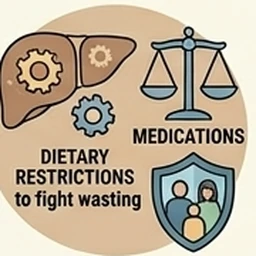
Cirrhosis (advanced scarring of the liver from chronic disease — alcohol, hepatitis, fatty liver, autoimmune) is a chronic-disease management problem with episodic crises. The day-to-day work centers on three patterns: a high-protein but low-sodium diet (the opposite of what most chronic diseases call for; cirrhosis patients often suffer muscle wasting that protein restriction worsens), the medication regimen (lactulose + rifaximin to prevent hepatic encephalopathy, diuretics for ascites, beta-blockers for varices, multiple supplements), and the constant readiness for an exacerbation. The exacerbations are real and frightening: hepatic encephalopathy (confusion that can come on over hours, often mistaken for dementia or stroke), variceal bleeding (vomiting blood — medical emergency), spontaneous bacterial peritonitis. The transplant evaluation is a multi-month process most families don't fully understand; the MELD score that determines wait-list priority changes weekly. And the alcohol-related-cirrhosis subset adds complex family dynamics — sobriety is required for most transplant programs, often after years of relapse + recovery.
早めに整えておきたいこと
診断後の期間は、これから先の道のり全体が支えにする構造を、ご家族が最もよく整えられるタイミングです。先延ばしにすればするほど、ここに挙げた事柄のいくつかは難しくなっていきます。
- A hepatology referral (not just GI) if the patient isn't already with one. Outcomes are measurably better with hepatologist care for cirrhosis; many academic medical centers have a dedicated cirrhosis or liver clinic.
- A transplant evaluation referral early. Wait times average 1-3 years depending on region + blood type + MELD score; preemptive listing (before complications) widens the patient's options. The evaluation itself is multi-month + intensive.
- A renal dietitian relationship (yes, the kidney specialist — cirrhosis nutrition is closer to renal nutrition than general nutrition). Generic "low-sodium" or "healthy" diet advice can worsen cirrhosis-specific issues. Most hepatology programs have one on the team.
- A clear understanding of the medication regimen — especially lactulose dosing, which the patient titrates themselves based on bowel movements (the inverse of how most medications work). Confusion about lactulose dosing is a leading cause of preventable hepatic encephalopathy hospitalizations.
- A written action plan for hepatic encephalopathy. Subtle confusion is often the first sign; families who recognize it and adjust lactulose at home prevent most hospitalizations. Most hepatology teams give one; if yours hasn't, ask.
- Legal documents while cognition is intact: durable POA, healthcare POA, advance directive. Hepatic encephalopathy can intermittently impair capacity for years before it permanently does; getting the paperwork done early matters.
もっともつらい瞬間
ご家族がもっともつらかったと語る瞬間は、誰も事前に教えてくれなかった瞬間であることがよくあります。これから起こりうることを知っていても、どの瞬間も楽になるわけではありません。それでも、その瞬間に名前を与えられること、そしてその瞬間が来たときに家族を再び結びつけてくれるワークスペースがあることは、確かに助けになります。
- The first hepatic encephalopathy episode. The patient who was lucid an hour ago is suddenly confused, agitated, sometimes hallucinating. The family's ability to recognize and respond (extra lactulose, hospital if severe) determines whether it stays a kitchen incident or becomes a 5-day admission.
- A variceal bleed. Vomiting blood is one of the most frightening symptoms in medicine. Emergency endoscopy with banding can stop it; the immediate threat is well-managed in tertiary centers; the recurrence risk shapes the next year.
- The transplant decision — listed vs. not, accepting vs. declining an organ offer at 3 AM. For alcohol-related cirrhosis, the sobriety question adds a layer most families weren't expecting: most programs require 6 months of documented sobriety, some require more.
- The conversation about stopping aggressive treatment. End-stage liver disease has clear inflection points; comfort-focused care is increasingly accepted in hepatology but rarely offered without the family asking. Palliative care consults early are widely recommended and widely under-utilized.
これに対応するプレイブック
Kintaria のプレイブックは、この介護の道のりで実際に出てくる具体的な場面のための、ステップ・バイ・ステップの手引きです。それぞれがあなたのワークスペース内で開き、あなたの回答に応じてパーソナライズされます。
- Foundation · One-time setupGet the legal paperwork in order.
- Hospital · 48-hour windowYour parent was just discharged from a hospital.
- Spouse · OngoingWhen you are the caregiver-spouse.
- Transition · HospiceYou think your parent may be approaching the end of life.
- Parent · This is real nowYour parent is in the ER for the first time.
全国規模の団体と電話相談窓口
これらは、この分野で標準的な出発点とされている団体です。すべて無料で、すべて実在の担当者が対応する電話相談窓口です(介護者向けの AI 電話相談はまた別のカテゴリーで、ここでは特定の疾患の研修を受けた人を指します)。
- Helpline · 1-800-465-4837
The largest patient + family liver-disease organization. Free helpline, support groups (in-person + online), patient education on cirrhosis specifically, advocacy on access to transplant + new therapies.
International patient-advocacy organization. Strong on the policy + research side, useful for families navigating insurance coverage decisions or pursuing access to emerging therapies. Patient-and-family newsletters.
- 1-800-489-3863
Helps patients and families fundraise for transplant-related costs (medications, lodging during evaluation, post-transplant care). Most transplant centers refer families to NFT for the financial side.
For viral-hepatitis-related cirrhosis specifically. The Hep B Foundation's patient + family resources are the best in the category; hepatitis-C-related cirrhosis remains common despite cure rates because patients diagnosed before treatment availability often present with advanced disease.
Clinician-society resources translated for patients. Strong cirrhosis-specific guides; useful when the family wants to understand what the hepatology team is doing + why.
Authoritative US government plain-language overview. Free, comprehensive, available in English + Spanish.
Kintaria のワークスペースがどう役立つか
Kintaria は、この診断がこれから生み出す仕事のために設計された、穏やかで共有可能な家族のワークスペースです。お薬リストは 1 か所にまとまっており、週末に飛行機で帰ってくる 3 番目のきょうだいが「何が変わったか」を一から学び直さずに済みます。診察の予定は共有されていて、家族が予定を重ねたり、リウマチ科のフォローアップを見落としたりしにくくなります。アクティビティの記録は「誰が何をしたか」について正直で、主たる介護者がすべてを黙って抱え込まなくて済みます。そしてワークスペースはバイリンガルです — 患者さまはご自身が楽な言語で読み、ご家族は英語で読みます — 診断そのものですでに頭が回らない状況では、この点は多くの人が想像する以上に重要になります。
創設の最初の 500 ご家族には 1 年間の無料トライアルをご提供します。クレジットカードは不要です。
Kintaria が何であり、何でないかについての一文
Kintaria は臨床ツールではなく、医療上の意思決定の代わりになるものでもなく、cirrhosisの医療チームの代わりになるものでもありません。このページの内容は、介護を調整するご家族のためのオリエンテーションです。個別の臨床判断は、患者さまの担当医師が行う必要があります。ワークスペース全体で示されるエスカレーションのサインは、その境界について正直に書かれています。
このページに出てくる介護用語
お読みになりながら意味を確認したくなりそうな言葉です。それぞれが独立したページで開き、わかりやすい言葉での意味と、介護の現場でどのように出てくるかを説明します。
- Palliative care — Specialty care focused on quality of life and symptom relief for people with serious illness.
- Power of attorney — A legal document where one person (the "principal") authorizes another person (the "agent" or "attorney-in-fact") to act on their behalf in financial matters.
- Healthcare proxy — A legal document naming a person to make medical decisions if the patient cannot.
- Advance directive — A written document specifying a patient's wishes for end-of-life medical care — typically covering CPR, mechanical ventilation, artificial nutrition, and other interventions when recovery is unlikely.
- Comfort care — A care approach focused entirely on symptom relief and dignity rather than disease treatment.
関連リンク: すべての疾患 · すべてのプレイブック · 介護者用語集 · 全国リソース一覧