Chăm sóc người thân mắc stroke
Caring for someone after a stroke
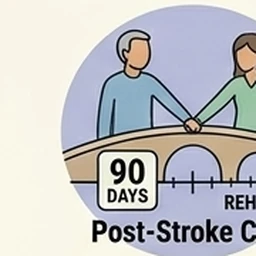
A stroke compresses years of caregiving change into ninety days. The patient who came home from the hospital is partly the person you knew and partly someone whose abilities will take weeks or months to map out. The rehab path that gets started in the first 90 days shapes the next decade. Here's what to set up while it matters most.
Điều gì thay đổi đối với gia đình
Stroke is uneven in a different way than dementia is. Specific abilities are gone or impaired (speech, swallowing, the use of one side, the ability to read or write); other things are intact, sometimes startlingly so. The first 90 days are the most consequential — most recovery happens then, and the rehab decisions made in that window largely determine the long-term trajectory. The marriage or family relationship reorganizes around new tasks (the spouse who suddenly handles the bills, the daughter who manages the rehab schedule), and the patient is often dealing with their own grief at the same time. Depression after stroke is common, treatable, and under-screened.
Những điều nên sắp xếp sớm
Khoảng thời gian ngay sau khi có chẩn đoán là lúc quý vị có nhiều dư địa nhất để dựng nên cấu trúc mà cả chặng đường phía sau sẽ tựa vào. Quý vị càng trì hoãn, một số việc dưới đây càng trở nên khó khăn hơn.
- A clear plan for the rehab path: acute inpatient rehab vs. subacute (skilled nursing facility) vs. home health PT/OT/SLP. The choice depends on the patient's tolerance for therapy hours; the discharge planner has options but the family has to choose deliberately.
- FMLA paperwork for the working spouse / adult child who needs leave. Don't wait — FMLA is paperwork-heavy and benefits are easier to access when started early.
- Power-of-attorney activation if the stroke affected speech or capacity. Many couples have these in place but never activated them; the bank doesn't honor a POA unless you formally present it.
- Medication reconciliation across the new neurology / cardiology / PT team. Stroke patients leave the hospital with new anticoagulants + blood-pressure regimens; the existing pharmacy probably needs the updated list.
- Home modifications insurance won't cover that you need anyway: grab bars, a raised toilet seat, a shower chair, removing throw rugs, securing the path from bedroom to bathroom.
- A conversation with the kids — including adult children — about what changed and what didn't. Stroke is invisible until you see it; visible changes are easier for kids to integrate than the cognitive ones that show up subtly.
Những khoảnh khắc khó khăn nhất
Những khoảnh khắc mà các gia đình mô tả là khó khăn nhất thường là những khoảnh khắc không ai báo trước cho họ. Biết được điều gì có khả năng xảy ra không làm cho bất kỳ khoảnh khắc nào trong đó dễ chịu hơn — nhưng có một cái tên cho chúng, và có một không gian làm việc giúp đưa gia đình trở lại bên nhau khi chúng xảy ra, thì sẽ đỡ hơn nhiều.
- The first time a familiar task is hard for the patient and they realize it. Reading the newspaper, signing a check, using the remote. The grief of those moments lives with the patient for months.
- The transition from inpatient rehab to home. The discharge feels like progress, but home is harder than the rehab unit — no 24/7 staff, no immediate equipment, fewer cues.
- Post-stroke depression at week 4-8. Hits most stroke patients to some degree, often unrecognized because the family attributes it to the stroke itself. PCP screening + treatment changes the recovery arc.
- The decision about driving. Stroke recovery often gates the return to driving; the conversation about when (and whether) is one families avoid until insurance forces it.
Các hướng dẫn liên quan đến tình trạng này
Các hướng dẫn của Kintaria là từng bước cho những khoảnh khắc cụ thể xuất hiện trong hành trình chăm sóc này. Mỗi hướng dẫn sẽ mở ra trong không gian làm việc của quý vị và được cá nhân hoá theo câu trả lời của quý vị.
- Spouse · 90-day windowYour spouse just had a stroke.
- Hospital · 48-hour windowYour parent was just discharged from a hospital.
- Spouse · OngoingWhen you are the caregiver-spouse.
- Foundation · One-time setupGet the legal paperwork in order.
- Parent · 72 hours + 30 daysYour parent is recovering from a surgery.
Các tổ chức quốc gia và đường dây hỗ trợ
Đây là những tổ chức được giới chuyên môn xem là điểm khởi đầu chuẩn mực. Tất cả đều miễn phí, và tất cả đều có người trực tổng đài (đường dây trợ giúp người chăm sóc do AI vận hành là một thể loại khác — ở đây là những người đã được đào tạo cụ thể về tình trạng này).
- Stroke Family Warmline · 1-888-478-7653
The Stroke Family Warmline connects caregivers with trained stroke specialists. Support groups (in-person + online). "Care for the Caregiver" practical guide.
For stroke survivors with aphasia (loss or impairment of language). Communication strategies, support groups, family education.
- National Brain Injury Information Center · 1-800-444-6443
For families navigating cognitive impacts of stroke or other brain injuries. State chapters, support groups, family resources.
Federal stroke prevention + recovery resources. Plain-language warning signs (FAST), recovery guides, signs of a second stroke.
Không gian làm việc Kintaria giúp được gì
Kintaria là một không gian gia đình chung, dịu dàng, được dựng lên cho khối công việc mà chẩn đoán này sắp tạo ra. Danh sách thuốc nằm ở một chỗ (để người em thứ ba bay về vào cuối tuần không phải học lại từ đầu xem có gì thay đổi). Lịch khám được chia sẻ (để gia đình không đặt trùng lịch hoặc bỏ sót buổi tái khám với chuyên khoa thấp khớp). Dòng hoạt động nói thật về việc ai đã làm gì (để người chăm sóc chính không lặng lẽ gánh hết). Và không gian này song ngữ — người bệnh đọc bằng ngôn ngữ họ thấy dễ chịu hơn, còn gia đình đọc bằng tiếng Anh — điều mà mọi người thường đánh giá thấp tầm quan trọng cho đến khi chẩn đoán đã khiến mọi thứ rối loạn.
Dùng thử miễn phí 1 năm dành cho 500 gia đình sáng lập đầu tiên. Không cần thẻ tín dụng.
Một lời nhắc về Kintaria là gì (và không phải là gì)
Kintaria không phải là công cụ lâm sàng, không thay thế cho quyết định y khoa, và không thay thế cho đội ngũ chăm sóc stroke. Nội dung trên trang này dành cho các gia đình đang phối hợp việc chăm sóc; những quyết định lâm sàng cụ thể cần được bác sĩ của người bệnh đưa ra. Các dấu hiệu cần báo cáo khẩn cấp xuất hiện xuyên suốt không gian làm việc đều trung thực về ranh giới đó.
Các thuật ngữ chăm sóc xuất hiện trên trang này
Những từ quý vị có thể muốn tra nghĩa trong khi đọc. Mỗi từ sẽ mở ra trang riêng với phần định nghĩa bằng ngôn ngữ dễ hiểu và cách từ đó xuất hiện trong việc chăm sóc.
- Case manager — A nurse or social worker employed by the hospital whose job is to coordinate care across the system — most importantly, discharge planning.
- Skilled nursing facility — A facility providing 24-hour skilled nursing care — primarily for short-term rehabilitation after hospitalization, but also for long-term residence.
- Home health — Skilled medical care delivered in the home by nurses, physical therapists, occupational therapists, or speech therapists — typically following hospitalization or during the management of a serious condition.
Xem thêm: tất cả các tình trạng · tất cả các hướng dẫn · từ điển dành cho người chăm sóc · danh bạ tài nguyên toàn quốc