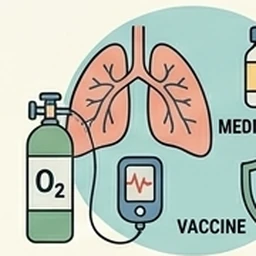
Chăm sóc người thân mắc COPD
Caring for someone with COPD
COPD is a slow-progressing disease punctuated by sudden, frightening exacerbations. The work of caregiving sits between those two paces — steady daily management (medications, oxygen, energy budgeting, vaccine adherence) and the always-possible 2 AM call when breathing gets worse. The families who do this well prevent most of the hospitalizations. Here's the orientation.
Điều gì thay đổi đối với gia đình
Chronic obstructive pulmonary disease (COPD) — emphysema, chronic bronchitis, or both — reorganizes a family around energy and breath. Patients learn to choose between walking to the bathroom and eating dinner; between talking on the phone and getting dressed. The caregiver becomes the manager of an unusual budget: oxygen tank scheduling, inhaler technique, the pulmonary-rehab attendance that's measurably the single highest-leverage intervention. Exacerbations — viral infections, cold air, smoke exposure — drop lung function fast and often require hospitalization; the difference between a 2-day urgent-care visit and a 10-day ICU stay is often whether the family caught the early signs. Late-stage COPD brings decisions about non-invasive ventilation (BiPAP), oxygen at higher flows, and the conversation about goals of care that most pulmonologists are surprisingly good at having when invited.
Những điều nên sắp xếp sớm
Khoảng thời gian ngay sau khi có chẩn đoán là lúc quý vị có nhiều dư địa nhất để dựng nên cấu trúc mà cả chặng đường phía sau sẽ tựa vào. Quý vị càng trì hoãn, một số việc dưới đây càng trở nên khó khăn hơn.
- Pulmonary rehab if eligible. This is the single most evidence-based intervention for quality of life in COPD and the most under-prescribed. 8-12 weeks of supervised exercise + education; results are dramatic. Ask if it wasn't offered.
- Smoking cessation — for the patient if still smoking, and for everyone in the household. Secondhand smoke meaningfully accelerates COPD progression. Free quit support at 1-800-QUIT-NOW.
- Annual flu shot + the pneumococcal series (PCV15 or PCV20 + PPSV23) + RSV vaccine for adults 60+ + updated COVID booster. Vaccine-preventable lung infections cause a disproportionate share of COPD hospitalizations.
- A written COPD action plan from the pulmonologist — green/yellow/red zones based on symptoms, with what to do at each. Most pulm teams give one; if yours hasn't, ask. Catching exacerbations early prevents most hospitalizations.
- Oxygen-equipment setup and a relationship with the home-oxygen company. Liquid vs concentrator vs portable tanks have very different daily ergonomics; the choice matters more than insurance reps acknowledge.
- A goals-of-care conversation while the patient is stable. Advanced COPD brings questions about intubation, ICU, and whether the patient wants comfort-focused care; talking about it before a crisis is far easier than during one.
Những khoảnh khắc khó khăn nhất
Những khoảnh khắc mà các gia đình mô tả là khó khăn nhất thường là những khoảnh khắc không ai báo trước cho họ. Biết được điều gì có khả năng xảy ra không làm cho bất kỳ khoảnh khắc nào trong đó dễ chịu hơn — nhưng có một cái tên cho chúng, và có một không gian làm việc giúp đưa gia đình trở lại bên nhau khi chúng xảy ra, thì sẽ đỡ hơn nhiều.
- The first exacerbation that lands them in the hospital. The patient is usually frightened (air hunger is one of the most distressing symptoms in medicine); the family is unprepared for how steep the recovery is. Post-hospitalization functional decline is a common pattern.
- The shift from "still active" to "needs oxygen 24/7." The day the cannula stays in around the house is one families describe as harder than the diagnosis itself — visible, identity-shifting.
- The exertion-vs-everything trade-off. Patients have to choose between physical effort and oxygen reserves on a daily basis; family members who don't understand this can interpret slowed-down behavior as depression rather than what it is.
- The end-of-life trajectory. COPD has a less-predictable end-stage than diseases like ALS or advanced cancer; the recurrent-exacerbation pattern can continue for years, making it hard to know when to consider hospice. Most pulmonologists wish families would ask about palliative care earlier.
Các hướng dẫn liên quan đến tình trạng này
Các hướng dẫn của Kintaria là từng bước cho những khoảnh khắc cụ thể xuất hiện trong hành trình chăm sóc này. Mỗi hướng dẫn sẽ mở ra trong không gian làm việc của quý vị và được cá nhân hoá theo câu trả lời của quý vị.
- Hospital · 48-hour windowYour parent was just discharged from a hospital.
- Foundation · One-time setupGet the legal paperwork in order.
- Spouse · OngoingWhen you are the caregiver-spouse.
- Parent · This is real nowYour parent is in the ER for the first time.
- Transition · HospiceYou think your parent may be approaching the end of life.
Các tổ chức quốc gia và đường dây hỗ trợ
Đây là những tổ chức được giới chuyên môn xem là điểm khởi đầu chuẩn mực. Tất cả đều miễn phí, và tất cả đều có người trực tổng đài (đường dây trợ giúp người chăm sóc do AI vận hành là một thể loại khác — ở đây là những người đã được đào tạo cụ thể về tình trạng này).
- C.O.P.D. Information Line · 1-866-316-2673
The patient + family organization specifically for COPD. Free education (the "COPD Pocket Consultant Guide" is the best plain-language primer in the field), peer-support groups (in-person + online), and the COPD360social community for patients + caregivers.
- Lung HelpLine · 1-800-586-4872
Free helpline staffed by registered nurses and respiratory therapists. "Better Breathers Club" support groups across the country, smoking-cessation programs, "Living with COPD" patient + family guides.
For patients + families who want to participate in research. Free to join; the registry has informed multiple FDA-approved therapies.
Find a certified pulmonary rehab program near you. Coverage details vary by Medicare/Medicaid + private insurance; the program intake walks you through them.
Authoritative US government plain-language overview. Free, comprehensive, available in English + Spanish.
Không gian làm việc Kintaria giúp được gì
Kintaria là một không gian gia đình chung, dịu dàng, được dựng lên cho khối công việc mà chẩn đoán này sắp tạo ra. Danh sách thuốc nằm ở một chỗ (để người em thứ ba bay về vào cuối tuần không phải học lại từ đầu xem có gì thay đổi). Lịch khám được chia sẻ (để gia đình không đặt trùng lịch hoặc bỏ sót buổi tái khám với chuyên khoa thấp khớp). Dòng hoạt động nói thật về việc ai đã làm gì (để người chăm sóc chính không lặng lẽ gánh hết). Và không gian này song ngữ — người bệnh đọc bằng ngôn ngữ họ thấy dễ chịu hơn, còn gia đình đọc bằng tiếng Anh — điều mà mọi người thường đánh giá thấp tầm quan trọng cho đến khi chẩn đoán đã khiến mọi thứ rối loạn.
Dùng thử miễn phí 1 năm dành cho 500 gia đình sáng lập đầu tiên. Không cần thẻ tín dụng.
Một lời nhắc về Kintaria là gì (và không phải là gì)
Kintaria không phải là công cụ lâm sàng, không thay thế cho quyết định y khoa, và không thay thế cho đội ngũ chăm sóc COPD. Nội dung trên trang này dành cho các gia đình đang phối hợp việc chăm sóc; những quyết định lâm sàng cụ thể cần được bác sĩ của người bệnh đưa ra. Các dấu hiệu cần báo cáo khẩn cấp xuất hiện xuyên suốt không gian làm việc đều trung thực về ranh giới đó.
Các thuật ngữ chăm sóc xuất hiện trên trang này
Những từ quý vị có thể muốn tra nghĩa trong khi đọc. Mỗi từ sẽ mở ra trang riêng với phần định nghĩa bằng ngôn ngữ dễ hiểu và cách từ đó xuất hiện trong việc chăm sóc.
- Palliative care — Specialty care focused on quality of life and symptom relief for people with serious illness.
- Hospice — A type of care for people with a life expectancy of about 6 months or less, focused entirely on comfort rather than cure.
- Comfort care — A care approach focused entirely on symptom relief and dignity rather than disease treatment.
Xem thêm: tất cả các tình trạng · tất cả các hướng dẫn · từ điển dành cho người chăm sóc · danh bạ tài nguyên toàn quốc