kidney diseaseを抱えるご家族の介護
Caring for someone with kidney disease
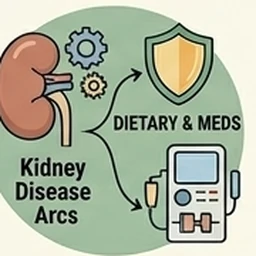
Kidney disease has two distinct caregiving arcs: the slow, mostly invisible chronic-kidney-disease (CKD) years where the work is dietary and medication management, and the much-more-demanding dialysis arc that begins when kidney function drops below ~15%. The decisions families don't see coming — transplant evaluation, dialysis modality, and when to stop — define the trajectory. Here's the orientation.
家族にとって何が変わるか
Chronic kidney disease (CKD) progresses across five stages over years or decades; most patients with early-stage CKD live a long time with relatively little disruption. Stage 4-5 is when caregiving intensifies: a low-potassium / low-phosphorus / low-sodium diet that affects almost everything the patient eats, a complicated medication regimen (phosphate binders, blood-pressure drugs, sometimes insulin), and the looming decision about renal replacement therapy. Once dialysis starts, the family's week reorganizes around 3-times-a-week 4-hour in-center sessions (or daily home hemo/peritoneal dialysis if that path was chosen). Fatigue on dialysis days is profound. The transplant evaluation is its own multi-month process. And the late-stage decisions — about whether to start dialysis, whether to continue, when to transition to comfort-focused kidney care — are some of the hardest in any chronic disease.
早めに整えておきたいこと
診断後の期間は、これから先の道のり全体が支えにする構造を、ご家族が最もよく整えられるタイミングです。先延ばしにすればするほど、ここに挙げた事柄のいくつかは難しくなっていきます。
- Connection to a multidisciplinary CKD clinic if your kidney function is below 30% (eGFR ~30). Outcomes are measurably better with multidisciplinary care (nephrologist + renal dietitian + nurse educator + social worker). Most academic medical centers have one.
- Education about ALL kidney-replacement options BEFORE dialysis becomes urgent — in-center hemo, home hemo, peritoneal dialysis (PD), preemptive transplant, conservative kidney management. The "default" of in-center hemo is rarely the best fit; the choice deserves a real conversation while there's time.
- Transplant evaluation referral. Wait-list time averages 3-7 years depending on region + blood type; preemptive transplant (before dialysis starts) has the best outcomes and requires getting on the list early.
- A relationship with a renal dietitian. The diet is unusual and counterintuitive (low potassium = avoid bananas, tomatoes, oranges; low phosphorus = avoid dairy, dark sodas, processed foods). Generic "healthy eating" advice can hurt.
- Vascular-access planning months before dialysis is needed. An AV fistula takes 2-3 months to mature; starting dialysis with a catheter has worse long-term outcomes.
- Legal documents: durable POA, healthcare POA, advance directive. Advanced kidney disease brings sudden hospitalizations and the kind of late-stage decisions (continue dialysis, withdraw dialysis, transition to hospice) the paperwork should be ready for.
もっともつらい瞬間
ご家族がもっともつらかったと語る瞬間は、誰も事前に教えてくれなかった瞬間であることがよくあります。これから起こりうることを知っていても、どの瞬間も楽になるわけではありません。それでも、その瞬間に名前を与えられること、そしてその瞬間が来たときに家族を再び結びつけてくれるワークスペースがあることは、確かに助けになります。
- The first dialysis session. The patient often feels worse immediately after (fatigue, low blood pressure, muscle cramps); the family is unprepared for the visible toll, and most caregivers describe the first month as harder than they expected.
- The choice between continued dialysis and stopping. Stopping dialysis is not giving up — it's choosing comfort when continued treatment isn't improving quality of life. Median survival after stopping is 7-10 days, well-managed by hospice. The conversation is hard; families consistently wish they had started it earlier.
- The transplant evaluation result. Being deemed not a candidate (age, cardiac disease, BMI, other comorbidities) closes a door the family had been hoping was open. Even when listed, the wait + the call that may come at any hour reshape the year.
- Cognitive changes on dialysis. Some patients develop "dialysis dementia" or cognitive impairment that worsens between sessions. Families often attribute this to aging rather than the kidney disease itself.
これに対応するプレイブック
Kintaria のプレイブックは、この介護の道のりで実際に出てくる具体的な場面のための、ステップ・バイ・ステップの手引きです。それぞれがあなたのワークスペース内で開き、あなたの回答に応じてパーソナライズされます。
- Foundation · One-time setupGet the legal paperwork in order.
- Hospital · 48-hour windowYour parent was just discharged from a hospital.
- Planning · First few weeksYou're ready to bring in a home health aide.
- Transition · HospiceYou think your parent may be approaching the end of life.
- Spouse · OngoingWhen you are the caregiver-spouse.
全国規模の団体と電話相談窓口
これらは、この分野で標準的な出発点とされている団体です。すべて無料で、すべて実在の担当者が対応する電話相談窓口です(介護者向けの AI 電話相談はまた別のカテゴリーで、ここでは特定の疾患の研修を受けた人を指します)。
- NKF Cares helpline · 1-855-653-2273
The largest patient + family kidney organization. NKF Cares is a peer-mentor program connecting newly-diagnosed patients and families with people who have been through it. Free educational resources, dietitian-reviewed nutrition guides, kidney walks, advocacy.
- Helpline · 1-866-300-2900
Direct financial assistance — health insurance premium grants for dialysis patients (one of the few sources of immigration-status-blind support), transplant medication assistance, emergency grants. Less of a community org and more of a help-with-bills org.
Patient-led advocacy + education. Strong on the kidney-patient experience of policy + insurance; the AAKP Center for Patient Education has condition-specific webinars and a thoughtful kidney-disease 101.
- Hopeline · 1-800-579-1970
Peer support specifically — the Hopeline is staffed by kidney patients (not clinicians). Distinct from NKF Cares in that it leans more emotional + experiential than informational.
For families considering home hemodialysis or peritoneal dialysis. Patient-led, very practical: equipment troubleshooting, training tips, the realities of doing dialysis in a spare bedroom. Under-promoted by in-center programs that profit from in-center treatment.
Authoritative US government plain-language overview. Free, comprehensive, available in English + Spanish.
Kintaria のワークスペースがどう役立つか
Kintaria は、この診断がこれから生み出す仕事のために設計された、穏やかで共有可能な家族のワークスペースです。お薬リストは 1 か所にまとまっており、週末に飛行機で帰ってくる 3 番目のきょうだいが「何が変わったか」を一から学び直さずに済みます。診察の予定は共有されていて、家族が予定を重ねたり、リウマチ科のフォローアップを見落としたりしにくくなります。アクティビティの記録は「誰が何をしたか」について正直で、主たる介護者がすべてを黙って抱え込まなくて済みます。そしてワークスペースはバイリンガルです — 患者さまはご自身が楽な言語で読み、ご家族は英語で読みます — 診断そのものですでに頭が回らない状況では、この点は多くの人が想像する以上に重要になります。
創設の最初の 500 ご家族には 1 年間の無料トライアルをご提供します。クレジットカードは不要です。
Kintaria が何であり、何でないかについての一文
Kintaria は臨床ツールではなく、医療上の意思決定の代わりになるものでもなく、kidney diseaseの医療チームの代わりになるものでもありません。このページの内容は、介護を調整するご家族のためのオリエンテーションです。個別の臨床判断は、患者さまの担当医師が行う必要があります。ワークスペース全体で示されるエスカレーションのサインは、その境界について正直に書かれています。
このページに出てくる介護用語
お読みになりながら意味を確認したくなりそうな言葉です。それぞれが独立したページで開き、わかりやすい言葉での意味と、介護の現場でどのように出てくるかを説明します。
- Hospice — A type of care for people with a life expectancy of about 6 months or less, focused entirely on comfort rather than cure.
- Power of attorney — A legal document where one person (the "principal") authorizes another person (the "agent" or "attorney-in-fact") to act on their behalf in financial matters.
- Healthcare proxy — A legal document naming a person to make medical decisions if the patient cannot.
- Advance directive — A written document specifying a patient's wishes for end-of-life medical care — typically covering CPR, mechanical ventilation, artificial nutrition, and other interventions when recovery is unlikely.
- eGFR — A calculated estimate of how well the kidneys are filtering, based on serum creatinine, age, and sex.
関連リンク: すべての疾患 · すべてのプレイブック · 介護者用語集 · 全国リソース一覧