Cuidando a un ser querido con serious mental illness
Caring for a family member with serious mental illness
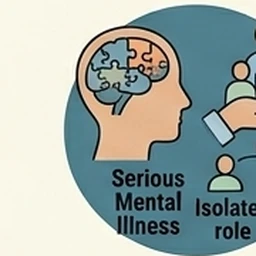
Serious mental illness — schizophrenia, bipolar I, severe major depression with psychotic features — is one of the most isolating caregiving roles in the US. The patient is often an adult child whose illness emerged in their late teens or twenties, and the family inherits decades of coordination work the medical system was never built to share. Here's the orientation.
Lo que cambia para la familia
Serious mental illness (SMI) reshapes a family along several axes the standard caregiver narrative doesn't cover. The patient is often a younger adult — schizophrenia typically emerges in the late teens or 20s, bipolar I in the 20s — meaning families face decades of caregiving rather than the late-life arc most caregiver resources assume. The medical system rarely sees the family as part of the team: HIPAA and the patient's autonomy rights mean the family is often informed only at hospitalization, sometimes not even then. The patient's relationship with treatment can be inconsistent (the "lack of insight" — anosognosia — that comes with some psychotic disorders is a clinical feature, not the patient being difficult). Housing, employment, benefits, the criminal-legal system, and substance use frequently intersect. And the stigma is real, both externally (housing discrimination, employment discrimination) and within families (the parents-of-an-adult-child-with-SMI cohort is one of the most isolated caregiver populations in the literature). NAMI — the National Alliance on Mental Illness — is the central family organization, and the single most useful first call.
Lo que conviene organizar temprano
La ventana después del diagnóstico es cuando la familia tiene más margen para establecer la estructura sobre la que se apoyará el resto del camino. Mientras más espere, más difícil se vuelve cada uno de estos pasos.
- A NAMI Family-to-Family course. 8 weeks, free, taught by trained family-member volunteers. Most attendees describe it as the most useful single thing they did in their caregiving arc. The Family Support Group (an ongoing version) is just as useful for the long term.
- Connection to an assertive community treatment (ACT) team if available in your area. ACT teams (multidisciplinary teams that work with SMI patients in the community) are the most evidence-based model for severe-and-persistent mental illness; under-utilized because they're hard to find. State mental-health authority can locate one.
- Documentation work while cooperation is possible: signed releases for the family to receive clinical information (HIPAA authorization), durable POA for healthcare, possibly a psychiatric advance directive that documents the patient's preferences for future treatment when they're well.
- A relationship with a psychiatrist who specializes in SMI (often a "first-episode psychosis" or "early-onset" specialist if the patient is younger). Care continuity matters more in SMI than almost any other condition; the wrong handoff can disrupt years of stability.
- Benefits + housing setup: SSI/SSDI application, Section 8 if relevant, Medicaid (often the only insurance that covers long-term outpatient psychiatric care), state mental-health-authority case-management enrollment. The benefits navigation is its own job.
- A crisis plan that's written down before crisis. The right phone numbers (988, the patient's case manager, the psychiatrist's on-call, local mobile crisis team, the family's designated decision-maker), the patient's current medications, prior hospitalizations, the things that have worked + the things that haven't. Save in everyone's phone.
Los momentos más difíciles
Los momentos que las familias describen como los más difíciles suelen ser aquellos sobre los que nadie las advirtió. Saber lo que probablemente viene no hace que ninguno sea fácil — pero tener un nombre para ellos, y un espacio de trabajo que vuelva a unir a la familia cuando ocurren, sí ayuda.
- A first psychotic break or first manic episode. The patient is often someone the family knew completely; the disease that emerges is unfamiliar. The hospitalization is short; the discharge often premature; the family is left to figure out what comes next with very little support.
- Medication non-adherence. Anosognosia (the clinical lack of insight into one's own illness) is common in schizophrenia and means the patient genuinely doesn't experience themselves as ill. Long-acting injectable medications can help; involuntary medication is a fraught legal process; family pressure rarely works long-term.
- A police or criminal-justice encounter. People with SMI are disproportionately likely to interact with police; outcomes range from a calm crisis intervention team encounter to a fatal one. Mobile crisis teams (in regions that have them) are dramatically safer than 911. Build the alternative numbers into the crisis plan.
- The long arc. Unlike most caregiving roles, SMI caregiving often continues for decades with episodic crises rather than a clear trajectory. Caregiver burnout is the rule. The structural answer is respite + support groups + therapy for the caregiver, all started early.
Planes que se relacionan con esto
Los planes de Kintaria son guías paso a paso para los momentos específicos que aparecen en este recorrido de cuidado. Cada uno se abre en su espacio de trabajo y se personaliza con sus respuestas.
- Adult child · Before the 18th birthdayYou need to set up the special-needs trust and guardianship.
- Adult child with disabilities · Future planningWhen you are the parent-caregiver and you need to plan for after you.
- Wellness · OngoingWhen you're burning out.
- Foundation · One-time setupGet the legal paperwork in order.
- Sibling · Inheriting the careYour parent was caring for your sibling — and now they can't.
Organizaciones nacionales y líneas de ayuda
Estas son las organizaciones que el sector considera los puntos de partida estándar. Todas son gratuitas y todas tienen líneas atendidas por personas reales (la línea telefónica de IA para cuidadores es otra categoría — aquí se trata de personas capacitadas en la condición específica).
- HelpLine · 1-800-950-6264 (text 62640) · Crisis: 988
The central family-side mental-health organization in the US. NAMI HelpLine answers calls from families. Family-to-Family course (8 weeks, free) is the single most-recommended resource. Local affiliates run support groups + advocacy.
- 988 · 24/7
For acute crisis. Free, confidential, doesn't auto-dispatch police. Trained counselors. Can connect to local mobile crisis teams where they exist (a meaningfully safer alternative to 911 for mental-health crises).
- 1-800-662-4357 · 24/7 · English + Spanish
Federal substance-abuse + mental-health services helpline. Free, confidential, doesn't require insurance. Useful when the SMI overlaps with substance use (which it often does).
Policy-focused organization specifically on access to SMI treatment. Strong resources on assisted outpatient treatment (AOT) laws, anosognosia, and the civil-commitment landscape state by state. Useful when the family is navigating involuntary-treatment questions.
Schizophrenia-specific patient + family advocacy. Online community, family-support resources, advocacy on policy that affects people with psychotic disorders.
- Helpline · 1-800-826-3632
For bipolar + severe-depression cohorts. Peer-led support groups across the country, education programs, wellness tools. The bipolar-specific community is the most engaged.
Authoritative US government plain-language overview. Free, comprehensive.
Cómo ayuda un espacio Kintaria
Kintaria es un espacio familiar compartido y tranquilo, diseñado para el trabajo que este diagnóstico está por generar. La lista de medicamentos vive en un solo lugar (para que el tercer hermano que vuela el fin de semana no tenga que volver a aprender qué cambió). El calendario de citas es compartido (para que la familia no duplique citas ni pierda el control de seguimiento de reumatología). El historial de actividad es honesto sobre quién hizo qué (para que el cuidador principal no cargue todo en silencio). Y el espacio es bilingüe — el paciente lee en su idioma preferido, la familia lee en inglés — lo cual importa más de lo que la gente espera cuando el diagnóstico mismo ya es desorientador.
Prueba gratuita de 1 año para las primeras 500 familias fundadoras. Sin tarjeta de crédito.
Una nota sobre lo que Kintaria es (y no es)
Kintaria no es una herramienta clínica, no es un sustituto de las decisiones médicas, no reemplaza al equipo de atención de serious mental illness. La orientación de esta página es para familias que coordinan el cuidado; las decisiones clínicas específicas las debe tomar el clínico del paciente. Los mensajes de escalada en todo el espacio son honestos sobre ese límite.
Términos de cuidado en esta página
Palabras que quizá quiera tener definidas mientras lee esto. Cada una abre su propia página con el significado en lenguaje sencillo y cómo aparece en el cuidado.
- Case manager — A nurse or social worker employed by the hospital whose job is to coordinate care across the system — most importantly, discharge planning.
- Power of attorney — A legal document where one person (the "principal") authorizes another person (the "agent" or "attorney-in-fact") to act on their behalf in financial matters.
- Advance directive — A written document specifying a patient's wishes for end-of-life medical care — typically covering CPR, mechanical ventilation, artificial nutrition, and other interventions when recovery is unlikely.
- HIPAA authorization — A signed form authorizing a healthcare provider to release the patient's information to a named family member or other party.
- Medicaid — Joint federal-state program covering health care for low-income people, including many people with disabilities and many older adults who have spent down their assets.
- Caregiver burnout — A state of physical, emotional, and mental exhaustion that develops over months or years of caregiving — characterized by chronic fatigue, irritability, isolation, anxiety, depression, sleep disturbance, and worsening physical health.
Ver también: todas las condiciones · todos los planes · glosario de cuidado · directorio nacional de recursos