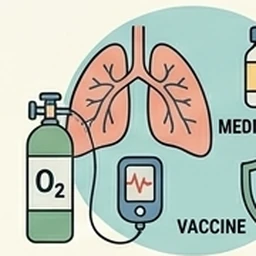
Cuidando a un ser querido con COPD
Caring for someone with COPD
COPD is a slow-progressing disease punctuated by sudden, frightening exacerbations. The work of caregiving sits between those two paces — steady daily management (medications, oxygen, energy budgeting, vaccine adherence) and the always-possible 2 AM call when breathing gets worse. The families who do this well prevent most of the hospitalizations. Here's the orientation.
Lo que cambia para la familia
Chronic obstructive pulmonary disease (COPD) — emphysema, chronic bronchitis, or both — reorganizes a family around energy and breath. Patients learn to choose between walking to the bathroom and eating dinner; between talking on the phone and getting dressed. The caregiver becomes the manager of an unusual budget: oxygen tank scheduling, inhaler technique, the pulmonary-rehab attendance that's measurably the single highest-leverage intervention. Exacerbations — viral infections, cold air, smoke exposure — drop lung function fast and often require hospitalization; the difference between a 2-day urgent-care visit and a 10-day ICU stay is often whether the family caught the early signs. Late-stage COPD brings decisions about non-invasive ventilation (BiPAP), oxygen at higher flows, and the conversation about goals of care that most pulmonologists are surprisingly good at having when invited.
Lo que conviene organizar temprano
La ventana después del diagnóstico es cuando la familia tiene más margen para establecer la estructura sobre la que se apoyará el resto del camino. Mientras más espere, más difícil se vuelve cada uno de estos pasos.
- Pulmonary rehab if eligible. This is the single most evidence-based intervention for quality of life in COPD and the most under-prescribed. 8-12 weeks of supervised exercise + education; results are dramatic. Ask if it wasn't offered.
- Smoking cessation — for the patient if still smoking, and for everyone in the household. Secondhand smoke meaningfully accelerates COPD progression. Free quit support at 1-800-QUIT-NOW.
- Annual flu shot + the pneumococcal series (PCV15 or PCV20 + PPSV23) + RSV vaccine for adults 60+ + updated COVID booster. Vaccine-preventable lung infections cause a disproportionate share of COPD hospitalizations.
- A written COPD action plan from the pulmonologist — green/yellow/red zones based on symptoms, with what to do at each. Most pulm teams give one; if yours hasn't, ask. Catching exacerbations early prevents most hospitalizations.
- Oxygen-equipment setup and a relationship with the home-oxygen company. Liquid vs concentrator vs portable tanks have very different daily ergonomics; the choice matters more than insurance reps acknowledge.
- A goals-of-care conversation while the patient is stable. Advanced COPD brings questions about intubation, ICU, and whether the patient wants comfort-focused care; talking about it before a crisis is far easier than during one.
Los momentos más difíciles
Los momentos que las familias describen como los más difíciles suelen ser aquellos sobre los que nadie las advirtió. Saber lo que probablemente viene no hace que ninguno sea fácil — pero tener un nombre para ellos, y un espacio de trabajo que vuelva a unir a la familia cuando ocurren, sí ayuda.
- The first exacerbation that lands them in the hospital. The patient is usually frightened (air hunger is one of the most distressing symptoms in medicine); the family is unprepared for how steep the recovery is. Post-hospitalization functional decline is a common pattern.
- The shift from "still active" to "needs oxygen 24/7." The day the cannula stays in around the house is one families describe as harder than the diagnosis itself — visible, identity-shifting.
- The exertion-vs-everything trade-off. Patients have to choose between physical effort and oxygen reserves on a daily basis; family members who don't understand this can interpret slowed-down behavior as depression rather than what it is.
- The end-of-life trajectory. COPD has a less-predictable end-stage than diseases like ALS or advanced cancer; the recurrent-exacerbation pattern can continue for years, making it hard to know when to consider hospice. Most pulmonologists wish families would ask about palliative care earlier.
Planes que se relacionan con esto
Los planes de Kintaria son guías paso a paso para los momentos específicos que aparecen en este recorrido de cuidado. Cada uno se abre en su espacio de trabajo y se personaliza con sus respuestas.
- Hospital · 48-hour windowYour parent was just discharged from a hospital.
- Foundation · One-time setupGet the legal paperwork in order.
- Spouse · OngoingWhen you are the caregiver-spouse.
- Parent · This is real nowYour parent is in the ER for the first time.
- Transition · HospiceYou think your parent may be approaching the end of life.
Organizaciones nacionales y líneas de ayuda
Estas son las organizaciones que el sector considera los puntos de partida estándar. Todas son gratuitas y todas tienen líneas atendidas por personas reales (la línea telefónica de IA para cuidadores es otra categoría — aquí se trata de personas capacitadas en la condición específica).
- C.O.P.D. Information Line · 1-866-316-2673
The patient + family organization specifically for COPD. Free education (the "COPD Pocket Consultant Guide" is the best plain-language primer in the field), peer-support groups (in-person + online), and the COPD360social community for patients + caregivers.
- Lung HelpLine · 1-800-586-4872
Free helpline staffed by registered nurses and respiratory therapists. "Better Breathers Club" support groups across the country, smoking-cessation programs, "Living with COPD" patient + family guides.
For patients + families who want to participate in research. Free to join; the registry has informed multiple FDA-approved therapies.
Find a certified pulmonary rehab program near you. Coverage details vary by Medicare/Medicaid + private insurance; the program intake walks you through them.
Authoritative US government plain-language overview. Free, comprehensive, available in English + Spanish.
Cómo ayuda un espacio Kintaria
Kintaria es un espacio familiar compartido y tranquilo, diseñado para el trabajo que este diagnóstico está por generar. La lista de medicamentos vive en un solo lugar (para que el tercer hermano que vuela el fin de semana no tenga que volver a aprender qué cambió). El calendario de citas es compartido (para que la familia no duplique citas ni pierda el control de seguimiento de reumatología). El historial de actividad es honesto sobre quién hizo qué (para que el cuidador principal no cargue todo en silencio). Y el espacio es bilingüe — el paciente lee en su idioma preferido, la familia lee en inglés — lo cual importa más de lo que la gente espera cuando el diagnóstico mismo ya es desorientador.
Prueba gratuita de 1 año para las primeras 500 familias fundadoras. Sin tarjeta de crédito.
Una nota sobre lo que Kintaria es (y no es)
Kintaria no es una herramienta clínica, no es un sustituto de las decisiones médicas, no reemplaza al equipo de atención de COPD. La orientación de esta página es para familias que coordinan el cuidado; las decisiones clínicas específicas las debe tomar el clínico del paciente. Los mensajes de escalada en todo el espacio son honestos sobre ese límite.
Términos de cuidado en esta página
Palabras que quizá quiera tener definidas mientras lee esto. Cada una abre su propia página con el significado en lenguaje sencillo y cómo aparece en el cuidado.
- Palliative care — Specialty care focused on quality of life and symptom relief for people with serious illness.
- Hospice — A type of care for people with a life expectancy of about 6 months or less, focused entirely on comfort rather than cure.
- Comfort care — A care approach focused entirely on symptom relief and dignity rather than disease treatment.
Ver también: todas las condiciones · todos los planes · glosario de cuidado · directorio nacional de recursos