Chăm sóc người thân mắc traumatic brain injury
Caring for someone with a traumatic brain injury
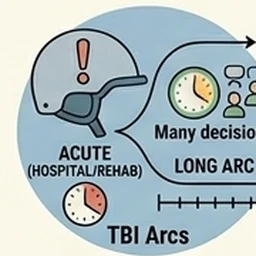
TBI is two very different caregiving stories — the acute hospital + rehab phase that compresses years of decision-making into weeks, and the long arc of recovery (or non-recovery) that can stretch over decades. The family that started in an ICU waiting room becomes, often unexpectedly, the long-term care team. Here's the orientation.
Điều gì thay đổi đối với gia đình
Traumatic brain injury reshapes a family along two axes that don't move at the same pace. The acute phase — ICU, then rehab, then home or to a long-term-care facility — happens in days and weeks. Decisions about continuing aggressive treatment, do-not-resuscitate orders, surgery, and tracheostomy + feeding tube placement often arrive before the family understands the prognosis. Once the patient is stable, the long arc begins: cognitive recovery that mostly happens in the first 6-12 months but can continue for years; behavioral and personality changes that families consistently rank as harder than the physical changes; the "you look fine" problem (invisible TBI is real and underestimated by clinicians and friends); and the financial weight of an injury that often hits people at peak earning age. Mild TBI / concussion has its own arc — most people recover in weeks, but a meaningful share develop post-concussion syndrome that lasts months or longer.
Những điều nên sắp xếp sớm
Khoảng thời gian ngay sau khi có chẩn đoán là lúc quý vị có nhiều dư địa nhất để dựng nên cấu trúc mà cả chặng đường phía sau sẽ tựa vào. Quý vị càng trì hoãn, một số việc dưới đây càng trở nên khó khăn hơn.
- Connection to the Brain Injury Association of your state (find via BIAA). State affiliates run support groups, equipment programs, advocacy, and case-management-style help. The single best first step.
- Documentation of pre-injury baseline. Photos, videos, employment records, work products — anything that shows who the patient was before. Used in rehab + long-term-care + sometimes legal contexts.
- A clinical relationship with a physical-medicine-and-rehabilitation (PM&R) physician (a "physiatrist"), not just a neurologist. PM&R doctors specialize in functional recovery and lead most TBI rehab teams.
- A neuropsychological evaluation 3-6 months post-injury. Documents cognitive strengths + weaknesses, drives the rehab plan, and is often required for school + work accommodations.
- Legal + insurance work: power of attorney (financial + healthcare), Social Security Disability application if work is no longer possible, claims through auto / workers' comp / other accident insurance, special-needs trust consideration if recovery is limited.
- A long-term care plan that doesn't assume the spouse can do all of it indefinitely. Caregiver burnout in TBI is among the highest in any condition; respite + paid care from the beginning is structural, not optional.
Những khoảnh khắc khó khăn nhất
Những khoảnh khắc mà các gia đình mô tả là khó khăn nhất thường là những khoảnh khắc không ai báo trước cho họ. Biết được điều gì có khả năng xảy ra không làm cho bất kỳ khoảnh khắc nào trong đó dễ chịu hơn — nhưng có một cái tên cho chúng, và có một không gian làm việc giúp đưa gia đình trở lại bên nhau khi chúng xảy ra, thì sẽ đỡ hơn nhiều.
- The acute-phase decisions when prognosis is unclear. Continuing intensive treatment vs. comfort care, surgery vs. waiting, tracheostomy + feeding tube placement — most families have minutes to hours to decide things the patient never discussed with them.
- The behavioral and personality changes. Disinhibition, emotional lability, anger, apathy, perseveration — these are the part of TBI that families consistently describe as hardest. They're not the patient choosing to be different; they're the injury. Education + family therapy help.
- The "invisible TBI" problem. Many TBI survivors look fine and pass cursory cognitive screens but can't hold the job they used to do, can't parent the way they used to, can't manage household finances. Outsiders dismiss it; the family lives with it.
- The plateau or decline. Recovery is not linear, and the rehab gains of the first year don't continue indefinitely. The family's relationship with hope shifts; some find peace, some get stuck.
Các hướng dẫn liên quan đến tình trạng này
Các hướng dẫn của Kintaria là từng bước cho những khoảnh khắc cụ thể xuất hiện trong hành trình chăm sóc này. Mỗi hướng dẫn sẽ mở ra trong không gian làm việc của quý vị và được cá nhân hoá theo câu trả lời của quý vị.
- Spouse · 90-day windowYour spouse just had a stroke.
- Hospital · 48-hour windowYour parent was just discharged from a hospital.
- Foundation · One-time setupGet the legal paperwork in order.
- Spouse · OngoingWhen you are the caregiver-spouse.
- Planning · First few weeksYou're ready to bring in a home health aide.
Các tổ chức quốc gia và đường dây hỗ trợ
Đây là những tổ chức được giới chuyên môn xem là điểm khởi đầu chuẩn mực. Tất cả đều miễn phí, và tất cả đều có người trực tổng đài (đường dây trợ giúp người chăm sóc do AI vận hành là một thể loại khác — ở đây là những người đã được đào tạo cụ thể về tình trạng này).
- National Brain Injury Information Center · 1-800-444-6443
The federal-level TBI organization. NBIIC helpline answers calls from patients + families. State affiliates (linked from BIAA site) run support groups, equipment programs, and case management. Strongest patient + family resource in the category.
For service-member + veteran TBI. Active-duty + post-discharge TBI is a meaningful share of the overall caregiver population; the DOD/VA infrastructure for it is substantial but under-known by families.
Clinician-facing primary, but the patient + family resources are useful. Strong on the science of TBI + the evidence-based treatment guidelines clinicians use; useful when families want to understand what the rehab team is doing.
Founded by snowboarder Kevin Pearce after his TBI. Yoga + meditation programs (in-person + virtual), retreats, community for TBI survivors + families. Different and more wellness-focused than the clinical orgs above.
- CLF Helpline · 866-385-9255
For concussion + chronic traumatic encephalopathy (CTE) — relevant for athletes + service members + post-multiple-concussion patients. CLF helpline, brain bank for research, family support.
Authoritative US government plain-language overview. Free, comprehensive.
Không gian làm việc Kintaria giúp được gì
Kintaria là một không gian gia đình chung, dịu dàng, được dựng lên cho khối công việc mà chẩn đoán này sắp tạo ra. Danh sách thuốc nằm ở một chỗ (để người em thứ ba bay về vào cuối tuần không phải học lại từ đầu xem có gì thay đổi). Lịch khám được chia sẻ (để gia đình không đặt trùng lịch hoặc bỏ sót buổi tái khám với chuyên khoa thấp khớp). Dòng hoạt động nói thật về việc ai đã làm gì (để người chăm sóc chính không lặng lẽ gánh hết). Và không gian này song ngữ — người bệnh đọc bằng ngôn ngữ họ thấy dễ chịu hơn, còn gia đình đọc bằng tiếng Anh — điều mà mọi người thường đánh giá thấp tầm quan trọng cho đến khi chẩn đoán đã khiến mọi thứ rối loạn.
Dùng thử miễn phí 1 năm dành cho 500 gia đình sáng lập đầu tiên. Không cần thẻ tín dụng.
Một lời nhắc về Kintaria là gì (và không phải là gì)
Kintaria không phải là công cụ lâm sàng, không thay thế cho quyết định y khoa, và không thay thế cho đội ngũ chăm sóc traumatic brain injury. Nội dung trên trang này dành cho các gia đình đang phối hợp việc chăm sóc; những quyết định lâm sàng cụ thể cần được bác sĩ của người bệnh đưa ra. Các dấu hiệu cần báo cáo khẩn cấp xuất hiện xuyên suốt không gian làm việc đều trung thực về ranh giới đó.
Các thuật ngữ chăm sóc xuất hiện trên trang này
Những từ quý vị có thể muốn tra nghĩa trong khi đọc. Mỗi từ sẽ mở ra trang riêng với phần định nghĩa bằng ngôn ngữ dễ hiểu và cách từ đó xuất hiện trong việc chăm sóc.
- Power of attorney — A legal document where one person (the "principal") authorizes another person (the "agent" or "attorney-in-fact") to act on their behalf in financial matters.
- Caregiver burnout — A state of physical, emotional, and mental exhaustion that develops over months or years of caregiving — characterized by chronic fatigue, irritability, isolation, anxiety, depression, sleep disturbance, and worsening physical health.
- Comfort care — A care approach focused entirely on symptom relief and dignity rather than disease treatment.
Xem thêm: tất cả các tình trạng · tất cả các hướng dẫn · từ điển dành cho người chăm sóc · danh bạ tài nguyên toàn quốc