Pag-aalaga sa mahal sa buhay na may kidney disease
Caring for someone with kidney disease
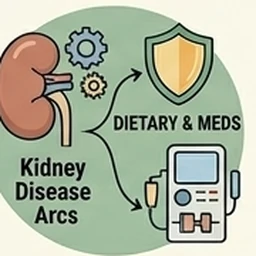
Kidney disease has two distinct caregiving arcs: the slow, mostly invisible chronic-kidney-disease (CKD) years where the work is dietary and medication management, and the much-more-demanding dialysis arc that begins when kidney function drops below ~15%. The decisions families don't see coming — transplant evaluation, dialysis modality, and when to stop — define the trajectory. Here's the orientation.
Ano ang nagbabago para sa pamilya
Chronic kidney disease (CKD) progresses across five stages over years or decades; most patients with early-stage CKD live a long time with relatively little disruption. Stage 4-5 is when caregiving intensifies: a low-potassium / low-phosphorus / low-sodium diet that affects almost everything the patient eats, a complicated medication regimen (phosphate binders, blood-pressure drugs, sometimes insulin), and the looming decision about renal replacement therapy. Once dialysis starts, the family's week reorganizes around 3-times-a-week 4-hour in-center sessions (or daily home hemo/peritoneal dialysis if that path was chosen). Fatigue on dialysis days is profound. The transplant evaluation is its own multi-month process. And the late-stage decisions — about whether to start dialysis, whether to continue, when to transition to comfort-focused kidney care — are some of the hardest in any chronic disease.
Ano ang dapat ihanda nang maaga
Ang panahon pagkatapos ng diagnosis po ang yugto na pinakamaraming puwedeng gawin ng pamilya para itayo ang istrukturang sasandalan ng natitirang bahagi ng paglalakbay na ito. Habang inaantala po ninyo, lalong nagiging mahirap ang ilan sa mga bagay na ito.
- Connection to a multidisciplinary CKD clinic if your kidney function is below 30% (eGFR ~30). Outcomes are measurably better with multidisciplinary care (nephrologist + renal dietitian + nurse educator + social worker). Most academic medical centers have one.
- Education about ALL kidney-replacement options BEFORE dialysis becomes urgent — in-center hemo, home hemo, peritoneal dialysis (PD), preemptive transplant, conservative kidney management. The "default" of in-center hemo is rarely the best fit; the choice deserves a real conversation while there's time.
- Transplant evaluation referral. Wait-list time averages 3-7 years depending on region + blood type; preemptive transplant (before dialysis starts) has the best outcomes and requires getting on the list early.
- A relationship with a renal dietitian. The diet is unusual and counterintuitive (low potassium = avoid bananas, tomatoes, oranges; low phosphorus = avoid dairy, dark sodas, processed foods). Generic "healthy eating" advice can hurt.
- Vascular-access planning months before dialysis is needed. An AV fistula takes 2-3 months to mature; starting dialysis with a catheter has worse long-term outcomes.
- Legal documents: durable POA, healthcare POA, advance directive. Advanced kidney disease brings sudden hospitalizations and the kind of late-stage decisions (continue dialysis, withdraw dialysis, transition to hospice) the paperwork should be ready for.
Ang pinakamahihirap na sandali
Ang mga sandali pong inilalarawan ng mga pamilya bilang pinakamahirap ay madalas na yaong walang nagsabi nang maaga sa kanila. Hindi po nagiging madali ang anuman sa mga ito dahil lang alam na ninyo na malamang dumating ang mga ito — pero ang pagkakaroon po ng pangalan para sa mga ito, at ng isang workspace na nagbubuklod muli sa pamilya kapag dumating ang mga ito, ay talagang nakatutulong.
- The first dialysis session. The patient often feels worse immediately after (fatigue, low blood pressure, muscle cramps); the family is unprepared for the visible toll, and most caregivers describe the first month as harder than they expected.
- The choice between continued dialysis and stopping. Stopping dialysis is not giving up — it's choosing comfort when continued treatment isn't improving quality of life. Median survival after stopping is 7-10 days, well-managed by hospice. The conversation is hard; families consistently wish they had started it earlier.
- The transplant evaluation result. Being deemed not a candidate (age, cardiac disease, BMI, other comorbidities) closes a door the family had been hoping was open. Even when listed, the wait + the call that may come at any hour reshape the year.
- Cognitive changes on dialysis. Some patients develop "dialysis dementia" or cognitive impairment that worsens between sessions. Families often attribute this to aging rather than the kidney disease itself.
Mga playbook na kaugnay nito
Ang mga playbook po ng Kintaria ay hakbang-hakbang na gabay para sa mga partikular na sandali na lumalabas sa daloy ng pag-aalaga na ito. Bawat isa po ay bubukas sa loob ng inyong workspace at iaayon sa mga sagot ninyo.
- Foundation · One-time setupGet the legal paperwork in order.
- Hospital · 48-hour windowYour parent was just discharged from a hospital.
- Planning · First few weeksYou're ready to bring in a home health aide.
- Transition · HospiceYou think your parent may be approaching the end of life.
- Spouse · OngoingWhen you are the caregiver-spouse.
Mga pambansang organisasyon at helpline
Ito po ang mga organisasyong itinuturing na pamantayang panimulang punto sa larangan. Lahat po ay libre, at lahat ay tunay na helpline na sinasagot ng tao (ang AI-on-the-phone na caregiver line po ay ibang kategorya — dito po ay tao na sinanay sa partikular na kondisyong ito).
- NKF Cares helpline · 1-855-653-2273
The largest patient + family kidney organization. NKF Cares is a peer-mentor program connecting newly-diagnosed patients and families with people who have been through it. Free educational resources, dietitian-reviewed nutrition guides, kidney walks, advocacy.
- Helpline · 1-866-300-2900
Direct financial assistance — health insurance premium grants for dialysis patients (one of the few sources of immigration-status-blind support), transplant medication assistance, emergency grants. Less of a community org and more of a help-with-bills org.
Patient-led advocacy + education. Strong on the kidney-patient experience of policy + insurance; the AAKP Center for Patient Education has condition-specific webinars and a thoughtful kidney-disease 101.
- Hopeline · 1-800-579-1970
Peer support specifically — the Hopeline is staffed by kidney patients (not clinicians). Distinct from NKF Cares in that it leans more emotional + experiential than informational.
For families considering home hemodialysis or peritoneal dialysis. Patient-led, very practical: equipment troubleshooting, training tips, the realities of doing dialysis in a spare bedroom. Under-promoted by in-center programs that profit from in-center treatment.
Authoritative US government plain-language overview. Free, comprehensive, available in English + Spanish.
Paano tumutulong ang isang Kintaria workspace
Ang Kintaria po ay isang kalmado at magkasamang workspace ng pamilya na ginawa para sa trabahong sisimulang likhain ng diagnosis na ito. Ang listahan ng gamot ay nasa iisang lugar (para hindi na po kailangang muling pag-aralan ng pangatlong kapatid na lilipad pauwi sa katapusan ng linggo kung ano ang nagbago). Ang kalendaryo ng mga appointment ay magkasama (para hindi po magdoble ang booking ng pamilya o makalimutan ang follow-up sa rheumatology). Ang activity feed ay tapat tungkol sa kung sino ang gumawa ng ano (para hindi po dahan-dahang nagdadala ng lahat ang pangunahing tagapag-alaga). At ang workspace ay bilingual po — ang pasyente ay nakababasa sa wikang mas komportable para sa kanya, ang pamilya ay nakababasa sa Ingles — at ito po ay mas mahalaga kaysa sa inaasahan ng karamihan kapag ang diagnosis mismo ay nakapagpapalito na.
Libreng 1-taong subok para sa unang 500 founding na pamilya. Walang kailangang credit card.
Isang paalala kung ano ang Kintaria (at kung ano ang hindi)
Hindi po klinikal na kasangkapan ang Kintaria, hindi po kapalit ng medikal na desisyon, at hindi po kapalit ng care team para sa kidney disease. Ang nilalaman po sa pahinang ito ay para sa mga pamilyang nag-uugnay ng pangangalaga; ang mga tiyak na klinikal na desisyon ay kailangang gawin ng doktor ng pasyente. Ang mga senyales ng pag-escalate sa buong workspace ay tapat tungkol sa hangganang iyon.
Mga termino sa pangangalaga na lumalabas sa pahinang ito
Mga salitang baka po gusto ninyong malaman ang kahulugan habang binabasa ito. Bawat isa po ay bubukas sa sariling pahina na may simpleng paliwanag ng kahulugan at kung paano ito lumalabas sa pangangalaga.
- Hospice — A type of care for people with a life expectancy of about 6 months or less, focused entirely on comfort rather than cure.
- Power of attorney — A legal document where one person (the "principal") authorizes another person (the "agent" or "attorney-in-fact") to act on their behalf in financial matters.
- Healthcare proxy — A legal document naming a person to make medical decisions if the patient cannot.
- Advance directive — A written document specifying a patient's wishes for end-of-life medical care — typically covering CPR, mechanical ventilation, artificial nutrition, and other interventions when recovery is unlikely.
- eGFR — A calculated estimate of how well the kidneys are filtering, based on serum creatinine, age, and sex.
Tingnan din: lahat ng kondisyon · lahat ng playbook · talasalitaan para sa tagapag-alaga · pambansang direktoryo ng mapagkukunan