Pag-aalaga sa mahal sa buhay na may cirrhosis
Caring for someone with cirrhosis
Cirrhosis is the late stage of liver disease, and it changes a family's life in ways most aren't prepared for. The medical management is unusual — dietary restrictions that fight muscle wasting, medications that prevent confusion episodes, the constant watch for variceal bleeding. The transplant evaluation is its own gauntlet. Here's the orientation.
Ano ang nagbabago para sa pamilya
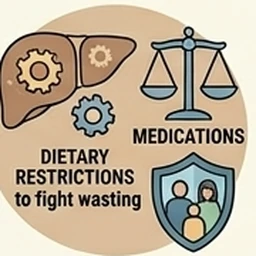
Cirrhosis (advanced scarring of the liver from chronic disease — alcohol, hepatitis, fatty liver, autoimmune) is a chronic-disease management problem with episodic crises. The day-to-day work centers on three patterns: a high-protein but low-sodium diet (the opposite of what most chronic diseases call for; cirrhosis patients often suffer muscle wasting that protein restriction worsens), the medication regimen (lactulose + rifaximin to prevent hepatic encephalopathy, diuretics for ascites, beta-blockers for varices, multiple supplements), and the constant readiness for an exacerbation. The exacerbations are real and frightening: hepatic encephalopathy (confusion that can come on over hours, often mistaken for dementia or stroke), variceal bleeding (vomiting blood — medical emergency), spontaneous bacterial peritonitis. The transplant evaluation is a multi-month process most families don't fully understand; the MELD score that determines wait-list priority changes weekly. And the alcohol-related-cirrhosis subset adds complex family dynamics — sobriety is required for most transplant programs, often after years of relapse + recovery.
Ano ang dapat ihanda nang maaga
Ang panahon pagkatapos ng diagnosis po ang yugto na pinakamaraming puwedeng gawin ng pamilya para itayo ang istrukturang sasandalan ng natitirang bahagi ng paglalakbay na ito. Habang inaantala po ninyo, lalong nagiging mahirap ang ilan sa mga bagay na ito.
- A hepatology referral (not just GI) if the patient isn't already with one. Outcomes are measurably better with hepatologist care for cirrhosis; many academic medical centers have a dedicated cirrhosis or liver clinic.
- A transplant evaluation referral early. Wait times average 1-3 years depending on region + blood type + MELD score; preemptive listing (before complications) widens the patient's options. The evaluation itself is multi-month + intensive.
- A renal dietitian relationship (yes, the kidney specialist — cirrhosis nutrition is closer to renal nutrition than general nutrition). Generic "low-sodium" or "healthy" diet advice can worsen cirrhosis-specific issues. Most hepatology programs have one on the team.
- A clear understanding of the medication regimen — especially lactulose dosing, which the patient titrates themselves based on bowel movements (the inverse of how most medications work). Confusion about lactulose dosing is a leading cause of preventable hepatic encephalopathy hospitalizations.
- A written action plan for hepatic encephalopathy. Subtle confusion is often the first sign; families who recognize it and adjust lactulose at home prevent most hospitalizations. Most hepatology teams give one; if yours hasn't, ask.
- Legal documents while cognition is intact: durable POA, healthcare POA, advance directive. Hepatic encephalopathy can intermittently impair capacity for years before it permanently does; getting the paperwork done early matters.
Ang pinakamahihirap na sandali
Ang mga sandali pong inilalarawan ng mga pamilya bilang pinakamahirap ay madalas na yaong walang nagsabi nang maaga sa kanila. Hindi po nagiging madali ang anuman sa mga ito dahil lang alam na ninyo na malamang dumating ang mga ito — pero ang pagkakaroon po ng pangalan para sa mga ito, at ng isang workspace na nagbubuklod muli sa pamilya kapag dumating ang mga ito, ay talagang nakatutulong.
- The first hepatic encephalopathy episode. The patient who was lucid an hour ago is suddenly confused, agitated, sometimes hallucinating. The family's ability to recognize and respond (extra lactulose, hospital if severe) determines whether it stays a kitchen incident or becomes a 5-day admission.
- A variceal bleed. Vomiting blood is one of the most frightening symptoms in medicine. Emergency endoscopy with banding can stop it; the immediate threat is well-managed in tertiary centers; the recurrence risk shapes the next year.
- The transplant decision — listed vs. not, accepting vs. declining an organ offer at 3 AM. For alcohol-related cirrhosis, the sobriety question adds a layer most families weren't expecting: most programs require 6 months of documented sobriety, some require more.
- The conversation about stopping aggressive treatment. End-stage liver disease has clear inflection points; comfort-focused care is increasingly accepted in hepatology but rarely offered without the family asking. Palliative care consults early are widely recommended and widely under-utilized.
Mga playbook na kaugnay nito
Ang mga playbook po ng Kintaria ay hakbang-hakbang na gabay para sa mga partikular na sandali na lumalabas sa daloy ng pag-aalaga na ito. Bawat isa po ay bubukas sa loob ng inyong workspace at iaayon sa mga sagot ninyo.
- Foundation · One-time setupGet the legal paperwork in order.
- Hospital · 48-hour windowYour parent was just discharged from a hospital.
- Spouse · OngoingWhen you are the caregiver-spouse.
- Transition · HospiceYou think your parent may be approaching the end of life.
- Parent · This is real nowYour parent is in the ER for the first time.
Mga pambansang organisasyon at helpline
Ito po ang mga organisasyong itinuturing na pamantayang panimulang punto sa larangan. Lahat po ay libre, at lahat ay tunay na helpline na sinasagot ng tao (ang AI-on-the-phone na caregiver line po ay ibang kategorya — dito po ay tao na sinanay sa partikular na kondisyong ito).
- Helpline · 1-800-465-4837
The largest patient + family liver-disease organization. Free helpline, support groups (in-person + online), patient education on cirrhosis specifically, advocacy on access to transplant + new therapies.
International patient-advocacy organization. Strong on the policy + research side, useful for families navigating insurance coverage decisions or pursuing access to emerging therapies. Patient-and-family newsletters.
- 1-800-489-3863
Helps patients and families fundraise for transplant-related costs (medications, lodging during evaluation, post-transplant care). Most transplant centers refer families to NFT for the financial side.
For viral-hepatitis-related cirrhosis specifically. The Hep B Foundation's patient + family resources are the best in the category; hepatitis-C-related cirrhosis remains common despite cure rates because patients diagnosed before treatment availability often present with advanced disease.
Clinician-society resources translated for patients. Strong cirrhosis-specific guides; useful when the family wants to understand what the hepatology team is doing + why.
Authoritative US government plain-language overview. Free, comprehensive, available in English + Spanish.
Paano tumutulong ang isang Kintaria workspace
Ang Kintaria po ay isang kalmado at magkasamang workspace ng pamilya na ginawa para sa trabahong sisimulang likhain ng diagnosis na ito. Ang listahan ng gamot ay nasa iisang lugar (para hindi na po kailangang muling pag-aralan ng pangatlong kapatid na lilipad pauwi sa katapusan ng linggo kung ano ang nagbago). Ang kalendaryo ng mga appointment ay magkasama (para hindi po magdoble ang booking ng pamilya o makalimutan ang follow-up sa rheumatology). Ang activity feed ay tapat tungkol sa kung sino ang gumawa ng ano (para hindi po dahan-dahang nagdadala ng lahat ang pangunahing tagapag-alaga). At ang workspace ay bilingual po — ang pasyente ay nakababasa sa wikang mas komportable para sa kanya, ang pamilya ay nakababasa sa Ingles — at ito po ay mas mahalaga kaysa sa inaasahan ng karamihan kapag ang diagnosis mismo ay nakapagpapalito na.
Libreng 1-taong subok para sa unang 500 founding na pamilya. Walang kailangang credit card.
Isang paalala kung ano ang Kintaria (at kung ano ang hindi)
Hindi po klinikal na kasangkapan ang Kintaria, hindi po kapalit ng medikal na desisyon, at hindi po kapalit ng care team para sa cirrhosis. Ang nilalaman po sa pahinang ito ay para sa mga pamilyang nag-uugnay ng pangangalaga; ang mga tiyak na klinikal na desisyon ay kailangang gawin ng doktor ng pasyente. Ang mga senyales ng pag-escalate sa buong workspace ay tapat tungkol sa hangganang iyon.
Mga termino sa pangangalaga na lumalabas sa pahinang ito
Mga salitang baka po gusto ninyong malaman ang kahulugan habang binabasa ito. Bawat isa po ay bubukas sa sariling pahina na may simpleng paliwanag ng kahulugan at kung paano ito lumalabas sa pangangalaga.
- Palliative care — Specialty care focused on quality of life and symptom relief for people with serious illness.
- Power of attorney — A legal document where one person (the "principal") authorizes another person (the "agent" or "attorney-in-fact") to act on their behalf in financial matters.
- Healthcare proxy — A legal document naming a person to make medical decisions if the patient cannot.
- Advance directive — A written document specifying a patient's wishes for end-of-life medical care — typically covering CPR, mechanical ventilation, artificial nutrition, and other interventions when recovery is unlikely.
- Comfort care — A care approach focused entirely on symptom relief and dignity rather than disease treatment.
Tingnan din: lahat ng kondisyon · lahat ng playbook · talasalitaan para sa tagapag-alaga · pambansang direktoryo ng mapagkukunan