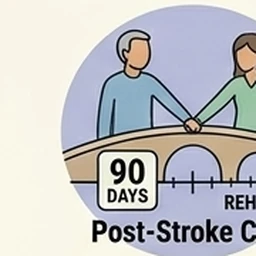
照护患有stroke的亲人
Caring for someone after a stroke
A stroke compresses years of caregiving change into ninety days. The patient who came home from the hospital is partly the person you knew and partly someone whose abilities will take weeks or months to map out. The rehab path that gets started in the first 90 days shapes the next decade. Here's what to set up while it matters most.
家庭会发生什么变化
Stroke is uneven in a different way than dementia is. Specific abilities are gone or impaired (speech, swallowing, the use of one side, the ability to read or write); other things are intact, sometimes startlingly so. The first 90 days are the most consequential — most recovery happens then, and the rehab decisions made in that window largely determine the long-term trajectory. The marriage or family relationship reorganizes around new tasks (the spouse who suddenly handles the bills, the daughter who manages the rehab schedule), and the patient is often dealing with their own grief at the same time. Depression after stroke is common, treatable, and under-screened.
需要尽早安排的事情
诊断之后的窗口期,是您的家庭最有余地去搭建后续整个旅程将依靠的结构的时刻。您拖得越久,其中一些事情就越难处理。
- A clear plan for the rehab path: acute inpatient rehab vs. subacute (skilled nursing facility) vs. home health PT/OT/SLP. The choice depends on the patient's tolerance for therapy hours; the discharge planner has options but the family has to choose deliberately.
- FMLA paperwork for the working spouse / adult child who needs leave. Don't wait — FMLA is paperwork-heavy and benefits are easier to access when started early.
- Power-of-attorney activation if the stroke affected speech or capacity. Many couples have these in place but never activated them; the bank doesn't honor a POA unless you formally present it.
- Medication reconciliation across the new neurology / cardiology / PT team. Stroke patients leave the hospital with new anticoagulants + blood-pressure regimens; the existing pharmacy probably needs the updated list.
- Home modifications insurance won't cover that you need anyway: grab bars, a raised toilet seat, a shower chair, removing throw rugs, securing the path from bedroom to bathroom.
- A conversation with the kids — including adult children — about what changed and what didn't. Stroke is invisible until you see it; visible changes are easier for kids to integrate than the cognitive ones that show up subtly.
最艰难的时刻
家庭描述为最艰难的时刻,往往是没有人提前提醒过他们的那些时刻。知道接下来可能发生什么,并不会让任何一刻变得容易——但能给这些时刻一个名字,并拥有一个在它们发生时能让家人重新聚拢起来的工作空间,会有帮助。
- The first time a familiar task is hard for the patient and they realize it. Reading the newspaper, signing a check, using the remote. The grief of those moments lives with the patient for months.
- The transition from inpatient rehab to home. The discharge feels like progress, but home is harder than the rehab unit — no 24/7 staff, no immediate equipment, fewer cues.
- Post-stroke depression at week 4-8. Hits most stroke patients to some degree, often unrecognized because the family attributes it to the stroke itself. PCP screening + treatment changes the recovery arc.
- The decision about driving. Stroke recovery often gates the return to driving; the conversation about when (and whether) is one families avoid until insurance forces it.
与此相关的指南
Kintaria 的指南是针对这条照护路径上具体时刻的分步说明。每一份都会在您的工作空间中打开,并根据您的回答进行个性化调整。
- Spouse · 90-day windowYour spouse just had a stroke.
- Hospital · 48-hour windowYour parent was just discharged from a hospital.
- Spouse · OngoingWhen you are the caregiver-spouse.
- Foundation · One-time setupGet the legal paperwork in order.
- Parent · 72 hours + 30 daysYour parent is recovering from a surgery.
全国性组织与求助热线
这些是业内公认的标准起点。全部免费,并且都是真人接听的求助热线(针对照护者的 AI 电话热线属于另一类——这里指的是接受过该具体疾病培训的人员)。
- Stroke Family Warmline · 1-888-478-7653
The Stroke Family Warmline connects caregivers with trained stroke specialists. Support groups (in-person + online). "Care for the Caregiver" practical guide.
For stroke survivors with aphasia (loss or impairment of language). Communication strategies, support groups, family education.
- National Brain Injury Information Center · 1-800-444-6443
For families navigating cognitive impacts of stroke or other brain injuries. State chapters, support groups, family resources.
Federal stroke prevention + recovery resources. Plain-language warning signs (FAST), recovery guides, signs of a second stroke.
Kintaria 工作空间如何提供帮助
Kintaria 是一个为这次诊断即将带来的工作而设计的、平静的、共享的家庭工作空间。用药清单集中在一个地方(这样周末飞回来的第三个兄弟姐妹就不必重新弄清楚有什么变化)。就诊日历是共享的(这样家人就不会重复预约或漏掉风湿科的复诊)。活动记录如实记录谁做了什么(这样主要照护者就不会默默承担一切)。并且工作空间是双语的——患者用自己更习惯的语言阅读,家人用英语阅读——当诊断本身已经让人手足无措时,这一点比人们以为的更重要。
前 500 个创始家庭可享 1 年免费试用。无需信用卡。
关于 Kintaria 是什么(以及不是什么)的说明
Kintaria 不是临床工具,不能替代医学决定,也不能取代stroke的照护团队。本页的内容是面向协调照护工作的家庭的导览;具体的临床决定需要由患者的医生作出。整个工作空间中的升级提示对这一界线是诚实的。
本页中的照护术语
您在阅读时可能希望先了解定义的词。每一个都会打开一个独立页面,提供平实的含义说明以及在照护中如何出现。
- Case manager — A nurse or social worker employed by the hospital whose job is to coordinate care across the system — most importantly, discharge planning.
- Skilled nursing facility — A facility providing 24-hour skilled nursing care — primarily for short-term rehabilitation after hospitalization, but also for long-term residence.
- Home health — Skilled medical care delivered in the home by nurses, physical therapists, occupational therapists, or speech therapists — typically following hospitalization or during the management of a serious condition.