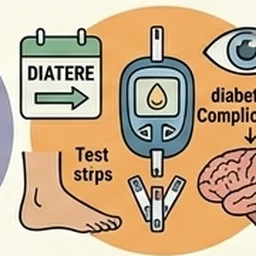
照护患有diabetes的亲人
Caring for an older adult with diabetes
Diabetes in an older adult is two stories at once: the medical management of blood sugar, and the long-tail of complications — vision, kidney function, foot care, the diabetes-dementia connection — that gradually reshape the patient's life. The work for the family is less about a single moment and more about preventing the next problem. Here's the orientation.
家庭会发生什么变化
Type 2 diabetes (the most common form in older adults) is a chronic-disease management problem with consequences that compound over years. The day-to-day work — blood-sugar monitoring, medication adherence, food choices, hypoglycemia recognition — sits with the patient and a family caregiver who often quietly absorbs it. Several big patterns reshape family life: hypoglycemia (low blood sugar) episodes that come on fast, especially with insulin or sulfonylureas; the diabetes-dementia connection (poorly-controlled diabetes meaningfully raises dementia risk + makes existing cognitive symptoms worse); the diabetic complications — retinopathy, neuropathy, kidney disease, peripheral artery disease, foot ulcers that become infections that become amputations — that progress more slowly than a heart attack but are no less consequential; and the medication burden, often 5-10 drugs, that requires real coordination. The good news: most diabetic complications are preventable or delayable with steady management. The harder news: "steady management" is harder than it sounds.
需要尽早安排的事情
诊断之后的窗口期,是您的家庭最有余地去搭建后续整个旅程将依靠的结构的时刻。您拖得越久,其中一些事情就越难处理。
- A continuous glucose monitor (CGM) if not already prescribed. CGMs (Dexcom, Libre) have transformed diabetes management — real-time glucose data, alarms for highs and lows, trend arrows. Medicare covers them for most patients on insulin. The information is useful to the family caregiver too.
- A standing-orders foot exam at every primary-care visit. Diabetic foot complications are one of the top preventable causes of hospitalization and amputation in older adults; the screen takes 60 seconds.
- Annual dilated eye exam with an ophthalmologist (not just an optometrist). Diabetic retinopathy progresses silently; early-stage treatment is dramatically more effective than late.
- Annual kidney function check (urine albumin + eGFR). Diabetes is the #1 cause of kidney disease in the US; catching the slide early opens treatment options that dramatically slow progression.
- A clear written "if blood sugar is X, do Y" plan from the patient's primary or endocrinologist. The patient needs it, the spouse needs it, the home caregiver needs it. Hypoglycemia in older adults can present as confusion (mistaken for dementia) or falls (mistaken for orthostatic issues).
- A conversation about deprescribing if the patient is on a sulfonylurea (glipizide, glyburide) or aggressive insulin regimen. Older-adult guidelines explicitly recommend LESS-tight blood-sugar targets in patients with limited life expectancy or significant comorbidities; many older diabetics are over-treated and at high risk of dangerous hypoglycemia.
最艰难的时刻
家庭描述为最艰难的时刻,往往是没有人提前提醒过他们的那些时刻。知道接下来可能发生什么,并不会让任何一刻变得容易——但能给这些时刻一个名字,并拥有一个在它们发生时能让家人重新聚拢起来的工作空间,会有帮助。
- The first serious hypoglycemia episode. Often presents as sudden confusion, sweating, weakness; can mimic stroke or cardiac event. The family's ability to recognize + treat (glucose tablets, juice, glucagon kit) determines whether it stays a kitchen incident or becomes an ER visit.
- A diabetic-foot infection or ulcer. What starts as a small sore can progress to cellulitis, osteomyelitis, and amputation faster than families expect. The decision to see a podiatrist or wound-care specialist same-day vs "wait and see" is consequential.
- The diagnosis of diabetic retinopathy or kidney disease. Both are silent until they're not, and the patient often experiences these as out-of-the-blue losses even when the progression has been visible to the clinicians for years.
- Cognitive symptoms in a patient with long-standing diabetes. The diabetes-dementia connection is real and bidirectional. Worsening cognition can make diabetes management harder, which worsens diabetes control, which worsens cognition. Breaking the cycle requires simplifying the medication regimen, often deprescribing aggressive treatments, and accepting less-tight targets.
与此相关的指南
Kintaria 的指南是针对这条照护路径上具体时刻的分步说明。每一份都会在您的工作空间中打开,并根据您的回答进行个性化调整。
- Foundation · One-time setupGet the legal paperwork in order.
- Hospital · 48-hour windowYour parent was just discharged from a hospital.
- Planning · First few weeksYou're ready to bring in a home health aide.
- Parent · 72 hours + 30 daysYour parent is recovering from a surgery.
- Parent · This is real nowYour parent is in the ER for the first time.
全国性组织与求助热线
这些是业内公认的标准起点。全部免费,并且都是真人接听的求助热线(针对照护者的 AI 电话热线属于另一类——这里指的是接受过该具体疾病培训的人员)。
- 1-800-DIABETES (1-800-342-2383)
The largest patient + family diabetes organization. Free helpline, "Living with Type 2" resources, Mediterranean + DASH diet guides, food-and-fitness planning tools, advocacy for insulin price caps + Medicare coverage.
Peer support specifically for women with diabetes (and their families). Online community, in-person meetups in many cities, a strong focus on the under-discussed reality that diabetes management interacts with hormonal + life-stage changes.
Type-1-focused (though family caregivers of type 1 adults can also benefit). Research-leading organization, peer-mentor program, and a strong policy-advocacy arm on insulin pricing + access.
For family members at risk of developing diabetes themselves (caregivers are at higher risk via stress + sleep loss). Year-long lifestyle program, covered by Medicare for eligible adults, can prevent or delay type 2.
Find a Certified Diabetes Care + Education Specialist (CDCES) near you. Medicare covers initial + annual diabetes self-management training (DSMT); most patients qualify and don't know it.
Authoritative US government plain-language overview. Free, comprehensive, available in English + Spanish.
Kintaria 工作空间如何提供帮助
Kintaria 是一个为这次诊断即将带来的工作而设计的、平静的、共享的家庭工作空间。用药清单集中在一个地方(这样周末飞回来的第三个兄弟姐妹就不必重新弄清楚有什么变化)。就诊日历是共享的(这样家人就不会重复预约或漏掉风湿科的复诊)。活动记录如实记录谁做了什么(这样主要照护者就不会默默承担一切)。并且工作空间是双语的——患者用自己更习惯的语言阅读,家人用英语阅读——当诊断本身已经让人手足无措时,这一点比人们以为的更重要。
前 500 个创始家庭可享 1 年免费试用。无需信用卡。
关于 Kintaria 是什么(以及不是什么)的说明
Kintaria 不是临床工具,不能替代医学决定,也不能取代diabetes的照护团队。本页的内容是面向协调照护工作的家庭的导览;具体的临床决定需要由患者的医生作出。整个工作空间中的升级提示对这一界线是诚实的。
本页中的照护术语
您在阅读时可能希望先了解定义的词。每一个都会打开一个独立页面,提供平实的含义说明以及在照护中如何出现。
- eGFR — A calculated estimate of how well the kidneys are filtering, based on serum creatinine, age, and sex.