Chăm sóc người thân mắc sickle cell disease
Caring for someone with sickle cell disease
Sickle cell disease is the most common inherited blood disorder in the US, affecting ~100,000 Americans — almost all of African, Caribbean, or Latin American descent. It's also the disease where racial bias in pain management is most documented. The caregiver role often includes advocacy at every emergency room visit. Here's the orientation.
Điều gì thay đổi đối với gia đình
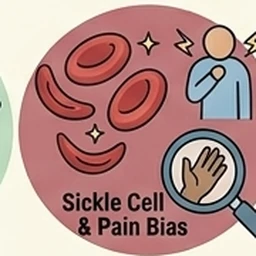
Sickle cell disease (SCD) reshapes a family along several axes that don't resemble other chronic-disease patterns. The medical work is dominated by pain — vaso-occlusive crises, in which sickle-shaped red blood cells block blood vessels, cause some of the most severe pain in medicine, requiring opioid treatment at levels that often trigger profiling at emergency rooms. The cumulative organ damage from years of micro-occlusion affects almost every organ system — chronic kidney disease, pulmonary hypertension, stroke risk, retinopathy, leg ulcers, avascular necrosis of joints — with the trajectory varying widely between patients. The treatment landscape has changed dramatically: hydroxyurea remains the foundation, voxelotor and crizanlizumab are newer options, and gene-therapy approvals in 2023-2024 (Casgevy, Lyfgenia) have made a curative path possible for some patients but at $2-3M per treatment with significant short-term toxicity. The family-caregiver role is unusually advocacy-heavy: ensuring the patient is believed at the ED, ensuring pain medication is given at the right doses, ensuring the SCD specialist (not just the hospitalist) is consulted, navigating insurance for the expensive newer therapies, often coordinating across multiple subspecialists.
Những điều nên sắp xếp sớm
Khoảng thời gian ngay sau khi có chẩn đoán là lúc quý vị có nhiều dư địa nhất để dựng nên cấu trúc mà cả chặng đường phía sau sẽ tựa vào. Quý vị càng trì hoãn, một số việc dưới đây càng trở nên khó khăn hơn.
- Connection to a hematologist who specializes in sickle cell (not just a general hematologist). Outcomes are dramatically better with SCD-specialist care. The Sickle Cell Disease Association of America (SCDAA) maintains a clinic locator.
- A written sickle cell pain action plan from the hematologist, signed and dated. The single most useful document a family can have at the ED — it documents the patient's typical pain regimen, prior responses to medications, and the SCD specialist's recommendation. Reduces (does not eliminate) the bias problem.
- Pneumococcal + meningococcal + annual flu + COVID + RSV vaccines. Patients with SCD are functionally asplenic and at high risk for serious bacterial infections; the vaccine schedule is more intensive than for the general population. Penicillin prophylaxis through age 5 is standard for kids.
- Education about hydroxyurea + the newer therapies. Hydroxyurea reduces crises and extends life, but uptake remains too low; clinician + family advocacy for it makes a measurable difference. Voxelotor, crizanlizumab, and gene therapy are newer options each family should discuss with their specialist.
- A stroke-prevention plan for children with SCD. Transcranial Doppler ultrasound starting at age 2 identifies kids at high risk for stroke; chronic transfusion can prevent it. Often missed at non-SCD centers.
- Connection to a local Sickle Cell Disease Association chapter or community-based SCD organization. The advocacy + peer-support work in the SCD community is some of the most effective in any patient community. Strong family-mentor programs.
Những khoảnh khắc khó khăn nhất
Những khoảnh khắc mà các gia đình mô tả là khó khăn nhất thường là những khoảnh khắc không ai báo trước cho họ. Biết được điều gì có khả năng xảy ra không làm cho bất kỳ khoảnh khắc nào trong đó dễ chịu hơn — nhưng có một cái tên cho chúng, và có một không gian làm việc giúp đưa gia đình trở lại bên nhau khi chúng xảy ra, thì sẽ đỡ hơn nhiều.
- The first vaso-occlusive crisis admission where pain isn't adequately treated, or the patient is profiled as drug-seeking. The bias is well-documented and ongoing; the family's advocacy at the bedside is structurally important. Documentation, calm escalation to the patient's SCD specialist, and a written pain plan all help.
- The acute chest syndrome admission. ACS is the leading cause of death in adults with SCD; presents as chest pain + cough + fever, escalates fast, requires aggressive treatment including transfusion. Most families don't know to look for it specifically.
- The stroke conversation for parents of children with SCD. Stroke risk is meaningful in pediatric SCD; the prevention regimen (chronic transfusion or hydroxyurea) is intensive and the alternative is heavy. The decision is best had with a pediatric hematologist + neurologist together.
- The gene therapy decision. Casgevy + Lyfgenia offer a possible cure but cost $2-3M, involve months of treatment + isolation, carry real short-term toxicity, and the long-term outcomes are still emerging. The decision is profoundly personal; most patients + families take months to a year to make it.
Các hướng dẫn liên quan đến tình trạng này
Các hướng dẫn của Kintaria là từng bước cho những khoảnh khắc cụ thể xuất hiện trong hành trình chăm sóc này. Mỗi hướng dẫn sẽ mở ra trong không gian làm việc của quý vị và được cá nhân hoá theo câu trả lời của quý vị.
- Foundation · One-time setupGet the legal paperwork in order.
- Hospital · 48-hour windowYour parent was just discharged from a hospital.
- Wellness · OngoingWhen you're burning out.
- Parent · This is real nowYour parent is in the ER for the first time.
- Parent · Financial interventionWhen your parent's bills become a problem.
Các tổ chức quốc gia và đường dây hỗ trợ
Đây là những tổ chức được giới chuyên môn xem là điểm khởi đầu chuẩn mực. Tất cả đều miễn phí, và tất cả đều có người trực tổng đài (đường dây trợ giúp người chăm sóc do AI vận hành là một thể loại khác — ở đây là những người đã được đào tạo cụ thể về tình trạng này).
- 1-800-421-8453
The national SCD organization. Local member organizations across the country, clinic locator (SCDAA member SCD treatment centers), advocacy on insurance + policy issues. Strong patient + family resources.
Patient-led, social-media-native education + community. Plain-language resources on every aspect of SCD living. Particularly useful for newer-generation patients + caregivers.
CDC's SCD program. Authoritative information on screening, complications, treatment landscape, and emerging research. Plain-language, regularly updated.
Pediatric-focused SCD support. Family camps, scholarships, support for parents of newly-diagnosed children, advocacy for school accommodations.
Authoritative US government plain-language overview. Free, comprehensive, available in English + Spanish.
For patients + families navigating the reproductive-health side of SCD — genetic counseling, family planning, pregnancy in SCD. An under-served area; SCRED fills a real gap.
Không gian làm việc Kintaria giúp được gì
Kintaria là một không gian gia đình chung, dịu dàng, được dựng lên cho khối công việc mà chẩn đoán này sắp tạo ra. Danh sách thuốc nằm ở một chỗ (để người em thứ ba bay về vào cuối tuần không phải học lại từ đầu xem có gì thay đổi). Lịch khám được chia sẻ (để gia đình không đặt trùng lịch hoặc bỏ sót buổi tái khám với chuyên khoa thấp khớp). Dòng hoạt động nói thật về việc ai đã làm gì (để người chăm sóc chính không lặng lẽ gánh hết). Và không gian này song ngữ — người bệnh đọc bằng ngôn ngữ họ thấy dễ chịu hơn, còn gia đình đọc bằng tiếng Anh — điều mà mọi người thường đánh giá thấp tầm quan trọng cho đến khi chẩn đoán đã khiến mọi thứ rối loạn.
Dùng thử miễn phí 1 năm dành cho 500 gia đình sáng lập đầu tiên. Không cần thẻ tín dụng.
Một lời nhắc về Kintaria là gì (và không phải là gì)
Kintaria không phải là công cụ lâm sàng, không thay thế cho quyết định y khoa, và không thay thế cho đội ngũ chăm sóc sickle cell disease. Nội dung trên trang này dành cho các gia đình đang phối hợp việc chăm sóc; những quyết định lâm sàng cụ thể cần được bác sĩ của người bệnh đưa ra. Các dấu hiệu cần báo cáo khẩn cấp xuất hiện xuyên suốt không gian làm việc đều trung thực về ranh giới đó.
Các thuật ngữ chăm sóc xuất hiện trên trang này
Những từ quý vị có thể muốn tra nghĩa trong khi đọc. Mỗi từ sẽ mở ra trang riêng với phần định nghĩa bằng ngôn ngữ dễ hiểu và cách từ đó xuất hiện trong việc chăm sóc.
- Hospitalist — A doctor who works exclusively inside the hospital.
Xem thêm: tất cả các tình trạng · tất cả các hướng dẫn · từ điển dành cho người chăm sóc · danh bạ tài nguyên toàn quốc