Chăm sóc người thân mắc multiple sclerosis
Caring for someone with multiple sclerosis
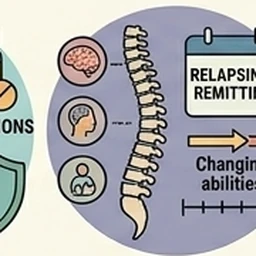
MS is the most variable of the major chronic neurologic diseases — some patients live decades with mild symptoms, others progress quickly, and the relapsing-remitting course can look stable for years before changing. The work for the family is less about a single crisis and more about adapting to a moving target. Here's the orientation.
Điều gì thay đổi đối với gia đình
Multiple sclerosis is an autoimmune attack on the protective coating of nerve fibers in the brain and spinal cord. Most patients start with relapsing-remitting MS (relapses + recovery) and a meaningful share transition to secondary-progressive MS over time. The disease affects almost every system: motor function (gait, hand use), sensory (numbness, tingling), cognitive (processing speed, memory), bladder + bowel, vision, sexual function, and fatigue — the symptom MS patients consistently rank as most disabling and that families consistently underestimate. The good news: disease-modifying therapies (DMTs) developed in the last 15 years dramatically slow progression and have changed the natural history. The harder news: those DMTs need to be matched to the patient's disease course, monitored with periodic MRIs, and adjusted as the disease evolves. The family role is often less about acute crises and more about steady accommodation as abilities shift.
Những điều nên sắp xếp sớm
Khoảng thời gian ngay sau khi có chẩn đoán là lúc quý vị có nhiều dư địa nhất để dựng nên cấu trúc mà cả chặng đường phía sau sẽ tựa vào. Quý vị càng trì hoãn, một số việc dưới đây càng trở nên khó khăn hơn.
- A relationship with an MS-specialist neurologist, not a general neurologist. The MS landscape has changed so fast that outcomes are measurably better with subspecialists. The National MS Society maintains a list of partners in care.
- A clear understanding of which DMT the patient is on, what it does, and what to monitor. DMT options have grown to ~20 with very different mechanisms + monitoring requirements; understanding the choice is part of being a useful caregiver.
- Baseline cognitive + neuropsych testing. Cognitive symptoms are common in MS, often subtle, and progress over years. Having a baseline makes future changes easier to recognize.
- A fatigue-management plan. MS fatigue is a unique kind of exhaustion that doesn't respond to rest the way ordinary tiredness does. Pacing, energy budgeting, and (in some cases) modafinil or amantadine help; "just push through" advice can worsen outcomes.
- Home + workplace accommodations early — handrails, raised toilet seat, a chair to sit while cooking, an FMLA conversation with the employer if energy demands are a problem. Easier to set up before they're needed.
- Connection to a local National MS Society chapter for support groups + equipment programs + family-services social work. The MS community is well-organized and generous.
Những khoảnh khắc khó khăn nhất
Những khoảnh khắc mà các gia đình mô tả là khó khăn nhất thường là những khoảnh khắc không ai báo trước cho họ. Biết được điều gì có khả năng xảy ra không làm cho bất kỳ khoảnh khắc nào trong đó dễ chịu hơn — nhưng có một cái tên cho chúng, và có một không gian làm việc giúp đưa gia đình trở lại bên nhau khi chúng xảy ra, thì sẽ đỡ hơn nhiều.
- A relapse after a period of stability. Often hits without warning — new neurologic symptoms over days to weeks. The fear that this is "the start of progression" is one of the heaviest parts of relapsing-remitting MS.
- The conversation about disability accommodation at work or stopping work entirely. MS often affects people in their 30s-50s — peak earning years — and the work decisions reshape family finances in ways most couples weren't planning for.
- The transition from relapsing-remitting to secondary-progressive MS. Often visible only in retrospect; many patients describe the recognition (or the conversation with the neurologist about it) as one of the hardest moments.
- Cognitive changes — particularly when the patient is still high-functioning enough that others don't notice but they themselves know something has shifted. Validation and accommodation matter; dismissal ("you're fine, you remembered the dinner") is corrosive.
Các hướng dẫn liên quan đến tình trạng này
Các hướng dẫn của Kintaria là từng bước cho những khoảnh khắc cụ thể xuất hiện trong hành trình chăm sóc này. Mỗi hướng dẫn sẽ mở ra trong không gian làm việc của quý vị và được cá nhân hoá theo câu trả lời của quý vị.
Các tổ chức quốc gia và đường dây hỗ trợ
Đây là những tổ chức được giới chuyên môn xem là điểm khởi đầu chuẩn mực. Tất cả đều miễn phí, và tất cả đều có người trực tổng đài (đường dây trợ giúp người chăm sóc do AI vận hành là một thể loại khác — ở đây là những người đã được đào tạo cụ thể về tình trạng này).
- MS Navigator · 1-800-344-4867
The largest MS-focused organization in the US. MS Navigators are case-management-style staff who help with everything from finding a neurologist to applying for disability to figuring out accessible vacation rentals. Free, real humans, deeply useful. Local chapters across the country.
- Helpline · 1-800-532-7667
Distinct from the National MS Society — runs an equipment-distribution program (cooling vests for heat-sensitive patients, mobility aids), a peer-support program, and a "My MS Manager" mobile app for symptom + medication tracking.
- Helpline · 1-888-673-6287
Direct financial assistance — emergency grants, cooling-vest program, home-care assistance, transportation grants. The financial-help organization in the MS space.
Wellness-focused MS programs — exercise, nutrition, fatigue management. Family-inclusive weekend programs (free); the closest thing to a "go to one place and learn everything" experience in MS. Patient + care partner attend together.
Federation of 9 MS organizations — the MS Coalition publishes the comprehensive treatment-decision tools the National MS Society + MSAA + others link to. Useful starting point when comparing DMT options.
Authoritative US government plain-language overview. Free, comprehensive.
Không gian làm việc Kintaria giúp được gì
Kintaria là một không gian gia đình chung, dịu dàng, được dựng lên cho khối công việc mà chẩn đoán này sắp tạo ra. Danh sách thuốc nằm ở một chỗ (để người em thứ ba bay về vào cuối tuần không phải học lại từ đầu xem có gì thay đổi). Lịch khám được chia sẻ (để gia đình không đặt trùng lịch hoặc bỏ sót buổi tái khám với chuyên khoa thấp khớp). Dòng hoạt động nói thật về việc ai đã làm gì (để người chăm sóc chính không lặng lẽ gánh hết). Và không gian này song ngữ — người bệnh đọc bằng ngôn ngữ họ thấy dễ chịu hơn, còn gia đình đọc bằng tiếng Anh — điều mà mọi người thường đánh giá thấp tầm quan trọng cho đến khi chẩn đoán đã khiến mọi thứ rối loạn.
Dùng thử miễn phí 1 năm dành cho 500 gia đình sáng lập đầu tiên. Không cần thẻ tín dụng.
Một lời nhắc về Kintaria là gì (và không phải là gì)
Kintaria không phải là công cụ lâm sàng, không thay thế cho quyết định y khoa, và không thay thế cho đội ngũ chăm sóc multiple sclerosis. Nội dung trên trang này dành cho các gia đình đang phối hợp việc chăm sóc; những quyết định lâm sàng cụ thể cần được bác sĩ của người bệnh đưa ra. Các dấu hiệu cần báo cáo khẩn cấp xuất hiện xuyên suốt không gian làm việc đều trung thực về ranh giới đó.
Xem thêm: tất cả các tình trạng · tất cả các hướng dẫn · từ điển dành cho người chăm sóc · danh bạ tài nguyên toàn quốc