Chăm sóc người thân mắc chronic pain
Caring for someone with chronic pain
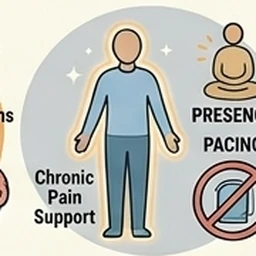
Chronic pain is the most prevalent and most invisible chronic condition in the US — ~50 million adults, no scan that confirms it, no clean treatment arc. The work for the family is mostly about presence and pacing, with periodic flares that reshape the week. Here's the orientation.
Điều gì thay đổi đối với gia đình
Chronic pain (pain that persists more than three months) reshapes a family without producing the visible markers other chronic diseases come with. The patient is often dismissed by clinicians, friends, and sometimes the family — the "but you look fine" comment is the most common refrain. The work for the family is paced support: helping with tasks during flares, accommodating reduced energy on bad days, and protecting the routines that keep pain manageable. The treatment landscape is unusually fragmented (primary care, pain medicine specialists, physical therapy, psychology, complementary medicine, sometimes interventional procedures); the family often becomes the de facto care coordinator. The opioid landscape adds a layer most families weren't prepared for: patients on long-term opioids face stigma at every appointment, prescription delays that can trigger withdrawal, and the rare-but-real risk of dependence. And depression is so common with chronic pain (~50% lifetime prevalence) that screening + treatment is structural, not optional.
Những điều nên sắp xếp sớm
Khoảng thời gian ngay sau khi có chẩn đoán là lúc quý vị có nhiều dư địa nhất để dựng nên cấu trúc mà cả chặng đường phía sau sẽ tựa vào. Quý vị càng trì hoãn, một số việc dưới đây càng trở nên khó khăn hơn.
- A relationship with a pain medicine specialist (not just the PCP). Multidisciplinary pain clinics combine medical, PT, and behavioral treatment in one place and have measurably better outcomes than fragmented care.
- A pain diary or app — tracking when, where, what helps, what triggers. Three to four weeks of data is more useful than years of recall when the patient meets a new clinician.
- A physical-therapy referral, even if the patient is in too much pain to do much. Modern PT for chronic pain is graded exposure + pacing + body-awareness work, not "no pain no gain." The wrong PT can make things worse; ask for one experienced in chronic pain specifically.
- A behavioral-health referral for CBT for chronic pain or ACT (Acceptance and Commitment Therapy). These are evidence-based for chronic pain and rarely offered without asking. Different from "treating the depression" — they specifically address pain-coping strategies.
- A documented chronic-pain plan signed by the prescriber if opioids are part of the regimen. Pharmacy delays, insurance prior authorizations, and provider transitions all go more smoothly with a written record of the established treatment.
- A family conversation about pacing. The well-meaning "let me know if you need anything" rarely helps; concrete commitments ("I'll cook on Tuesdays whatever your pain level," "I'll drive you to PT every Friday") land better.
Những khoảnh khắc khó khăn nhất
Những khoảnh khắc mà các gia đình mô tả là khó khăn nhất thường là những khoảnh khắc không ai báo trước cho họ. Biết được điều gì có khả năng xảy ra không làm cho bất kỳ khoảnh khắc nào trong đó dễ chịu hơn — nhưng có một cái tên cho chúng, và có một không gian làm việc giúp đưa gia đình trở lại bên nhau khi chúng xảy ra, thì sẽ đỡ hơn nhiều.
- The first time a clinician implies the pain is in the patient's head, or is exaggerated, or is "just" depression. The damage to the patient is real; advocacy from the family caregiver — calmly, with documentation — is one of the most useful things a family member can do.
- A pain flare that lasts weeks. Most chronic pain has good and bad periods; a prolonged flare can shake the family's confidence that pacing + treatment is working. The right response is usually patience plus a check-in with the pain specialist, not panic.
- The opioid conversation — either the patient struggling with dependence, or being suddenly tapered against their will (a common late-2010s/2020s pattern that produced real harm), or being denied an established prescription by a new provider. The family's role is to advocate, to know the patient's clinical history, and to be present at difficult appointments.
- The cumulative emotional weight on the caregiver. Living with someone in chronic pain is a slow-burn caregiving role with relatively little recognition. Caregiver burnout in this cohort is real, under-supported, and often unaddressed until it becomes its own clinical issue.
Các hướng dẫn liên quan đến tình trạng này
Các hướng dẫn của Kintaria là từng bước cho những khoảnh khắc cụ thể xuất hiện trong hành trình chăm sóc này. Mỗi hướng dẫn sẽ mở ra trong không gian làm việc của quý vị và được cá nhân hoá theo câu trả lời của quý vị.
Các tổ chức quốc gia và đường dây hỗ trợ
Đây là những tổ chức được giới chuyên môn xem là điểm khởi đầu chuẩn mực. Tất cả đều miễn phí, và tất cả đều có người trực tổng đài (đường dây trợ giúp người chăm sóc do AI vận hành là một thể loại khác — ở đây là những người đã được đào tạo cụ thể về tình trạng này).
The largest patient-led chronic-pain advocacy organization in the US. Patient + caregiver support groups, peer mentoring, advocacy on insurance + opioid policy, the "Invisible Project" patient storytelling series.
- 1-800-533-3231
Peer support + education with a focus on self-management skills. The "From Patient to Person" framework is the foundation; chapter network across the country; family-caregiver-specific materials.
Independent journalism specifically on the chronic-pain policy + treatment landscape. Useful for staying current on opioid policy changes, insurance coverage shifts, and new treatments. Free.
- Helpline · 1-800-283-7800
For chronic pain related to arthritis (the most common cause). Free helpline, exercise programs (Walk With Ease, Tai Chi), local chapter support groups.
Condition-specific (fibromyalgia is a common subset of chronic widespread pain). Patient + family resources, support-group locator, advocacy.
NIH National Center for Complementary and Integrative Health plain-language overview, with strong coverage of evidence-based non-medication approaches.
Không gian làm việc Kintaria giúp được gì
Kintaria là một không gian gia đình chung, dịu dàng, được dựng lên cho khối công việc mà chẩn đoán này sắp tạo ra. Danh sách thuốc nằm ở một chỗ (để người em thứ ba bay về vào cuối tuần không phải học lại từ đầu xem có gì thay đổi). Lịch khám được chia sẻ (để gia đình không đặt trùng lịch hoặc bỏ sót buổi tái khám với chuyên khoa thấp khớp). Dòng hoạt động nói thật về việc ai đã làm gì (để người chăm sóc chính không lặng lẽ gánh hết). Và không gian này song ngữ — người bệnh đọc bằng ngôn ngữ họ thấy dễ chịu hơn, còn gia đình đọc bằng tiếng Anh — điều mà mọi người thường đánh giá thấp tầm quan trọng cho đến khi chẩn đoán đã khiến mọi thứ rối loạn.
Dùng thử miễn phí 1 năm dành cho 500 gia đình sáng lập đầu tiên. Không cần thẻ tín dụng.
Một lời nhắc về Kintaria là gì (và không phải là gì)
Kintaria không phải là công cụ lâm sàng, không thay thế cho quyết định y khoa, và không thay thế cho đội ngũ chăm sóc chronic pain. Nội dung trên trang này dành cho các gia đình đang phối hợp việc chăm sóc; những quyết định lâm sàng cụ thể cần được bác sĩ của người bệnh đưa ra. Các dấu hiệu cần báo cáo khẩn cấp xuất hiện xuyên suốt không gian làm việc đều trung thực về ranh giới đó.
Các thuật ngữ chăm sóc xuất hiện trên trang này
Những từ quý vị có thể muốn tra nghĩa trong khi đọc. Mỗi từ sẽ mở ra trang riêng với phần định nghĩa bằng ngôn ngữ dễ hiểu và cách từ đó xuất hiện trong việc chăm sóc.
- Caregiver burnout — A state of physical, emotional, and mental exhaustion that develops over months or years of caregiving — characterized by chronic fatigue, irritability, isolation, anxiety, depression, sleep disturbance, and worsening physical health.
Xem thêm: tất cả các tình trạng · tất cả các hướng dẫn · từ điển dành cho người chăm sóc · danh bạ tài nguyên toàn quốc