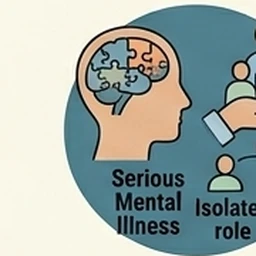
Pag-aalaga sa mahal sa buhay na may serious mental illness
Caring for a family member with serious mental illness
Serious mental illness — schizophrenia, bipolar I, severe major depression with psychotic features — is one of the most isolating caregiving roles in the US. The patient is often an adult child whose illness emerged in their late teens or twenties, and the family inherits decades of coordination work the medical system was never built to share. Here's the orientation.
Ano ang nagbabago para sa pamilya
Serious mental illness (SMI) reshapes a family along several axes the standard caregiver narrative doesn't cover. The patient is often a younger adult — schizophrenia typically emerges in the late teens or 20s, bipolar I in the 20s — meaning families face decades of caregiving rather than the late-life arc most caregiver resources assume. The medical system rarely sees the family as part of the team: HIPAA and the patient's autonomy rights mean the family is often informed only at hospitalization, sometimes not even then. The patient's relationship with treatment can be inconsistent (the "lack of insight" — anosognosia — that comes with some psychotic disorders is a clinical feature, not the patient being difficult). Housing, employment, benefits, the criminal-legal system, and substance use frequently intersect. And the stigma is real, both externally (housing discrimination, employment discrimination) and within families (the parents-of-an-adult-child-with-SMI cohort is one of the most isolated caregiver populations in the literature). NAMI — the National Alliance on Mental Illness — is the central family organization, and the single most useful first call.
Ano ang dapat ihanda nang maaga
Ang panahon pagkatapos ng diagnosis po ang yugto na pinakamaraming puwedeng gawin ng pamilya para itayo ang istrukturang sasandalan ng natitirang bahagi ng paglalakbay na ito. Habang inaantala po ninyo, lalong nagiging mahirap ang ilan sa mga bagay na ito.
- A NAMI Family-to-Family course. 8 weeks, free, taught by trained family-member volunteers. Most attendees describe it as the most useful single thing they did in their caregiving arc. The Family Support Group (an ongoing version) is just as useful for the long term.
- Connection to an assertive community treatment (ACT) team if available in your area. ACT teams (multidisciplinary teams that work with SMI patients in the community) are the most evidence-based model for severe-and-persistent mental illness; under-utilized because they're hard to find. State mental-health authority can locate one.
- Documentation work while cooperation is possible: signed releases for the family to receive clinical information (HIPAA authorization), durable POA for healthcare, possibly a psychiatric advance directive that documents the patient's preferences for future treatment when they're well.
- A relationship with a psychiatrist who specializes in SMI (often a "first-episode psychosis" or "early-onset" specialist if the patient is younger). Care continuity matters more in SMI than almost any other condition; the wrong handoff can disrupt years of stability.
- Benefits + housing setup: SSI/SSDI application, Section 8 if relevant, Medicaid (often the only insurance that covers long-term outpatient psychiatric care), state mental-health-authority case-management enrollment. The benefits navigation is its own job.
- A crisis plan that's written down before crisis. The right phone numbers (988, the patient's case manager, the psychiatrist's on-call, local mobile crisis team, the family's designated decision-maker), the patient's current medications, prior hospitalizations, the things that have worked + the things that haven't. Save in everyone's phone.
Ang pinakamahihirap na sandali
Ang mga sandali pong inilalarawan ng mga pamilya bilang pinakamahirap ay madalas na yaong walang nagsabi nang maaga sa kanila. Hindi po nagiging madali ang anuman sa mga ito dahil lang alam na ninyo na malamang dumating ang mga ito — pero ang pagkakaroon po ng pangalan para sa mga ito, at ng isang workspace na nagbubuklod muli sa pamilya kapag dumating ang mga ito, ay talagang nakatutulong.
- A first psychotic break or first manic episode. The patient is often someone the family knew completely; the disease that emerges is unfamiliar. The hospitalization is short; the discharge often premature; the family is left to figure out what comes next with very little support.
- Medication non-adherence. Anosognosia (the clinical lack of insight into one's own illness) is common in schizophrenia and means the patient genuinely doesn't experience themselves as ill. Long-acting injectable medications can help; involuntary medication is a fraught legal process; family pressure rarely works long-term.
- A police or criminal-justice encounter. People with SMI are disproportionately likely to interact with police; outcomes range from a calm crisis intervention team encounter to a fatal one. Mobile crisis teams (in regions that have them) are dramatically safer than 911. Build the alternative numbers into the crisis plan.
- The long arc. Unlike most caregiving roles, SMI caregiving often continues for decades with episodic crises rather than a clear trajectory. Caregiver burnout is the rule. The structural answer is respite + support groups + therapy for the caregiver, all started early.
Mga playbook na kaugnay nito
Ang mga playbook po ng Kintaria ay hakbang-hakbang na gabay para sa mga partikular na sandali na lumalabas sa daloy ng pag-aalaga na ito. Bawat isa po ay bubukas sa loob ng inyong workspace at iaayon sa mga sagot ninyo.
- Adult child · Before the 18th birthdayYou need to set up the special-needs trust and guardianship.
- Adult child with disabilities · Future planningWhen you are the parent-caregiver and you need to plan for after you.
- Wellness · OngoingWhen you're burning out.
- Foundation · One-time setupGet the legal paperwork in order.
- Sibling · Inheriting the careYour parent was caring for your sibling — and now they can't.
Mga pambansang organisasyon at helpline
Ito po ang mga organisasyong itinuturing na pamantayang panimulang punto sa larangan. Lahat po ay libre, at lahat ay tunay na helpline na sinasagot ng tao (ang AI-on-the-phone na caregiver line po ay ibang kategorya — dito po ay tao na sinanay sa partikular na kondisyong ito).
- HelpLine · 1-800-950-6264 (text 62640) · Crisis: 988
The central family-side mental-health organization in the US. NAMI HelpLine answers calls from families. Family-to-Family course (8 weeks, free) is the single most-recommended resource. Local affiliates run support groups + advocacy.
- 988 · 24/7
For acute crisis. Free, confidential, doesn't auto-dispatch police. Trained counselors. Can connect to local mobile crisis teams where they exist (a meaningfully safer alternative to 911 for mental-health crises).
- 1-800-662-4357 · 24/7 · English + Spanish
Federal substance-abuse + mental-health services helpline. Free, confidential, doesn't require insurance. Useful when the SMI overlaps with substance use (which it often does).
Policy-focused organization specifically on access to SMI treatment. Strong resources on assisted outpatient treatment (AOT) laws, anosognosia, and the civil-commitment landscape state by state. Useful when the family is navigating involuntary-treatment questions.
Schizophrenia-specific patient + family advocacy. Online community, family-support resources, advocacy on policy that affects people with psychotic disorders.
- Helpline · 1-800-826-3632
For bipolar + severe-depression cohorts. Peer-led support groups across the country, education programs, wellness tools. The bipolar-specific community is the most engaged.
Authoritative US government plain-language overview. Free, comprehensive.
Paano tumutulong ang isang Kintaria workspace
Ang Kintaria po ay isang kalmado at magkasamang workspace ng pamilya na ginawa para sa trabahong sisimulang likhain ng diagnosis na ito. Ang listahan ng gamot ay nasa iisang lugar (para hindi na po kailangang muling pag-aralan ng pangatlong kapatid na lilipad pauwi sa katapusan ng linggo kung ano ang nagbago). Ang kalendaryo ng mga appointment ay magkasama (para hindi po magdoble ang booking ng pamilya o makalimutan ang follow-up sa rheumatology). Ang activity feed ay tapat tungkol sa kung sino ang gumawa ng ano (para hindi po dahan-dahang nagdadala ng lahat ang pangunahing tagapag-alaga). At ang workspace ay bilingual po — ang pasyente ay nakababasa sa wikang mas komportable para sa kanya, ang pamilya ay nakababasa sa Ingles — at ito po ay mas mahalaga kaysa sa inaasahan ng karamihan kapag ang diagnosis mismo ay nakapagpapalito na.
Libreng 1-taong subok para sa unang 500 founding na pamilya. Walang kailangang credit card.
Isang paalala kung ano ang Kintaria (at kung ano ang hindi)
Hindi po klinikal na kasangkapan ang Kintaria, hindi po kapalit ng medikal na desisyon, at hindi po kapalit ng care team para sa serious mental illness. Ang nilalaman po sa pahinang ito ay para sa mga pamilyang nag-uugnay ng pangangalaga; ang mga tiyak na klinikal na desisyon ay kailangang gawin ng doktor ng pasyente. Ang mga senyales ng pag-escalate sa buong workspace ay tapat tungkol sa hangganang iyon.
Mga termino sa pangangalaga na lumalabas sa pahinang ito
Mga salitang baka po gusto ninyong malaman ang kahulugan habang binabasa ito. Bawat isa po ay bubukas sa sariling pahina na may simpleng paliwanag ng kahulugan at kung paano ito lumalabas sa pangangalaga.
- Case manager — A nurse or social worker employed by the hospital whose job is to coordinate care across the system — most importantly, discharge planning.
- Power of attorney — A legal document where one person (the "principal") authorizes another person (the "agent" or "attorney-in-fact") to act on their behalf in financial matters.
- Advance directive — A written document specifying a patient's wishes for end-of-life medical care — typically covering CPR, mechanical ventilation, artificial nutrition, and other interventions when recovery is unlikely.
- HIPAA authorization — A signed form authorizing a healthcare provider to release the patient's information to a named family member or other party.
- Medicaid — Joint federal-state program covering health care for low-income people, including many people with disabilities and many older adults who have spent down their assets.
- Caregiver burnout — A state of physical, emotional, and mental exhaustion that develops over months or years of caregiving — characterized by chronic fatigue, irritability, isolation, anxiety, depression, sleep disturbance, and worsening physical health.
Tingnan din: lahat ng kondisyon · lahat ng playbook · talasalitaan para sa tagapag-alaga · pambansang direktoryo ng mapagkukunan