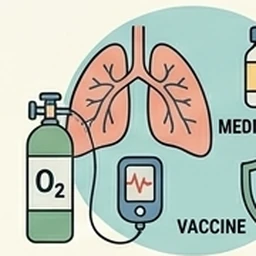
COPD을(를) 앓는 가족을 돌보기
Caring for someone with COPD
COPD is a slow-progressing disease punctuated by sudden, frightening exacerbations. The work of caregiving sits between those two paces — steady daily management (medications, oxygen, energy budgeting, vaccine adherence) and the always-possible 2 AM call when breathing gets worse. The families who do this well prevent most of the hospitalizations. Here's the orientation.
가족에게 무엇이 달라지는가
Chronic obstructive pulmonary disease (COPD) — emphysema, chronic bronchitis, or both — reorganizes a family around energy and breath. Patients learn to choose between walking to the bathroom and eating dinner; between talking on the phone and getting dressed. The caregiver becomes the manager of an unusual budget: oxygen tank scheduling, inhaler technique, the pulmonary-rehab attendance that's measurably the single highest-leverage intervention. Exacerbations — viral infections, cold air, smoke exposure — drop lung function fast and often require hospitalization; the difference between a 2-day urgent-care visit and a 10-day ICU stay is often whether the family caught the early signs. Late-stage COPD brings decisions about non-invasive ventilation (BiPAP), oxygen at higher flows, and the conversation about goals of care that most pulmonologists are surprisingly good at having when invited.
일찍 마련해두어야 할 것들
진단 직후의 시기는 가족이 앞으로의 여정 전체가 의지하게 될 구조를 잡을 수 있는, 가장 여유가 있는 때입니다. 미룰수록 아래의 일들 가운데 일부는 점점 더 어려워집니다.
- Pulmonary rehab if eligible. This is the single most evidence-based intervention for quality of life in COPD and the most under-prescribed. 8-12 weeks of supervised exercise + education; results are dramatic. Ask if it wasn't offered.
- Smoking cessation — for the patient if still smoking, and for everyone in the household. Secondhand smoke meaningfully accelerates COPD progression. Free quit support at 1-800-QUIT-NOW.
- Annual flu shot + the pneumococcal series (PCV15 or PCV20 + PPSV23) + RSV vaccine for adults 60+ + updated COVID booster. Vaccine-preventable lung infections cause a disproportionate share of COPD hospitalizations.
- A written COPD action plan from the pulmonologist — green/yellow/red zones based on symptoms, with what to do at each. Most pulm teams give one; if yours hasn't, ask. Catching exacerbations early prevents most hospitalizations.
- Oxygen-equipment setup and a relationship with the home-oxygen company. Liquid vs concentrator vs portable tanks have very different daily ergonomics; the choice matters more than insurance reps acknowledge.
- A goals-of-care conversation while the patient is stable. Advanced COPD brings questions about intubation, ICU, and whether the patient wants comfort-focused care; talking about it before a crisis is far easier than during one.
가장 힘든 순간들
가족들이 가장 힘들었다고 말하는 순간들은 종종 누구도 미리 알려주지 않은 순간들입니다. 무엇이 올 가능성이 있는지 안다고 해서 이 순간들이 쉬워지지는 않습니다 — 그러나 이 순간들에 이름을 붙일 수 있고, 그 순간이 닥쳤을 때 가족을 다시 모이게 해주는 공간이 있다면 도움이 됩니다.
- The first exacerbation that lands them in the hospital. The patient is usually frightened (air hunger is one of the most distressing symptoms in medicine); the family is unprepared for how steep the recovery is. Post-hospitalization functional decline is a common pattern.
- The shift from "still active" to "needs oxygen 24/7." The day the cannula stays in around the house is one families describe as harder than the diagnosis itself — visible, identity-shifting.
- The exertion-vs-everything trade-off. Patients have to choose between physical effort and oxygen reserves on a daily basis; family members who don't understand this can interpret slowed-down behavior as depression rather than what it is.
- The end-of-life trajectory. COPD has a less-predictable end-stage than diseases like ALS or advanced cancer; the recurrent-exacerbation pattern can continue for years, making it hard to know when to consider hospice. Most pulmonologists wish families would ask about palliative care earlier.
이 질환과 연결되는 플레이북
Kintaria의 플레이북은 이 돌봄 여정에서 실제로 나타나는 구체적인 순간들을 위한 단계별 안내입니다. 각각은 여러분의 워크스페이스에서 열리고, 여러분의 답변에 맞추어 개인화됩니다.
- Hospital · 48-hour windowYour parent was just discharged from a hospital.
- Foundation · One-time setupGet the legal paperwork in order.
- Spouse · OngoingWhen you are the caregiver-spouse.
- Parent · This is real nowYour parent is in the ER for the first time.
- Transition · HospiceYou think your parent may be approaching the end of life.
전국 단체와 상담 전화
이 단체들은 업계에서 표준적인 출발점으로 여기는 곳들입니다. 모두 무료이며, 모두 실제 사람이 받는 상담 전화입니다(돌봄제공자용 AI 전화 상담은 별개의 범주이며, 여기에서는 해당 질환에 대해 훈련받은 사람을 의미합니다).
- C.O.P.D. Information Line · 1-866-316-2673
The patient + family organization specifically for COPD. Free education (the "COPD Pocket Consultant Guide" is the best plain-language primer in the field), peer-support groups (in-person + online), and the COPD360social community for patients + caregivers.
- Lung HelpLine · 1-800-586-4872
Free helpline staffed by registered nurses and respiratory therapists. "Better Breathers Club" support groups across the country, smoking-cessation programs, "Living with COPD" patient + family guides.
For patients + families who want to participate in research. Free to join; the registry has informed multiple FDA-approved therapies.
Find a certified pulmonary rehab program near you. Coverage details vary by Medicare/Medicaid + private insurance; the program intake walks you through them.
Authoritative US government plain-language overview. Free, comprehensive, available in English + Spanish.
Kintaria 워크스페이스가 어떻게 돕는가
Kintaria는 이 진단이 만들어낼 일들을 위해 설계된, 차분하고 공유되는 가족 워크스페이스입니다. 약 목록은 한 곳에 모여 있어, 주말에 비행기로 오는 셋째 형제자매가 무엇이 바뀌었는지 다시 처음부터 익힐 필요가 없습니다. 진료 일정은 공유되어 있어, 가족이 일정이 겹치거나 류마티스내과 추적 진료를 놓치는 일이 줄어듭니다. 활동 기록은 누가 무엇을 했는지에 대해 정직하기 때문에, 주 돌봄제공자가 모든 일을 조용히 떠안지 않게 됩니다. 그리고 워크스페이스는 이중 언어입니다 — 환자는 자신이 더 편한 언어로 읽고, 가족은 영어로 읽습니다 — 진단 자체가 이미 정신을 어지럽게 만드는 상황에서, 이 점은 사람들이 예상하는 것보다 훨씬 더 중요합니다.
처음 500가족에게 1년 무료 체험을 제공합니다. 신용카드가 필요하지 않습니다.
Kintaria가 무엇인지(그리고 아닌지)에 대한 안내
Kintaria는 임상 도구가 아니며, 의학적 의사결정을 대체하지 않고, COPD 치료팀을 대신하지도 않습니다. 이 페이지의 안내는 돌봄을 조율하는 가족을 위한 것이고, 구체적인 임상 결정은 환자의 담당의가 내려야 합니다. 워크스페이스 곳곳에서 안내되는 escalation 신호는 그 경계에 대해 정직합니다.
이 페이지에서 사용된 돌봄 용어
읽으시면서 뜻을 알고 싶을 수 있는 단어들입니다. 각 단어는 별도의 페이지로 열리며, 쉬운 말로 정의와 돌봄 현장에서 어떻게 등장하는지를 설명합니다.
- Palliative care — Specialty care focused on quality of life and symptom relief for people with serious illness.
- Hospice — A type of care for people with a life expectancy of about 6 months or less, focused entirely on comfort rather than cure.
- Comfort care — A care approach focused entirely on symptom relief and dignity rather than disease treatment.
함께 보기: 모든 질환 · 모든 플레이북 · 돌봄제공자 용어집 · 전국 자원 디렉터리