Structured help for the moments that hit hardest.
When something big happens — a hospital discharge, a fall, a diagnosis — the question isn't “what do I do?” It's “what do I do first?” 30 playbooks across parent care, spouse care, adult children with disabilities, and siblings. Filter by who you're caring for.

Your parent was just discharged from a hospital.
The 48 hours after discharge are when re-admission risk is highest and the family is most overwhelmed. The playbook walks you through the paperwork, the medication reconciliation, the follow-up appointments, the danger signs to watch for, and what to say when a sibling asks how they can help.
Open playbook →Diagnosis · First 6 months
Your parent was just diagnosed with dementia.
The first six months matter most — the legal documents, the financial setup, the conversations with siblings, the orientation to what's ahead. The playbook covers the Alzheimer's Association call, the elder-law attorney, the support group, and the conversations to have while your parent can still participate in them.
Open playbook →Incident · Same day
Your parent fell.
Whether they're in the ER, just home from urgent care, or you got the call after the fact — the playbook covers the medical workup, the home-safety audit (rugs, grab bars, raised seat), the medication review for fall-risk drugs, and the PT referral that often gets skipped.
Open playbook →Planning · First few weeks
You're ready to bring in a home health aide.
The playbook covers the difference between home health (medical, often Medicare-covered) and home care (non-medical, usually private-pay), how to find someone, how to interview, what to expect in the first week, and the small-but-real decisions about keys, food, schedule, and how to fire someone respectfully if it doesn't work out.
Open playbook →Transition · Hospice
You think your parent may be approaching the end of life.
Hospice isn't giving up — it's choosing comfort over more treatment when more treatment won't help. Fully covered by Medicare. The playbook covers when to ask about hospice, how to have the conversation, what changes when hospice starts, and the small kindnesses that matter most in the last weeks.
Open playbook →Spouse · 90-day window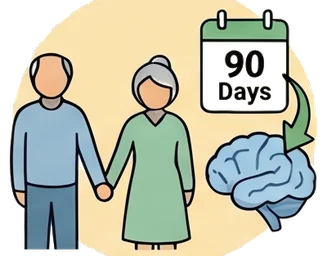
Your spouse just had a stroke.
The first 90 days after a stroke are when most recovery happens — and when the marriage and the household have to be reorganized around someone who isn't fully the person they were a month ago. The playbook walks through the rehab path (acute inpatient rehab vs. SNF vs. home health), the FMLA and short-term-disability paperwork, the power-of-attorney activation, the home modifications insurance will and won't cover, the medication reconciliation across the new neurology / cardiology / PT team, and the conversations with the kids about what changed and what didn't.
Open playbook →Adult child · Age 18 to 22
Your adult child is aging out of school-based services.
The "services cliff" at 21 or 22 is one of the hardest transitions in disability life — IDEA-mandated supports end and adult services become an application-driven patchwork. The playbook covers the state DDA / DDS intake, the HCBS waiver application (often a multi-year waitlist that has to start now), supported employment vs. day programs vs. continued education, the transition from pediatric to adult specialists, the special-needs trust setup, the ABLE account, and the guardianship-vs-supported-decision-making decision that should happen before the 18th birthday.
Open playbook →Sibling · Same day
You're the sibling and the ER just called.
The hospital expected a parent or spouse — and called you instead, because there isn't one. The playbook covers the consent-basis paperwork to have ready before the next call, how to establish authority at the front desk without a 20-minute argument, the HIPAA forms that should already be on file, the medication and allergy list you need to surface in seconds, and the next-of-kin documentation the hospital probably doesn't know you already have.
Open playbook →Parent · Conversation
It's time for the car keys conversation.
The driving conversation rarely lands in one sitting — it's the slow returning to the topic over weeks. The playbook walks through the DMV self-screening process, when to ask the PCP for a formal driving evaluation, the occupational-therapy driving assessment that catches what self-screening misses, what to do about a parent who keeps driving anyway (insurance call, key relocation, anonymous DMV report — and the ethical weight of each), and the transportation alternatives that have to land before the keys do.
Open playbook →Parent · Transition · 60-day window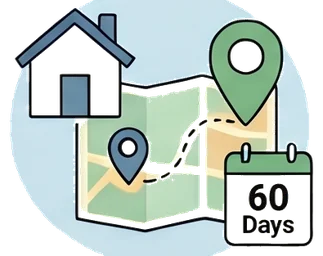
Your parent is moving to assisted living or memory care.
The move itself takes a weekend; the decision and preparation take 60 days. The playbook covers the assisted-living vs. memory-care distinction, the facility tour checklist that catches what the marketing tour hides, the financial paperwork (long-term care insurance? VA Aid & Attendance? Medicaid spend-down?), the medication transfer to the facility's pharmacy, the move-in checklist (what to bring, what gets lost, what familiar items help), and the first-30-days rhythm of visits before the new pattern settles.
Open playbook →Spouse · First 30 days
Your spouse was just diagnosed with cancer.
The first 30 days after a cancer diagnosis are dominated by appointment cascade and treatment-plan decisions — a partnership that suddenly has to function as a clinical-decision-making unit. The playbook covers the second-opinion question, the staging workup, the oncology team coordination (medical / surgical / radiation), the genetic-counseling referral, the insurance + employer + FMLA paperwork, the conversations with the kids, and the practical rhythm of treatment days that resets your week.
Open playbook →Adult child · Before the 18th birthday
You need to set up the special-needs trust and guardianship.
The 18th birthday is a legal cliff for a young adult with a developmental disability — they become their own decision-maker by default, federal and state benefits get re-evaluated, and any inherited assets in their name disqualify them from SSI and Medicaid unless structured correctly. The playbook walks through the third-party vs. first-party special-needs trust choice, the ABLE account setup, the guardianship vs. conservatorship vs. supported-decision-making decision, the elder-law attorney specializing in disability planning, the school-age IEP documents the attorney will want, and the family conversations about who serves as trustee and successor.
Open playbook →Sibling · Inheriting the care
Your parent was caring for your sibling — and now they can't.
The succession a parent has been worried about for decades has arrived: the primary caregiver for a sibling with disabilities is no longer able, and the sibling steps in. The playbook covers the workspace handoff (the export the original caregiver made — or didn't), the medical-history catch-up across decades of records, the legal transfer (guardianship modification, trust trustee swap, ABLE account authorization), the state DDA / DDS notification, the relationships with the day-program coordinator and the team of specialists, and the slow rebuilding of trust with a sibling whose primary attachment was someone else.
Open playbook →Foundation · 30 minutes
Lock down your workspace security.
A family caregiver workspace holds every sensitive thing about your loved one: medical history, medications, legal documents, photos, addresses. The realistic threat isn't a sophisticated attacker — it's a misplaced phone, a phishing email at 11 PM, a forwarded link that lands somewhere it shouldn't. The playbook covers two-step sign-in, recovery codes stored offline, an audit of who's in the workspace and at what role, designating an emergency-access person, and briefing the family on the recovery process. About 30 minutes of work that prevents the most likely actual problems.
Open playbook →Foundation · One-time setup
Get the legal paperwork in order.
Power of attorney, healthcare proxy, advance directive, HIPAA releases, will — the bundle every family wishes they'd set up before a crisis hit. The playbook inventories what's already signed, identifies the gaps, walks through finding an elder-law attorney, and gets the missing documents drafted + signed + filed with every provider + the family told who holds what. Two attorney visits, three weeks of follow-up.
Open playbook →Wellness · Ongoing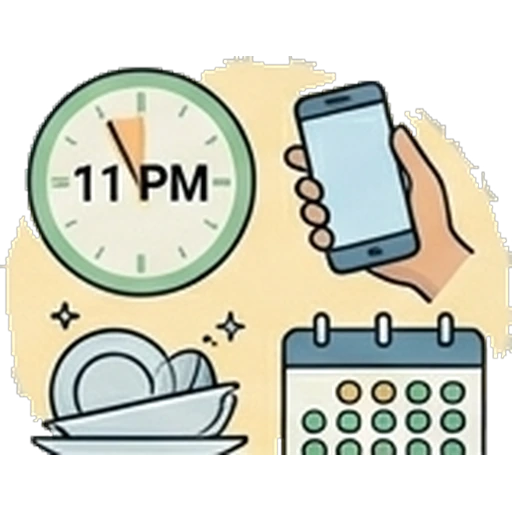
When you're burning out.
Burnout doesn't announce itself — it seeps in through 11 PM phone calls, a kitchen counter that hasn't been wiped in three weeks, and a calendar with no margin. By the time most caregivers recognize it, the depression has been brewing for months. The playbook walks through the FCA self-assessment, telling your own primary care doctor, finding peer support, establishing a regular respite cadence, considering therapy, and auditing what you can stop doing. Plus a crisis path with 988 + ER guidance for the moments where this isn't self-care, it's a medical one.
Open playbook →Parent · Same day
Your parent just died.
The first 24 hours are a sequence of small decisions nobody teaches you, layered on top of grief. The playbook walks through the right first call (hospice vs. 911), what the funeral home handles and what they don't, why to order 10-12 certified death certificates not 2-3, the three phone calls that have to happen within 48 hours (Social Security, the bank, the executor), and the deliberate "decide nothing major in week one" rule. Then a notification checklist, the start of probate, the sibling conversation about the house and belongings, and the question of acknowledgment cards.
Open playbook →Family · 90-minute meeting
Holding the first family meeting about Mom's (or Dad's) care.
The conversation adult children almost universally avoid is also the one that prevents the worst of what's coming. The playbook covers picking a date 2-3 weeks out, the one-paragraph framing email that doesn't ambush anyone, the picture you should quietly inventory before the meeting, the three-to-five concrete decisions to aim for (not "let's get on the same page"), the same-day written summary, the quarterly follow-up cadence, when to bring the parent in, and how to set up the shared workspace so the agreements survive past the call.
Open playbook →Parent · 72 hours + 30 days
Your parent is recovering from a surgery.
Hip and knee replacements, coronary bypass, cancer resection, hernia, gallbladder — recovery follows a predictable arc most families are not briefed on. The playbook covers pain management on a schedule (not chasing it), the DVT-prevention rhythm that prevents the most serious complication, daily wound-site inspection with phone photos, the difference between week-1 warning signs and week-2 warning signs, PT adherence in the first 6 weeks (the make-or-break window), the pain-medication taper, and the 30-day follow-up as the gate to driving, lifting, and getting back to work.
Open playbook →Parent · Multi-month decision
Your parent is moving in with you.
The largest single transition in family caregiving — financial, legal, physical, emotional. The playbook covers the financial conversation with siblings, the written caregiver agreement (and why Medicaid look-back makes the timing matter), the home-modification tour you should do BEFORE move day not after, the explicit decision about the car, the conversation with your spouse that determines whether the marriage survives this, an external respite cadence set up on day one (not "once we see how it goes"), and the 30-day check-in to catch small problems before they harden.
Open playbook →Parent · Financial intervention
When your parent's bills become a problem.
The shift from "occasional confusion about a credit card" to "real intervention needed" is rarely obvious. The playbook covers the don't-confront-yet rule (gather the picture first), sitting in on a bill-paying session, pulling the last 90 days of statements, the free credit-report check, the bank's elder-financial-abuse specialist team (most banks have one), the escalation ladder from account alerts → spending limits → credit freeze → consolidated bill pay, when to activate durable POA, and the disclosure-to-siblings decision that prevents the larger fight a year later.
Open playbook →Dementia · Late afternoon pattern
When your parent with dementia starts changing in the late afternoon.
Sundowning is the most-reported and least-understood behavioral pattern in dementia — reported by 20-25% of caregivers, most commonly mid-stage. The playbook covers a week of tracking (when, where, what), environmental adjustments (lights on before the change starts, lower stimulation), moving demanding tasks to morning, checking unmet basic needs first, daylight walks before 3pm, and the medication review that often resolves it. Plus: ruling out the acute medical causes (UTI, dehydration, pneumonia) that mimic sundowning but resolve with treatment, and setting up a respite block for the hardest hours of the day.
Open playbook →Operational · First month
Coordinating with a paid in-home caregiver.
You hired help. The thing nobody briefs you on is how to work together. The playbook covers the 60-minute sit-down on day one, the one-page printed care plan, the shift-end communication channel that prevents misunderstandings, scope clarity (what is and is not in the contract), the 2-week and 4-week check-ins, the weekly shift-note review, the backup plan for when the caregiver is sick, the household-employer payroll setup most families overlook, and the rule of always having at least two named alternatives so a single-source arrangement does not become a single-point-of-failure.
Open playbook →Parent · This is real now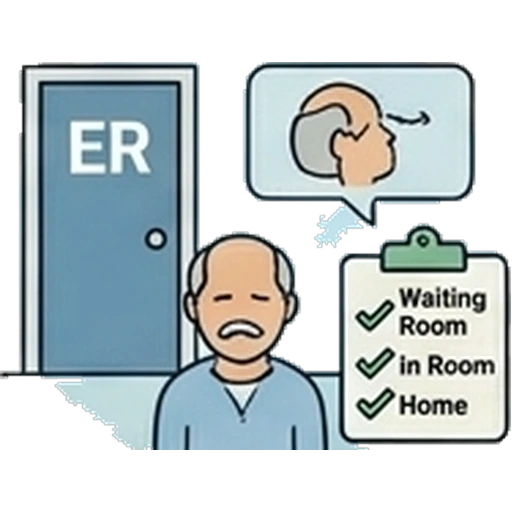
Your parent is in the ER for the first time.
The first ER visit is often the moment caregiving becomes real. The playbook covers what to bring (the medication picture, the medical history, the emergency contacts), how to find the one person in charge in this hour, the admission-vs-observation distinction that matters for Medicare rehab coverage later, the 7-day follow-up appointment that prevents most re-admissions, the same-night summary to the family, and the structural work to do this month: update everything in the workspace, set up the NEXT ER visit before you need it, reflect on what almost went wrong, check on yourself.
Open playbook →Spouse · First 6 monthsWhen your spouse is diagnosed with dementia.
The disease that takes a parent over years takes a spouse differently — you live with the person being lost. The playbook covers the first-week orientation (the Alzheimer's Association overview, the 24/7 helpline saved in your phone, telling one trusted person outside the family), the legal-and-financial setup while your spouse can still sign documents, the password-and-account handoff conversation, finding a spouse-specific support group (different from general caregiver groups), telling the adult children face-to-face, and starting the driving conversation. With younger-onset, the timeline compresses.
Open playbook →Spouse · Ongoing
When you are the caregiver-spouse.
The cohort with the highest rates of depression, sleep disruption, and their own emergency-room visits in all of caregiving. The work is 24/7 with no shift change. The playbook covers telling your own PCP separately, finding a respite block (even two hours), identifying one peer (another spouse caregiver, not a general one), sleeping separately for one night as a diagnostic, restructuring the financial picture for the new reality, setting up regular respite (not "when I can"), the conversation with adult children about what specifically you need, and the identity question — am I a wife or a nurse, both, at what hours.
Open playbook →Adult child with disabilities · Multi-year decision
Deciding where your adult child with disabilities will live.
The multi-year decision most parents postpone, with the biggest single impact on the next 30 years of their child's life. The playbook covers getting on every HCBS waiver waitlist (5-10 year lists, the option is the day you need it), mapping the housing options that actually exist in your state (varies dramatically — group home, supported living, ICF, family-care home, aging in place), visiting at least two of each type you are considering, separating the parent's preferences from the adult child's preferences, talking to families five years past the decision, getting the special-needs trust + ABLE account in place, and the documented letter of intent that becomes the most important reference for a successor caregiver later.
Open playbook →Adult child with disabilities · Future planning
When you are the parent-caregiver and you need to plan for after you.
The conversation parents of adult children with disabilities most want to have and most avoid. The arithmetic is straightforward: your child will likely outlive your ability to caregive. The plan that exists at that moment is the plan that runs. The playbook covers writing down what currently happens in a normal week (the single most valuable artifact you can leave behind), identifying and ranking candidate successor caregivers, the concrete "here is what taking over would actually mean" conversation with the successor, the special-needs trust + ABLE + beneficiary-designation work, the letter of intent, guardianship-with-named-successor (not just guardianship), bringing siblings into the workspace as observers years before they need to take over, and the yearly review.
Open playbook →Sibling · 5-7 day trip
You are flying in to help for a week.
The high-impact short trip is one of the most common sibling-caregiver moves. Done well, the week permanently lowers the load on the primary caregiver. Done poorly, it becomes another item on her list. The playbook covers asking what would actually help (and listening to the answer), picking three projects instead of eight, getting workspace and portal access BEFORE you arrive, blocking out one day for the unexpected, listening for the first 24 hours instead of fixing, taking at least one appointment off the primary caregiver's plate, having the conversation she cannot have, setting up at least one ongoing remote contribution before you leave, and the written summary that turns the trip into shared family memory.
Open playbook →Sibling · Ongoing remote
Being the out-of-state sibling.
A structural role, not a failure — ~15-20% of family caregivers live more than an hour away, more for adult children. The playbook covers the direct conversation about what would actually help (not "let me know"), picking one ongoing responsibility you OWN end-to-end (insurance, bills, refills, taxes), setting up your view of the workspace and checking it weekly, the calendared weekly check-in call, planning the next 2-4 visits deliberately, taking on one project that suits remote work, building a relationship with the parent independent of the primary caregiver, consistent and visible financial contribution, and being the second-call person hospital staff actually reach when the primary caregiver cannot pick up.
Open playbook →How playbooks work
Every playbook starts with a short intake — five to eight questions about your loved one's specific situation. The playbook personalizes from your answers: tasks you don't need disappear, dates anchor to events you specified, and other family members get assigned to the tasks they've already said they can help with.
Tasks land in the workspace as a real to-do list with due dates and owners. Marking one done updates the activity feed and the next-step suggestion engine; no separate “playbook app” to keep up with.
Why a playbook (and why not a chatbot)
A chatbot can answer one question. A playbook is a structure for the dozens of decisions that follow that first question — and a shared place where the family agrees who's doing which one. Static enough that a tired sibling can pick it up at 11 PM and know what to do. Dynamic enough that finishing one task surfaces the next.
See a playbook in action.
The demo workspace has the “after a fall” playbook half-completed so you can see how tasks roll forward as the family works through them.