cirrhosis을(를) 앓는 가족을 돌보기
Caring for someone with cirrhosis
Cirrhosis is the late stage of liver disease, and it changes a family's life in ways most aren't prepared for. The medical management is unusual — dietary restrictions that fight muscle wasting, medications that prevent confusion episodes, the constant watch for variceal bleeding. The transplant evaluation is its own gauntlet. Here's the orientation.
가족에게 무엇이 달라지는가
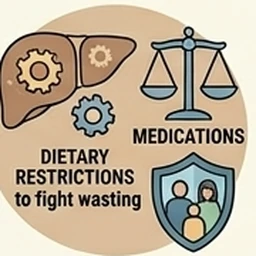
Cirrhosis (advanced scarring of the liver from chronic disease — alcohol, hepatitis, fatty liver, autoimmune) is a chronic-disease management problem with episodic crises. The day-to-day work centers on three patterns: a high-protein but low-sodium diet (the opposite of what most chronic diseases call for; cirrhosis patients often suffer muscle wasting that protein restriction worsens), the medication regimen (lactulose + rifaximin to prevent hepatic encephalopathy, diuretics for ascites, beta-blockers for varices, multiple supplements), and the constant readiness for an exacerbation. The exacerbations are real and frightening: hepatic encephalopathy (confusion that can come on over hours, often mistaken for dementia or stroke), variceal bleeding (vomiting blood — medical emergency), spontaneous bacterial peritonitis. The transplant evaluation is a multi-month process most families don't fully understand; the MELD score that determines wait-list priority changes weekly. And the alcohol-related-cirrhosis subset adds complex family dynamics — sobriety is required for most transplant programs, often after years of relapse + recovery.
일찍 마련해두어야 할 것들
진단 직후의 시기는 가족이 앞으로의 여정 전체가 의지하게 될 구조를 잡을 수 있는, 가장 여유가 있는 때입니다. 미룰수록 아래의 일들 가운데 일부는 점점 더 어려워집니다.
- A hepatology referral (not just GI) if the patient isn't already with one. Outcomes are measurably better with hepatologist care for cirrhosis; many academic medical centers have a dedicated cirrhosis or liver clinic.
- A transplant evaluation referral early. Wait times average 1-3 years depending on region + blood type + MELD score; preemptive listing (before complications) widens the patient's options. The evaluation itself is multi-month + intensive.
- A renal dietitian relationship (yes, the kidney specialist — cirrhosis nutrition is closer to renal nutrition than general nutrition). Generic "low-sodium" or "healthy" diet advice can worsen cirrhosis-specific issues. Most hepatology programs have one on the team.
- A clear understanding of the medication regimen — especially lactulose dosing, which the patient titrates themselves based on bowel movements (the inverse of how most medications work). Confusion about lactulose dosing is a leading cause of preventable hepatic encephalopathy hospitalizations.
- A written action plan for hepatic encephalopathy. Subtle confusion is often the first sign; families who recognize it and adjust lactulose at home prevent most hospitalizations. Most hepatology teams give one; if yours hasn't, ask.
- Legal documents while cognition is intact: durable POA, healthcare POA, advance directive. Hepatic encephalopathy can intermittently impair capacity for years before it permanently does; getting the paperwork done early matters.
가장 힘든 순간들
가족들이 가장 힘들었다고 말하는 순간들은 종종 누구도 미리 알려주지 않은 순간들입니다. 무엇이 올 가능성이 있는지 안다고 해서 이 순간들이 쉬워지지는 않습니다 — 그러나 이 순간들에 이름을 붙일 수 있고, 그 순간이 닥쳤을 때 가족을 다시 모이게 해주는 공간이 있다면 도움이 됩니다.
- The first hepatic encephalopathy episode. The patient who was lucid an hour ago is suddenly confused, agitated, sometimes hallucinating. The family's ability to recognize and respond (extra lactulose, hospital if severe) determines whether it stays a kitchen incident or becomes a 5-day admission.
- A variceal bleed. Vomiting blood is one of the most frightening symptoms in medicine. Emergency endoscopy with banding can stop it; the immediate threat is well-managed in tertiary centers; the recurrence risk shapes the next year.
- The transplant decision — listed vs. not, accepting vs. declining an organ offer at 3 AM. For alcohol-related cirrhosis, the sobriety question adds a layer most families weren't expecting: most programs require 6 months of documented sobriety, some require more.
- The conversation about stopping aggressive treatment. End-stage liver disease has clear inflection points; comfort-focused care is increasingly accepted in hepatology but rarely offered without the family asking. Palliative care consults early are widely recommended and widely under-utilized.
이 질환과 연결되는 플레이북
Kintaria의 플레이북은 이 돌봄 여정에서 실제로 나타나는 구체적인 순간들을 위한 단계별 안내입니다. 각각은 여러분의 워크스페이스에서 열리고, 여러분의 답변에 맞추어 개인화됩니다.
- Foundation · One-time setupGet the legal paperwork in order.
- Hospital · 48-hour windowYour parent was just discharged from a hospital.
- Spouse · OngoingWhen you are the caregiver-spouse.
- Transition · HospiceYou think your parent may be approaching the end of life.
- Parent · This is real nowYour parent is in the ER for the first time.
전국 단체와 상담 전화
이 단체들은 업계에서 표준적인 출발점으로 여기는 곳들입니다. 모두 무료이며, 모두 실제 사람이 받는 상담 전화입니다(돌봄제공자용 AI 전화 상담은 별개의 범주이며, 여기에서는 해당 질환에 대해 훈련받은 사람을 의미합니다).
- Helpline · 1-800-465-4837
The largest patient + family liver-disease organization. Free helpline, support groups (in-person + online), patient education on cirrhosis specifically, advocacy on access to transplant + new therapies.
International patient-advocacy organization. Strong on the policy + research side, useful for families navigating insurance coverage decisions or pursuing access to emerging therapies. Patient-and-family newsletters.
- 1-800-489-3863
Helps patients and families fundraise for transplant-related costs (medications, lodging during evaluation, post-transplant care). Most transplant centers refer families to NFT for the financial side.
For viral-hepatitis-related cirrhosis specifically. The Hep B Foundation's patient + family resources are the best in the category; hepatitis-C-related cirrhosis remains common despite cure rates because patients diagnosed before treatment availability often present with advanced disease.
Clinician-society resources translated for patients. Strong cirrhosis-specific guides; useful when the family wants to understand what the hepatology team is doing + why.
Authoritative US government plain-language overview. Free, comprehensive, available in English + Spanish.
Kintaria 워크스페이스가 어떻게 돕는가
Kintaria는 이 진단이 만들어낼 일들을 위해 설계된, 차분하고 공유되는 가족 워크스페이스입니다. 약 목록은 한 곳에 모여 있어, 주말에 비행기로 오는 셋째 형제자매가 무엇이 바뀌었는지 다시 처음부터 익힐 필요가 없습니다. 진료 일정은 공유되어 있어, 가족이 일정이 겹치거나 류마티스내과 추적 진료를 놓치는 일이 줄어듭니다. 활동 기록은 누가 무엇을 했는지에 대해 정직하기 때문에, 주 돌봄제공자가 모든 일을 조용히 떠안지 않게 됩니다. 그리고 워크스페이스는 이중 언어입니다 — 환자는 자신이 더 편한 언어로 읽고, 가족은 영어로 읽습니다 — 진단 자체가 이미 정신을 어지럽게 만드는 상황에서, 이 점은 사람들이 예상하는 것보다 훨씬 더 중요합니다.
처음 500가족에게 1년 무료 체험을 제공합니다. 신용카드가 필요하지 않습니다.
Kintaria가 무엇인지(그리고 아닌지)에 대한 안내
Kintaria는 임상 도구가 아니며, 의학적 의사결정을 대체하지 않고, cirrhosis 치료팀을 대신하지도 않습니다. 이 페이지의 안내는 돌봄을 조율하는 가족을 위한 것이고, 구체적인 임상 결정은 환자의 담당의가 내려야 합니다. 워크스페이스 곳곳에서 안내되는 escalation 신호는 그 경계에 대해 정직합니다.
이 페이지에서 사용된 돌봄 용어
읽으시면서 뜻을 알고 싶을 수 있는 단어들입니다. 각 단어는 별도의 페이지로 열리며, 쉬운 말로 정의와 돌봄 현장에서 어떻게 등장하는지를 설명합니다.
- Palliative care — Specialty care focused on quality of life and symptom relief for people with serious illness.
- Power of attorney — A legal document where one person (the "principal") authorizes another person (the "agent" or "attorney-in-fact") to act on their behalf in financial matters.
- Healthcare proxy — A legal document naming a person to make medical decisions if the patient cannot.
- Advance directive — A written document specifying a patient's wishes for end-of-life medical care — typically covering CPR, mechanical ventilation, artificial nutrition, and other interventions when recovery is unlikely.
- Comfort care — A care approach focused entirely on symptom relief and dignity rather than disease treatment.
함께 보기: 모든 질환 · 모든 플레이북 · 돌봄제공자 용어집 · 전국 자원 디렉터리