sickle cell diseaseを抱えるご家族の介護
Caring for someone with sickle cell disease
Sickle cell disease is the most common inherited blood disorder in the US, affecting ~100,000 Americans — almost all of African, Caribbean, or Latin American descent. It's also the disease where racial bias in pain management is most documented. The caregiver role often includes advocacy at every emergency room visit. Here's the orientation.
家族にとって何が変わるか
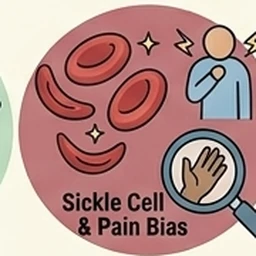
Sickle cell disease (SCD) reshapes a family along several axes that don't resemble other chronic-disease patterns. The medical work is dominated by pain — vaso-occlusive crises, in which sickle-shaped red blood cells block blood vessels, cause some of the most severe pain in medicine, requiring opioid treatment at levels that often trigger profiling at emergency rooms. The cumulative organ damage from years of micro-occlusion affects almost every organ system — chronic kidney disease, pulmonary hypertension, stroke risk, retinopathy, leg ulcers, avascular necrosis of joints — with the trajectory varying widely between patients. The treatment landscape has changed dramatically: hydroxyurea remains the foundation, voxelotor and crizanlizumab are newer options, and gene-therapy approvals in 2023-2024 (Casgevy, Lyfgenia) have made a curative path possible for some patients but at $2-3M per treatment with significant short-term toxicity. The family-caregiver role is unusually advocacy-heavy: ensuring the patient is believed at the ED, ensuring pain medication is given at the right doses, ensuring the SCD specialist (not just the hospitalist) is consulted, navigating insurance for the expensive newer therapies, often coordinating across multiple subspecialists.
早めに整えておきたいこと
診断後の期間は、これから先の道のり全体が支えにする構造を、ご家族が最もよく整えられるタイミングです。先延ばしにすればするほど、ここに挙げた事柄のいくつかは難しくなっていきます。
- Connection to a hematologist who specializes in sickle cell (not just a general hematologist). Outcomes are dramatically better with SCD-specialist care. The Sickle Cell Disease Association of America (SCDAA) maintains a clinic locator.
- A written sickle cell pain action plan from the hematologist, signed and dated. The single most useful document a family can have at the ED — it documents the patient's typical pain regimen, prior responses to medications, and the SCD specialist's recommendation. Reduces (does not eliminate) the bias problem.
- Pneumococcal + meningococcal + annual flu + COVID + RSV vaccines. Patients with SCD are functionally asplenic and at high risk for serious bacterial infections; the vaccine schedule is more intensive than for the general population. Penicillin prophylaxis through age 5 is standard for kids.
- Education about hydroxyurea + the newer therapies. Hydroxyurea reduces crises and extends life, but uptake remains too low; clinician + family advocacy for it makes a measurable difference. Voxelotor, crizanlizumab, and gene therapy are newer options each family should discuss with their specialist.
- A stroke-prevention plan for children with SCD. Transcranial Doppler ultrasound starting at age 2 identifies kids at high risk for stroke; chronic transfusion can prevent it. Often missed at non-SCD centers.
- Connection to a local Sickle Cell Disease Association chapter or community-based SCD organization. The advocacy + peer-support work in the SCD community is some of the most effective in any patient community. Strong family-mentor programs.
もっともつらい瞬間
ご家族がもっともつらかったと語る瞬間は、誰も事前に教えてくれなかった瞬間であることがよくあります。これから起こりうることを知っていても、どの瞬間も楽になるわけではありません。それでも、その瞬間に名前を与えられること、そしてその瞬間が来たときに家族を再び結びつけてくれるワークスペースがあることは、確かに助けになります。
- The first vaso-occlusive crisis admission where pain isn't adequately treated, or the patient is profiled as drug-seeking. The bias is well-documented and ongoing; the family's advocacy at the bedside is structurally important. Documentation, calm escalation to the patient's SCD specialist, and a written pain plan all help.
- The acute chest syndrome admission. ACS is the leading cause of death in adults with SCD; presents as chest pain + cough + fever, escalates fast, requires aggressive treatment including transfusion. Most families don't know to look for it specifically.
- The stroke conversation for parents of children with SCD. Stroke risk is meaningful in pediatric SCD; the prevention regimen (chronic transfusion or hydroxyurea) is intensive and the alternative is heavy. The decision is best had with a pediatric hematologist + neurologist together.
- The gene therapy decision. Casgevy + Lyfgenia offer a possible cure but cost $2-3M, involve months of treatment + isolation, carry real short-term toxicity, and the long-term outcomes are still emerging. The decision is profoundly personal; most patients + families take months to a year to make it.
これに対応するプレイブック
Kintaria のプレイブックは、この介護の道のりで実際に出てくる具体的な場面のための、ステップ・バイ・ステップの手引きです。それぞれがあなたのワークスペース内で開き、あなたの回答に応じてパーソナライズされます。
- Foundation · One-time setupGet the legal paperwork in order.
- Hospital · 48-hour windowYour parent was just discharged from a hospital.
- Wellness · OngoingWhen you're burning out.
- Parent · This is real nowYour parent is in the ER for the first time.
- Parent · Financial interventionWhen your parent's bills become a problem.
全国規模の団体と電話相談窓口
これらは、この分野で標準的な出発点とされている団体です。すべて無料で、すべて実在の担当者が対応する電話相談窓口です(介護者向けの AI 電話相談はまた別のカテゴリーで、ここでは特定の疾患の研修を受けた人を指します)。
- 1-800-421-8453
The national SCD organization. Local member organizations across the country, clinic locator (SCDAA member SCD treatment centers), advocacy on insurance + policy issues. Strong patient + family resources.
Patient-led, social-media-native education + community. Plain-language resources on every aspect of SCD living. Particularly useful for newer-generation patients + caregivers.
CDC's SCD program. Authoritative information on screening, complications, treatment landscape, and emerging research. Plain-language, regularly updated.
Pediatric-focused SCD support. Family camps, scholarships, support for parents of newly-diagnosed children, advocacy for school accommodations.
Authoritative US government plain-language overview. Free, comprehensive, available in English + Spanish.
For patients + families navigating the reproductive-health side of SCD — genetic counseling, family planning, pregnancy in SCD. An under-served area; SCRED fills a real gap.
Kintaria のワークスペースがどう役立つか
Kintaria は、この診断がこれから生み出す仕事のために設計された、穏やかで共有可能な家族のワークスペースです。お薬リストは 1 か所にまとまっており、週末に飛行機で帰ってくる 3 番目のきょうだいが「何が変わったか」を一から学び直さずに済みます。診察の予定は共有されていて、家族が予定を重ねたり、リウマチ科のフォローアップを見落としたりしにくくなります。アクティビティの記録は「誰が何をしたか」について正直で、主たる介護者がすべてを黙って抱え込まなくて済みます。そしてワークスペースはバイリンガルです — 患者さまはご自身が楽な言語で読み、ご家族は英語で読みます — 診断そのものですでに頭が回らない状況では、この点は多くの人が想像する以上に重要になります。
創設の最初の 500 ご家族には 1 年間の無料トライアルをご提供します。クレジットカードは不要です。
Kintaria が何であり、何でないかについての一文
Kintaria は臨床ツールではなく、医療上の意思決定の代わりになるものでもなく、sickle cell diseaseの医療チームの代わりになるものでもありません。このページの内容は、介護を調整するご家族のためのオリエンテーションです。個別の臨床判断は、患者さまの担当医師が行う必要があります。ワークスペース全体で示されるエスカレーションのサインは、その境界について正直に書かれています。
このページに出てくる介護用語
お読みになりながら意味を確認したくなりそうな言葉です。それぞれが独立したページで開き、わかりやすい言葉での意味と、介護の現場でどのように出てくるかを説明します。
- Hospitalist — A doctor who works exclusively inside the hospital.
関連リンク: すべての疾患 · すべてのプレイブック · 介護者用語集 · 全国リソース一覧