multiple sclerosisを抱えるご家族の介護
Caring for someone with multiple sclerosis
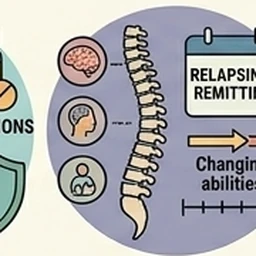
MS is the most variable of the major chronic neurologic diseases — some patients live decades with mild symptoms, others progress quickly, and the relapsing-remitting course can look stable for years before changing. The work for the family is less about a single crisis and more about adapting to a moving target. Here's the orientation.
家族にとって何が変わるか
Multiple sclerosis is an autoimmune attack on the protective coating of nerve fibers in the brain and spinal cord. Most patients start with relapsing-remitting MS (relapses + recovery) and a meaningful share transition to secondary-progressive MS over time. The disease affects almost every system: motor function (gait, hand use), sensory (numbness, tingling), cognitive (processing speed, memory), bladder + bowel, vision, sexual function, and fatigue — the symptom MS patients consistently rank as most disabling and that families consistently underestimate. The good news: disease-modifying therapies (DMTs) developed in the last 15 years dramatically slow progression and have changed the natural history. The harder news: those DMTs need to be matched to the patient's disease course, monitored with periodic MRIs, and adjusted as the disease evolves. The family role is often less about acute crises and more about steady accommodation as abilities shift.
早めに整えておきたいこと
診断後の期間は、これから先の道のり全体が支えにする構造を、ご家族が最もよく整えられるタイミングです。先延ばしにすればするほど、ここに挙げた事柄のいくつかは難しくなっていきます。
- A relationship with an MS-specialist neurologist, not a general neurologist. The MS landscape has changed so fast that outcomes are measurably better with subspecialists. The National MS Society maintains a list of partners in care.
- A clear understanding of which DMT the patient is on, what it does, and what to monitor. DMT options have grown to ~20 with very different mechanisms + monitoring requirements; understanding the choice is part of being a useful caregiver.
- Baseline cognitive + neuropsych testing. Cognitive symptoms are common in MS, often subtle, and progress over years. Having a baseline makes future changes easier to recognize.
- A fatigue-management plan. MS fatigue is a unique kind of exhaustion that doesn't respond to rest the way ordinary tiredness does. Pacing, energy budgeting, and (in some cases) modafinil or amantadine help; "just push through" advice can worsen outcomes.
- Home + workplace accommodations early — handrails, raised toilet seat, a chair to sit while cooking, an FMLA conversation with the employer if energy demands are a problem. Easier to set up before they're needed.
- Connection to a local National MS Society chapter for support groups + equipment programs + family-services social work. The MS community is well-organized and generous.
もっともつらい瞬間
ご家族がもっともつらかったと語る瞬間は、誰も事前に教えてくれなかった瞬間であることがよくあります。これから起こりうることを知っていても、どの瞬間も楽になるわけではありません。それでも、その瞬間に名前を与えられること、そしてその瞬間が来たときに家族を再び結びつけてくれるワークスペースがあることは、確かに助けになります。
- A relapse after a period of stability. Often hits without warning — new neurologic symptoms over days to weeks. The fear that this is "the start of progression" is one of the heaviest parts of relapsing-remitting MS.
- The conversation about disability accommodation at work or stopping work entirely. MS often affects people in their 30s-50s — peak earning years — and the work decisions reshape family finances in ways most couples weren't planning for.
- The transition from relapsing-remitting to secondary-progressive MS. Often visible only in retrospect; many patients describe the recognition (or the conversation with the neurologist about it) as one of the hardest moments.
- Cognitive changes — particularly when the patient is still high-functioning enough that others don't notice but they themselves know something has shifted. Validation and accommodation matter; dismissal ("you're fine, you remembered the dinner") is corrosive.
これに対応するプレイブック
Kintaria のプレイブックは、この介護の道のりで実際に出てくる具体的な場面のための、ステップ・バイ・ステップの手引きです。それぞれがあなたのワークスペース内で開き、あなたの回答に応じてパーソナライズされます。
全国規模の団体と電話相談窓口
これらは、この分野で標準的な出発点とされている団体です。すべて無料で、すべて実在の担当者が対応する電話相談窓口です(介護者向けの AI 電話相談はまた別のカテゴリーで、ここでは特定の疾患の研修を受けた人を指します)。
- MS Navigator · 1-800-344-4867
The largest MS-focused organization in the US. MS Navigators are case-management-style staff who help with everything from finding a neurologist to applying for disability to figuring out accessible vacation rentals. Free, real humans, deeply useful. Local chapters across the country.
- Helpline · 1-800-532-7667
Distinct from the National MS Society — runs an equipment-distribution program (cooling vests for heat-sensitive patients, mobility aids), a peer-support program, and a "My MS Manager" mobile app for symptom + medication tracking.
- Helpline · 1-888-673-6287
Direct financial assistance — emergency grants, cooling-vest program, home-care assistance, transportation grants. The financial-help organization in the MS space.
Wellness-focused MS programs — exercise, nutrition, fatigue management. Family-inclusive weekend programs (free); the closest thing to a "go to one place and learn everything" experience in MS. Patient + care partner attend together.
Federation of 9 MS organizations — the MS Coalition publishes the comprehensive treatment-decision tools the National MS Society + MSAA + others link to. Useful starting point when comparing DMT options.
Authoritative US government plain-language overview. Free, comprehensive.
Kintaria のワークスペースがどう役立つか
Kintaria は、この診断がこれから生み出す仕事のために設計された、穏やかで共有可能な家族のワークスペースです。お薬リストは 1 か所にまとまっており、週末に飛行機で帰ってくる 3 番目のきょうだいが「何が変わったか」を一から学び直さずに済みます。診察の予定は共有されていて、家族が予定を重ねたり、リウマチ科のフォローアップを見落としたりしにくくなります。アクティビティの記録は「誰が何をしたか」について正直で、主たる介護者がすべてを黙って抱え込まなくて済みます。そしてワークスペースはバイリンガルです — 患者さまはご自身が楽な言語で読み、ご家族は英語で読みます — 診断そのものですでに頭が回らない状況では、この点は多くの人が想像する以上に重要になります。
創設の最初の 500 ご家族には 1 年間の無料トライアルをご提供します。クレジットカードは不要です。
Kintaria が何であり、何でないかについての一文
Kintaria は臨床ツールではなく、医療上の意思決定の代わりになるものでもなく、multiple sclerosisの医療チームの代わりになるものでもありません。このページの内容は、介護を調整するご家族のためのオリエンテーションです。個別の臨床判断は、患者さまの担当医師が行う必要があります。ワークスペース全体で示されるエスカレーションのサインは、その境界について正直に書かれています。
関連リンク: すべての疾患 · すべてのプレイブック · 介護者用語集 · 全国リソース一覧