chronic painを抱えるご家族の介護
Caring for someone with chronic pain
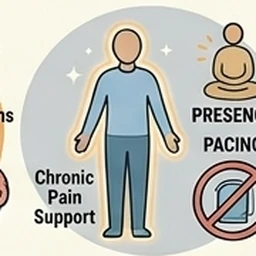
Chronic pain is the most prevalent and most invisible chronic condition in the US — ~50 million adults, no scan that confirms it, no clean treatment arc. The work for the family is mostly about presence and pacing, with periodic flares that reshape the week. Here's the orientation.
家族にとって何が変わるか
Chronic pain (pain that persists more than three months) reshapes a family without producing the visible markers other chronic diseases come with. The patient is often dismissed by clinicians, friends, and sometimes the family — the "but you look fine" comment is the most common refrain. The work for the family is paced support: helping with tasks during flares, accommodating reduced energy on bad days, and protecting the routines that keep pain manageable. The treatment landscape is unusually fragmented (primary care, pain medicine specialists, physical therapy, psychology, complementary medicine, sometimes interventional procedures); the family often becomes the de facto care coordinator. The opioid landscape adds a layer most families weren't prepared for: patients on long-term opioids face stigma at every appointment, prescription delays that can trigger withdrawal, and the rare-but-real risk of dependence. And depression is so common with chronic pain (~50% lifetime prevalence) that screening + treatment is structural, not optional.
早めに整えておきたいこと
診断後の期間は、これから先の道のり全体が支えにする構造を、ご家族が最もよく整えられるタイミングです。先延ばしにすればするほど、ここに挙げた事柄のいくつかは難しくなっていきます。
- A relationship with a pain medicine specialist (not just the PCP). Multidisciplinary pain clinics combine medical, PT, and behavioral treatment in one place and have measurably better outcomes than fragmented care.
- A pain diary or app — tracking when, where, what helps, what triggers. Three to four weeks of data is more useful than years of recall when the patient meets a new clinician.
- A physical-therapy referral, even if the patient is in too much pain to do much. Modern PT for chronic pain is graded exposure + pacing + body-awareness work, not "no pain no gain." The wrong PT can make things worse; ask for one experienced in chronic pain specifically.
- A behavioral-health referral for CBT for chronic pain or ACT (Acceptance and Commitment Therapy). These are evidence-based for chronic pain and rarely offered without asking. Different from "treating the depression" — they specifically address pain-coping strategies.
- A documented chronic-pain plan signed by the prescriber if opioids are part of the regimen. Pharmacy delays, insurance prior authorizations, and provider transitions all go more smoothly with a written record of the established treatment.
- A family conversation about pacing. The well-meaning "let me know if you need anything" rarely helps; concrete commitments ("I'll cook on Tuesdays whatever your pain level," "I'll drive you to PT every Friday") land better.
もっともつらい瞬間
ご家族がもっともつらかったと語る瞬間は、誰も事前に教えてくれなかった瞬間であることがよくあります。これから起こりうることを知っていても、どの瞬間も楽になるわけではありません。それでも、その瞬間に名前を与えられること、そしてその瞬間が来たときに家族を再び結びつけてくれるワークスペースがあることは、確かに助けになります。
- The first time a clinician implies the pain is in the patient's head, or is exaggerated, or is "just" depression. The damage to the patient is real; advocacy from the family caregiver — calmly, with documentation — is one of the most useful things a family member can do.
- A pain flare that lasts weeks. Most chronic pain has good and bad periods; a prolonged flare can shake the family's confidence that pacing + treatment is working. The right response is usually patience plus a check-in with the pain specialist, not panic.
- The opioid conversation — either the patient struggling with dependence, or being suddenly tapered against their will (a common late-2010s/2020s pattern that produced real harm), or being denied an established prescription by a new provider. The family's role is to advocate, to know the patient's clinical history, and to be present at difficult appointments.
- The cumulative emotional weight on the caregiver. Living with someone in chronic pain is a slow-burn caregiving role with relatively little recognition. Caregiver burnout in this cohort is real, under-supported, and often unaddressed until it becomes its own clinical issue.
これに対応するプレイブック
Kintaria のプレイブックは、この介護の道のりで実際に出てくる具体的な場面のための、ステップ・バイ・ステップの手引きです。それぞれがあなたのワークスペース内で開き、あなたの回答に応じてパーソナライズされます。
全国規模の団体と電話相談窓口
これらは、この分野で標準的な出発点とされている団体です。すべて無料で、すべて実在の担当者が対応する電話相談窓口です(介護者向けの AI 電話相談はまた別のカテゴリーで、ここでは特定の疾患の研修を受けた人を指します)。
The largest patient-led chronic-pain advocacy organization in the US. Patient + caregiver support groups, peer mentoring, advocacy on insurance + opioid policy, the "Invisible Project" patient storytelling series.
- 1-800-533-3231
Peer support + education with a focus on self-management skills. The "From Patient to Person" framework is the foundation; chapter network across the country; family-caregiver-specific materials.
Independent journalism specifically on the chronic-pain policy + treatment landscape. Useful for staying current on opioid policy changes, insurance coverage shifts, and new treatments. Free.
- Helpline · 1-800-283-7800
For chronic pain related to arthritis (the most common cause). Free helpline, exercise programs (Walk With Ease, Tai Chi), local chapter support groups.
Condition-specific (fibromyalgia is a common subset of chronic widespread pain). Patient + family resources, support-group locator, advocacy.
NIH National Center for Complementary and Integrative Health plain-language overview, with strong coverage of evidence-based non-medication approaches.
Kintaria のワークスペースがどう役立つか
Kintaria は、この診断がこれから生み出す仕事のために設計された、穏やかで共有可能な家族のワークスペースです。お薬リストは 1 か所にまとまっており、週末に飛行機で帰ってくる 3 番目のきょうだいが「何が変わったか」を一から学び直さずに済みます。診察の予定は共有されていて、家族が予定を重ねたり、リウマチ科のフォローアップを見落としたりしにくくなります。アクティビティの記録は「誰が何をしたか」について正直で、主たる介護者がすべてを黙って抱え込まなくて済みます。そしてワークスペースはバイリンガルです — 患者さまはご自身が楽な言語で読み、ご家族は英語で読みます — 診断そのものですでに頭が回らない状況では、この点は多くの人が想像する以上に重要になります。
創設の最初の 500 ご家族には 1 年間の無料トライアルをご提供します。クレジットカードは不要です。
Kintaria が何であり、何でないかについての一文
Kintaria は臨床ツールではなく、医療上の意思決定の代わりになるものでもなく、chronic painの医療チームの代わりになるものでもありません。このページの内容は、介護を調整するご家族のためのオリエンテーションです。個別の臨床判断は、患者さまの担当医師が行う必要があります。ワークスペース全体で示されるエスカレーションのサインは、その境界について正直に書かれています。
このページに出てくる介護用語
お読みになりながら意味を確認したくなりそうな言葉です。それぞれが独立したページで開き、わかりやすい言葉での意味と、介護の現場でどのように出てくるかを説明します。
- Caregiver burnout — A state of physical, emotional, and mental exhaustion that develops over months or years of caregiving — characterized by chronic fatigue, irritability, isolation, anxiety, depression, sleep disturbance, and worsening physical health.
関連リンク: すべての疾患 · すべてのプレイブック · 介護者用語集 · 全国リソース一覧