Cuidando a un ser querido con sickle cell disease
Caring for someone with sickle cell disease
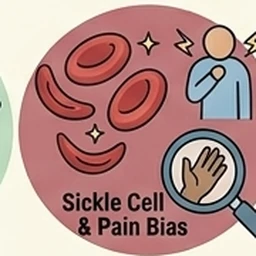
Sickle cell disease is the most common inherited blood disorder in the US, affecting ~100,000 Americans — almost all of African, Caribbean, or Latin American descent. It's also the disease where racial bias in pain management is most documented. The caregiver role often includes advocacy at every emergency room visit. Here's the orientation.
Lo que cambia para la familia
Sickle cell disease (SCD) reshapes a family along several axes that don't resemble other chronic-disease patterns. The medical work is dominated by pain — vaso-occlusive crises, in which sickle-shaped red blood cells block blood vessels, cause some of the most severe pain in medicine, requiring opioid treatment at levels that often trigger profiling at emergency rooms. The cumulative organ damage from years of micro-occlusion affects almost every organ system — chronic kidney disease, pulmonary hypertension, stroke risk, retinopathy, leg ulcers, avascular necrosis of joints — with the trajectory varying widely between patients. The treatment landscape has changed dramatically: hydroxyurea remains the foundation, voxelotor and crizanlizumab are newer options, and gene-therapy approvals in 2023-2024 (Casgevy, Lyfgenia) have made a curative path possible for some patients but at $2-3M per treatment with significant short-term toxicity. The family-caregiver role is unusually advocacy-heavy: ensuring the patient is believed at the ED, ensuring pain medication is given at the right doses, ensuring the SCD specialist (not just the hospitalist) is consulted, navigating insurance for the expensive newer therapies, often coordinating across multiple subspecialists.
Lo que conviene organizar temprano
La ventana después del diagnóstico es cuando la familia tiene más margen para establecer la estructura sobre la que se apoyará el resto del camino. Mientras más espere, más difícil se vuelve cada uno de estos pasos.
- Connection to a hematologist who specializes in sickle cell (not just a general hematologist). Outcomes are dramatically better with SCD-specialist care. The Sickle Cell Disease Association of America (SCDAA) maintains a clinic locator.
- A written sickle cell pain action plan from the hematologist, signed and dated. The single most useful document a family can have at the ED — it documents the patient's typical pain regimen, prior responses to medications, and the SCD specialist's recommendation. Reduces (does not eliminate) the bias problem.
- Pneumococcal + meningococcal + annual flu + COVID + RSV vaccines. Patients with SCD are functionally asplenic and at high risk for serious bacterial infections; the vaccine schedule is more intensive than for the general population. Penicillin prophylaxis through age 5 is standard for kids.
- Education about hydroxyurea + the newer therapies. Hydroxyurea reduces crises and extends life, but uptake remains too low; clinician + family advocacy for it makes a measurable difference. Voxelotor, crizanlizumab, and gene therapy are newer options each family should discuss with their specialist.
- A stroke-prevention plan for children with SCD. Transcranial Doppler ultrasound starting at age 2 identifies kids at high risk for stroke; chronic transfusion can prevent it. Often missed at non-SCD centers.
- Connection to a local Sickle Cell Disease Association chapter or community-based SCD organization. The advocacy + peer-support work in the SCD community is some of the most effective in any patient community. Strong family-mentor programs.
Los momentos más difíciles
Los momentos que las familias describen como los más difíciles suelen ser aquellos sobre los que nadie las advirtió. Saber lo que probablemente viene no hace que ninguno sea fácil — pero tener un nombre para ellos, y un espacio de trabajo que vuelva a unir a la familia cuando ocurren, sí ayuda.
- The first vaso-occlusive crisis admission where pain isn't adequately treated, or the patient is profiled as drug-seeking. The bias is well-documented and ongoing; the family's advocacy at the bedside is structurally important. Documentation, calm escalation to the patient's SCD specialist, and a written pain plan all help.
- The acute chest syndrome admission. ACS is the leading cause of death in adults with SCD; presents as chest pain + cough + fever, escalates fast, requires aggressive treatment including transfusion. Most families don't know to look for it specifically.
- The stroke conversation for parents of children with SCD. Stroke risk is meaningful in pediatric SCD; the prevention regimen (chronic transfusion or hydroxyurea) is intensive and the alternative is heavy. The decision is best had with a pediatric hematologist + neurologist together.
- The gene therapy decision. Casgevy + Lyfgenia offer a possible cure but cost $2-3M, involve months of treatment + isolation, carry real short-term toxicity, and the long-term outcomes are still emerging. The decision is profoundly personal; most patients + families take months to a year to make it.
Planes que se relacionan con esto
Los planes de Kintaria son guías paso a paso para los momentos específicos que aparecen en este recorrido de cuidado. Cada uno se abre en su espacio de trabajo y se personaliza con sus respuestas.
- Foundation · One-time setupGet the legal paperwork in order.
- Hospital · 48-hour windowYour parent was just discharged from a hospital.
- Wellness · OngoingWhen you're burning out.
- Parent · This is real nowYour parent is in the ER for the first time.
- Parent · Financial interventionWhen your parent's bills become a problem.
Organizaciones nacionales y líneas de ayuda
Estas son las organizaciones que el sector considera los puntos de partida estándar. Todas son gratuitas y todas tienen líneas atendidas por personas reales (la línea telefónica de IA para cuidadores es otra categoría — aquí se trata de personas capacitadas en la condición específica).
- 1-800-421-8453
The national SCD organization. Local member organizations across the country, clinic locator (SCDAA member SCD treatment centers), advocacy on insurance + policy issues. Strong patient + family resources.
Patient-led, social-media-native education + community. Plain-language resources on every aspect of SCD living. Particularly useful for newer-generation patients + caregivers.
CDC's SCD program. Authoritative information on screening, complications, treatment landscape, and emerging research. Plain-language, regularly updated.
Pediatric-focused SCD support. Family camps, scholarships, support for parents of newly-diagnosed children, advocacy for school accommodations.
Authoritative US government plain-language overview. Free, comprehensive, available in English + Spanish.
For patients + families navigating the reproductive-health side of SCD — genetic counseling, family planning, pregnancy in SCD. An under-served area; SCRED fills a real gap.
Cómo ayuda un espacio Kintaria
Kintaria es un espacio familiar compartido y tranquilo, diseñado para el trabajo que este diagnóstico está por generar. La lista de medicamentos vive en un solo lugar (para que el tercer hermano que vuela el fin de semana no tenga que volver a aprender qué cambió). El calendario de citas es compartido (para que la familia no duplique citas ni pierda el control de seguimiento de reumatología). El historial de actividad es honesto sobre quién hizo qué (para que el cuidador principal no cargue todo en silencio). Y el espacio es bilingüe — el paciente lee en su idioma preferido, la familia lee en inglés — lo cual importa más de lo que la gente espera cuando el diagnóstico mismo ya es desorientador.
Prueba gratuita de 1 año para las primeras 500 familias fundadoras. Sin tarjeta de crédito.
Una nota sobre lo que Kintaria es (y no es)
Kintaria no es una herramienta clínica, no es un sustituto de las decisiones médicas, no reemplaza al equipo de atención de sickle cell disease. La orientación de esta página es para familias que coordinan el cuidado; las decisiones clínicas específicas las debe tomar el clínico del paciente. Los mensajes de escalada en todo el espacio son honestos sobre ese límite.
Términos de cuidado en esta página
Palabras que quizá quiera tener definidas mientras lee esto. Cada una abre su propia página con el significado en lenguaje sencillo y cómo aparece en el cuidado.
- Hospitalist — A doctor who works exclusively inside the hospital.
Ver también: todas las condiciones · todos los planes · glosario de cuidado · directorio nacional de recursos