Cuidando a un ser querido con diabetes
Caring for an older adult with diabetes
Diabetes in an older adult is two stories at once: the medical management of blood sugar, and the long-tail of complications — vision, kidney function, foot care, the diabetes-dementia connection — that gradually reshape the patient's life. The work for the family is less about a single moment and more about preventing the next problem. Here's the orientation.
Lo que cambia para la familia
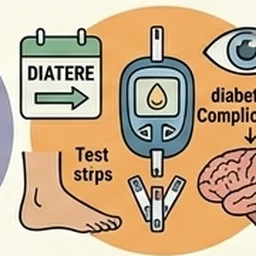
Type 2 diabetes (the most common form in older adults) is a chronic-disease management problem with consequences that compound over years. The day-to-day work — blood-sugar monitoring, medication adherence, food choices, hypoglycemia recognition — sits with the patient and a family caregiver who often quietly absorbs it. Several big patterns reshape family life: hypoglycemia (low blood sugar) episodes that come on fast, especially with insulin or sulfonylureas; the diabetes-dementia connection (poorly-controlled diabetes meaningfully raises dementia risk + makes existing cognitive symptoms worse); the diabetic complications — retinopathy, neuropathy, kidney disease, peripheral artery disease, foot ulcers that become infections that become amputations — that progress more slowly than a heart attack but are no less consequential; and the medication burden, often 5-10 drugs, that requires real coordination. The good news: most diabetic complications are preventable or delayable with steady management. The harder news: "steady management" is harder than it sounds.
Lo que conviene organizar temprano
La ventana después del diagnóstico es cuando la familia tiene más margen para establecer la estructura sobre la que se apoyará el resto del camino. Mientras más espere, más difícil se vuelve cada uno de estos pasos.
- A continuous glucose monitor (CGM) if not already prescribed. CGMs (Dexcom, Libre) have transformed diabetes management — real-time glucose data, alarms for highs and lows, trend arrows. Medicare covers them for most patients on insulin. The information is useful to the family caregiver too.
- A standing-orders foot exam at every primary-care visit. Diabetic foot complications are one of the top preventable causes of hospitalization and amputation in older adults; the screen takes 60 seconds.
- Annual dilated eye exam with an ophthalmologist (not just an optometrist). Diabetic retinopathy progresses silently; early-stage treatment is dramatically more effective than late.
- Annual kidney function check (urine albumin + eGFR). Diabetes is the #1 cause of kidney disease in the US; catching the slide early opens treatment options that dramatically slow progression.
- A clear written "if blood sugar is X, do Y" plan from the patient's primary or endocrinologist. The patient needs it, the spouse needs it, the home caregiver needs it. Hypoglycemia in older adults can present as confusion (mistaken for dementia) or falls (mistaken for orthostatic issues).
- A conversation about deprescribing if the patient is on a sulfonylurea (glipizide, glyburide) or aggressive insulin regimen. Older-adult guidelines explicitly recommend LESS-tight blood-sugar targets in patients with limited life expectancy or significant comorbidities; many older diabetics are over-treated and at high risk of dangerous hypoglycemia.
Los momentos más difíciles
Los momentos que las familias describen como los más difíciles suelen ser aquellos sobre los que nadie las advirtió. Saber lo que probablemente viene no hace que ninguno sea fácil — pero tener un nombre para ellos, y un espacio de trabajo que vuelva a unir a la familia cuando ocurren, sí ayuda.
- The first serious hypoglycemia episode. Often presents as sudden confusion, sweating, weakness; can mimic stroke or cardiac event. The family's ability to recognize + treat (glucose tablets, juice, glucagon kit) determines whether it stays a kitchen incident or becomes an ER visit.
- A diabetic-foot infection or ulcer. What starts as a small sore can progress to cellulitis, osteomyelitis, and amputation faster than families expect. The decision to see a podiatrist or wound-care specialist same-day vs "wait and see" is consequential.
- The diagnosis of diabetic retinopathy or kidney disease. Both are silent until they're not, and the patient often experiences these as out-of-the-blue losses even when the progression has been visible to the clinicians for years.
- Cognitive symptoms in a patient with long-standing diabetes. The diabetes-dementia connection is real and bidirectional. Worsening cognition can make diabetes management harder, which worsens diabetes control, which worsens cognition. Breaking the cycle requires simplifying the medication regimen, often deprescribing aggressive treatments, and accepting less-tight targets.
Planes que se relacionan con esto
Los planes de Kintaria son guías paso a paso para los momentos específicos que aparecen en este recorrido de cuidado. Cada uno se abre en su espacio de trabajo y se personaliza con sus respuestas.
- Foundation · One-time setupGet the legal paperwork in order.
- Hospital · 48-hour windowYour parent was just discharged from a hospital.
- Planning · First few weeksYou're ready to bring in a home health aide.
- Parent · 72 hours + 30 daysYour parent is recovering from a surgery.
- Parent · This is real nowYour parent is in the ER for the first time.
Organizaciones nacionales y líneas de ayuda
Estas son las organizaciones que el sector considera los puntos de partida estándar. Todas son gratuitas y todas tienen líneas atendidas por personas reales (la línea telefónica de IA para cuidadores es otra categoría — aquí se trata de personas capacitadas en la condición específica).
- 1-800-DIABETES (1-800-342-2383)
The largest patient + family diabetes organization. Free helpline, "Living with Type 2" resources, Mediterranean + DASH diet guides, food-and-fitness planning tools, advocacy for insulin price caps + Medicare coverage.
Peer support specifically for women with diabetes (and their families). Online community, in-person meetups in many cities, a strong focus on the under-discussed reality that diabetes management interacts with hormonal + life-stage changes.
Type-1-focused (though family caregivers of type 1 adults can also benefit). Research-leading organization, peer-mentor program, and a strong policy-advocacy arm on insulin pricing + access.
For family members at risk of developing diabetes themselves (caregivers are at higher risk via stress + sleep loss). Year-long lifestyle program, covered by Medicare for eligible adults, can prevent or delay type 2.
Find a Certified Diabetes Care + Education Specialist (CDCES) near you. Medicare covers initial + annual diabetes self-management training (DSMT); most patients qualify and don't know it.
Authoritative US government plain-language overview. Free, comprehensive, available in English + Spanish.
Cómo ayuda un espacio Kintaria
Kintaria es un espacio familiar compartido y tranquilo, diseñado para el trabajo que este diagnóstico está por generar. La lista de medicamentos vive en un solo lugar (para que el tercer hermano que vuela el fin de semana no tenga que volver a aprender qué cambió). El calendario de citas es compartido (para que la familia no duplique citas ni pierda el control de seguimiento de reumatología). El historial de actividad es honesto sobre quién hizo qué (para que el cuidador principal no cargue todo en silencio). Y el espacio es bilingüe — el paciente lee en su idioma preferido, la familia lee en inglés — lo cual importa más de lo que la gente espera cuando el diagnóstico mismo ya es desorientador.
Prueba gratuita de 1 año para las primeras 500 familias fundadoras. Sin tarjeta de crédito.
Una nota sobre lo que Kintaria es (y no es)
Kintaria no es una herramienta clínica, no es un sustituto de las decisiones médicas, no reemplaza al equipo de atención de diabetes. La orientación de esta página es para familias que coordinan el cuidado; las decisiones clínicas específicas las debe tomar el clínico del paciente. Los mensajes de escalada en todo el espacio son honestos sobre ese límite.
Términos de cuidado en esta página
Palabras que quizá quiera tener definidas mientras lee esto. Cada una abre su propia página con el significado en lenguaje sencillo y cómo aparece en el cuidado.
- eGFR — A calculated estimate of how well the kidneys are filtering, based on serum creatinine, age, and sex.
Ver también: todas las condiciones · todos los planes · glosario de cuidado · directorio nacional de recursos