Cuidando a un ser querido con chronic pain
Caring for someone with chronic pain
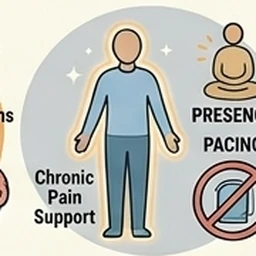
Chronic pain is the most prevalent and most invisible chronic condition in the US — ~50 million adults, no scan that confirms it, no clean treatment arc. The work for the family is mostly about presence and pacing, with periodic flares that reshape the week. Here's the orientation.
Lo que cambia para la familia
Chronic pain (pain that persists more than three months) reshapes a family without producing the visible markers other chronic diseases come with. The patient is often dismissed by clinicians, friends, and sometimes the family — the "but you look fine" comment is the most common refrain. The work for the family is paced support: helping with tasks during flares, accommodating reduced energy on bad days, and protecting the routines that keep pain manageable. The treatment landscape is unusually fragmented (primary care, pain medicine specialists, physical therapy, psychology, complementary medicine, sometimes interventional procedures); the family often becomes the de facto care coordinator. The opioid landscape adds a layer most families weren't prepared for: patients on long-term opioids face stigma at every appointment, prescription delays that can trigger withdrawal, and the rare-but-real risk of dependence. And depression is so common with chronic pain (~50% lifetime prevalence) that screening + treatment is structural, not optional.
Lo que conviene organizar temprano
La ventana después del diagnóstico es cuando la familia tiene más margen para establecer la estructura sobre la que se apoyará el resto del camino. Mientras más espere, más difícil se vuelve cada uno de estos pasos.
- A relationship with a pain medicine specialist (not just the PCP). Multidisciplinary pain clinics combine medical, PT, and behavioral treatment in one place and have measurably better outcomes than fragmented care.
- A pain diary or app — tracking when, where, what helps, what triggers. Three to four weeks of data is more useful than years of recall when the patient meets a new clinician.
- A physical-therapy referral, even if the patient is in too much pain to do much. Modern PT for chronic pain is graded exposure + pacing + body-awareness work, not "no pain no gain." The wrong PT can make things worse; ask for one experienced in chronic pain specifically.
- A behavioral-health referral for CBT for chronic pain or ACT (Acceptance and Commitment Therapy). These are evidence-based for chronic pain and rarely offered without asking. Different from "treating the depression" — they specifically address pain-coping strategies.
- A documented chronic-pain plan signed by the prescriber if opioids are part of the regimen. Pharmacy delays, insurance prior authorizations, and provider transitions all go more smoothly with a written record of the established treatment.
- A family conversation about pacing. The well-meaning "let me know if you need anything" rarely helps; concrete commitments ("I'll cook on Tuesdays whatever your pain level," "I'll drive you to PT every Friday") land better.
Los momentos más difíciles
Los momentos que las familias describen como los más difíciles suelen ser aquellos sobre los que nadie las advirtió. Saber lo que probablemente viene no hace que ninguno sea fácil — pero tener un nombre para ellos, y un espacio de trabajo que vuelva a unir a la familia cuando ocurren, sí ayuda.
- The first time a clinician implies the pain is in the patient's head, or is exaggerated, or is "just" depression. The damage to the patient is real; advocacy from the family caregiver — calmly, with documentation — is one of the most useful things a family member can do.
- A pain flare that lasts weeks. Most chronic pain has good and bad periods; a prolonged flare can shake the family's confidence that pacing + treatment is working. The right response is usually patience plus a check-in with the pain specialist, not panic.
- The opioid conversation — either the patient struggling with dependence, or being suddenly tapered against their will (a common late-2010s/2020s pattern that produced real harm), or being denied an established prescription by a new provider. The family's role is to advocate, to know the patient's clinical history, and to be present at difficult appointments.
- The cumulative emotional weight on the caregiver. Living with someone in chronic pain is a slow-burn caregiving role with relatively little recognition. Caregiver burnout in this cohort is real, under-supported, and often unaddressed until it becomes its own clinical issue.
Planes que se relacionan con esto
Los planes de Kintaria son guías paso a paso para los momentos específicos que aparecen en este recorrido de cuidado. Cada uno se abre en su espacio de trabajo y se personaliza con sus respuestas.
Organizaciones nacionales y líneas de ayuda
Estas son las organizaciones que el sector considera los puntos de partida estándar. Todas son gratuitas y todas tienen líneas atendidas por personas reales (la línea telefónica de IA para cuidadores es otra categoría — aquí se trata de personas capacitadas en la condición específica).
The largest patient-led chronic-pain advocacy organization in the US. Patient + caregiver support groups, peer mentoring, advocacy on insurance + opioid policy, the "Invisible Project" patient storytelling series.
- 1-800-533-3231
Peer support + education with a focus on self-management skills. The "From Patient to Person" framework is the foundation; chapter network across the country; family-caregiver-specific materials.
Independent journalism specifically on the chronic-pain policy + treatment landscape. Useful for staying current on opioid policy changes, insurance coverage shifts, and new treatments. Free.
- Helpline · 1-800-283-7800
For chronic pain related to arthritis (the most common cause). Free helpline, exercise programs (Walk With Ease, Tai Chi), local chapter support groups.
Condition-specific (fibromyalgia is a common subset of chronic widespread pain). Patient + family resources, support-group locator, advocacy.
NIH National Center for Complementary and Integrative Health plain-language overview, with strong coverage of evidence-based non-medication approaches.
Cómo ayuda un espacio Kintaria
Kintaria es un espacio familiar compartido y tranquilo, diseñado para el trabajo que este diagnóstico está por generar. La lista de medicamentos vive en un solo lugar (para que el tercer hermano que vuela el fin de semana no tenga que volver a aprender qué cambió). El calendario de citas es compartido (para que la familia no duplique citas ni pierda el control de seguimiento de reumatología). El historial de actividad es honesto sobre quién hizo qué (para que el cuidador principal no cargue todo en silencio). Y el espacio es bilingüe — el paciente lee en su idioma preferido, la familia lee en inglés — lo cual importa más de lo que la gente espera cuando el diagnóstico mismo ya es desorientador.
Prueba gratuita de 1 año para las primeras 500 familias fundadoras. Sin tarjeta de crédito.
Una nota sobre lo que Kintaria es (y no es)
Kintaria no es una herramienta clínica, no es un sustituto de las decisiones médicas, no reemplaza al equipo de atención de chronic pain. La orientación de esta página es para familias que coordinan el cuidado; las decisiones clínicas específicas las debe tomar el clínico del paciente. Los mensajes de escalada en todo el espacio son honestos sobre ese límite.
Términos de cuidado en esta página
Palabras que quizá quiera tener definidas mientras lee esto. Cada una abre su propia página con el significado en lenguaje sencillo y cómo aparece en el cuidado.
- Caregiver burnout — A state of physical, emotional, and mental exhaustion that develops over months or years of caregiving — characterized by chronic fatigue, irritability, isolation, anxiety, depression, sleep disturbance, and worsening physical health.
Ver también: todas las condiciones · todos los planes · glosario de cuidado · directorio nacional de recursos