Pag-aalaga sa mahal sa buhay na may traumatic brain injury
Caring for someone with a traumatic brain injury
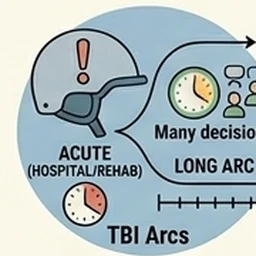
TBI is two very different caregiving stories — the acute hospital + rehab phase that compresses years of decision-making into weeks, and the long arc of recovery (or non-recovery) that can stretch over decades. The family that started in an ICU waiting room becomes, often unexpectedly, the long-term care team. Here's the orientation.
Ano ang nagbabago para sa pamilya
Traumatic brain injury reshapes a family along two axes that don't move at the same pace. The acute phase — ICU, then rehab, then home or to a long-term-care facility — happens in days and weeks. Decisions about continuing aggressive treatment, do-not-resuscitate orders, surgery, and tracheostomy + feeding tube placement often arrive before the family understands the prognosis. Once the patient is stable, the long arc begins: cognitive recovery that mostly happens in the first 6-12 months but can continue for years; behavioral and personality changes that families consistently rank as harder than the physical changes; the "you look fine" problem (invisible TBI is real and underestimated by clinicians and friends); and the financial weight of an injury that often hits people at peak earning age. Mild TBI / concussion has its own arc — most people recover in weeks, but a meaningful share develop post-concussion syndrome that lasts months or longer.
Ano ang dapat ihanda nang maaga
Ang panahon pagkatapos ng diagnosis po ang yugto na pinakamaraming puwedeng gawin ng pamilya para itayo ang istrukturang sasandalan ng natitirang bahagi ng paglalakbay na ito. Habang inaantala po ninyo, lalong nagiging mahirap ang ilan sa mga bagay na ito.
- Connection to the Brain Injury Association of your state (find via BIAA). State affiliates run support groups, equipment programs, advocacy, and case-management-style help. The single best first step.
- Documentation of pre-injury baseline. Photos, videos, employment records, work products — anything that shows who the patient was before. Used in rehab + long-term-care + sometimes legal contexts.
- A clinical relationship with a physical-medicine-and-rehabilitation (PM&R) physician (a "physiatrist"), not just a neurologist. PM&R doctors specialize in functional recovery and lead most TBI rehab teams.
- A neuropsychological evaluation 3-6 months post-injury. Documents cognitive strengths + weaknesses, drives the rehab plan, and is often required for school + work accommodations.
- Legal + insurance work: power of attorney (financial + healthcare), Social Security Disability application if work is no longer possible, claims through auto / workers' comp / other accident insurance, special-needs trust consideration if recovery is limited.
- A long-term care plan that doesn't assume the spouse can do all of it indefinitely. Caregiver burnout in TBI is among the highest in any condition; respite + paid care from the beginning is structural, not optional.
Ang pinakamahihirap na sandali
Ang mga sandali pong inilalarawan ng mga pamilya bilang pinakamahirap ay madalas na yaong walang nagsabi nang maaga sa kanila. Hindi po nagiging madali ang anuman sa mga ito dahil lang alam na ninyo na malamang dumating ang mga ito — pero ang pagkakaroon po ng pangalan para sa mga ito, at ng isang workspace na nagbubuklod muli sa pamilya kapag dumating ang mga ito, ay talagang nakatutulong.
- The acute-phase decisions when prognosis is unclear. Continuing intensive treatment vs. comfort care, surgery vs. waiting, tracheostomy + feeding tube placement — most families have minutes to hours to decide things the patient never discussed with them.
- The behavioral and personality changes. Disinhibition, emotional lability, anger, apathy, perseveration — these are the part of TBI that families consistently describe as hardest. They're not the patient choosing to be different; they're the injury. Education + family therapy help.
- The "invisible TBI" problem. Many TBI survivors look fine and pass cursory cognitive screens but can't hold the job they used to do, can't parent the way they used to, can't manage household finances. Outsiders dismiss it; the family lives with it.
- The plateau or decline. Recovery is not linear, and the rehab gains of the first year don't continue indefinitely. The family's relationship with hope shifts; some find peace, some get stuck.
Mga playbook na kaugnay nito
Ang mga playbook po ng Kintaria ay hakbang-hakbang na gabay para sa mga partikular na sandali na lumalabas sa daloy ng pag-aalaga na ito. Bawat isa po ay bubukas sa loob ng inyong workspace at iaayon sa mga sagot ninyo.
- Spouse · 90-day windowYour spouse just had a stroke.
- Hospital · 48-hour windowYour parent was just discharged from a hospital.
- Foundation · One-time setupGet the legal paperwork in order.
- Spouse · OngoingWhen you are the caregiver-spouse.
- Planning · First few weeksYou're ready to bring in a home health aide.
Mga pambansang organisasyon at helpline
Ito po ang mga organisasyong itinuturing na pamantayang panimulang punto sa larangan. Lahat po ay libre, at lahat ay tunay na helpline na sinasagot ng tao (ang AI-on-the-phone na caregiver line po ay ibang kategorya — dito po ay tao na sinanay sa partikular na kondisyong ito).
- National Brain Injury Information Center · 1-800-444-6443
The federal-level TBI organization. NBIIC helpline answers calls from patients + families. State affiliates (linked from BIAA site) run support groups, equipment programs, and case management. Strongest patient + family resource in the category.
For service-member + veteran TBI. Active-duty + post-discharge TBI is a meaningful share of the overall caregiver population; the DOD/VA infrastructure for it is substantial but under-known by families.
Clinician-facing primary, but the patient + family resources are useful. Strong on the science of TBI + the evidence-based treatment guidelines clinicians use; useful when families want to understand what the rehab team is doing.
Founded by snowboarder Kevin Pearce after his TBI. Yoga + meditation programs (in-person + virtual), retreats, community for TBI survivors + families. Different and more wellness-focused than the clinical orgs above.
- CLF Helpline · 866-385-9255
For concussion + chronic traumatic encephalopathy (CTE) — relevant for athletes + service members + post-multiple-concussion patients. CLF helpline, brain bank for research, family support.
Authoritative US government plain-language overview. Free, comprehensive.
Paano tumutulong ang isang Kintaria workspace
Ang Kintaria po ay isang kalmado at magkasamang workspace ng pamilya na ginawa para sa trabahong sisimulang likhain ng diagnosis na ito. Ang listahan ng gamot ay nasa iisang lugar (para hindi na po kailangang muling pag-aralan ng pangatlong kapatid na lilipad pauwi sa katapusan ng linggo kung ano ang nagbago). Ang kalendaryo ng mga appointment ay magkasama (para hindi po magdoble ang booking ng pamilya o makalimutan ang follow-up sa rheumatology). Ang activity feed ay tapat tungkol sa kung sino ang gumawa ng ano (para hindi po dahan-dahang nagdadala ng lahat ang pangunahing tagapag-alaga). At ang workspace ay bilingual po — ang pasyente ay nakababasa sa wikang mas komportable para sa kanya, ang pamilya ay nakababasa sa Ingles — at ito po ay mas mahalaga kaysa sa inaasahan ng karamihan kapag ang diagnosis mismo ay nakapagpapalito na.
Libreng 1-taong subok para sa unang 500 founding na pamilya. Walang kailangang credit card.
Isang paalala kung ano ang Kintaria (at kung ano ang hindi)
Hindi po klinikal na kasangkapan ang Kintaria, hindi po kapalit ng medikal na desisyon, at hindi po kapalit ng care team para sa traumatic brain injury. Ang nilalaman po sa pahinang ito ay para sa mga pamilyang nag-uugnay ng pangangalaga; ang mga tiyak na klinikal na desisyon ay kailangang gawin ng doktor ng pasyente. Ang mga senyales ng pag-escalate sa buong workspace ay tapat tungkol sa hangganang iyon.
Mga termino sa pangangalaga na lumalabas sa pahinang ito
Mga salitang baka po gusto ninyong malaman ang kahulugan habang binabasa ito. Bawat isa po ay bubukas sa sariling pahina na may simpleng paliwanag ng kahulugan at kung paano ito lumalabas sa pangangalaga.
- Power of attorney — A legal document where one person (the "principal") authorizes another person (the "agent" or "attorney-in-fact") to act on their behalf in financial matters.
- Caregiver burnout — A state of physical, emotional, and mental exhaustion that develops over months or years of caregiving — characterized by chronic fatigue, irritability, isolation, anxiety, depression, sleep disturbance, and worsening physical health.
- Comfort care — A care approach focused entirely on symptom relief and dignity rather than disease treatment.
Tingnan din: lahat ng kondisyon · lahat ng playbook · talasalitaan para sa tagapag-alaga · pambansang direktoryo ng mapagkukunan