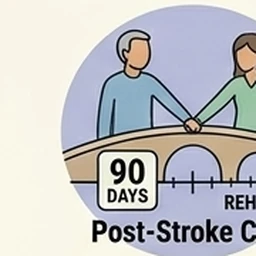
Pag-aalaga sa mahal sa buhay na may stroke
Caring for someone after a stroke
A stroke compresses years of caregiving change into ninety days. The patient who came home from the hospital is partly the person you knew and partly someone whose abilities will take weeks or months to map out. The rehab path that gets started in the first 90 days shapes the next decade. Here's what to set up while it matters most.
Ano ang nagbabago para sa pamilya
Stroke is uneven in a different way than dementia is. Specific abilities are gone or impaired (speech, swallowing, the use of one side, the ability to read or write); other things are intact, sometimes startlingly so. The first 90 days are the most consequential — most recovery happens then, and the rehab decisions made in that window largely determine the long-term trajectory. The marriage or family relationship reorganizes around new tasks (the spouse who suddenly handles the bills, the daughter who manages the rehab schedule), and the patient is often dealing with their own grief at the same time. Depression after stroke is common, treatable, and under-screened.
Ano ang dapat ihanda nang maaga
Ang panahon pagkatapos ng diagnosis po ang yugto na pinakamaraming puwedeng gawin ng pamilya para itayo ang istrukturang sasandalan ng natitirang bahagi ng paglalakbay na ito. Habang inaantala po ninyo, lalong nagiging mahirap ang ilan sa mga bagay na ito.
- A clear plan for the rehab path: acute inpatient rehab vs. subacute (skilled nursing facility) vs. home health PT/OT/SLP. The choice depends on the patient's tolerance for therapy hours; the discharge planner has options but the family has to choose deliberately.
- FMLA paperwork for the working spouse / adult child who needs leave. Don't wait — FMLA is paperwork-heavy and benefits are easier to access when started early.
- Power-of-attorney activation if the stroke affected speech or capacity. Many couples have these in place but never activated them; the bank doesn't honor a POA unless you formally present it.
- Medication reconciliation across the new neurology / cardiology / PT team. Stroke patients leave the hospital with new anticoagulants + blood-pressure regimens; the existing pharmacy probably needs the updated list.
- Home modifications insurance won't cover that you need anyway: grab bars, a raised toilet seat, a shower chair, removing throw rugs, securing the path from bedroom to bathroom.
- A conversation with the kids — including adult children — about what changed and what didn't. Stroke is invisible until you see it; visible changes are easier for kids to integrate than the cognitive ones that show up subtly.
Ang pinakamahihirap na sandali
Ang mga sandali pong inilalarawan ng mga pamilya bilang pinakamahirap ay madalas na yaong walang nagsabi nang maaga sa kanila. Hindi po nagiging madali ang anuman sa mga ito dahil lang alam na ninyo na malamang dumating ang mga ito — pero ang pagkakaroon po ng pangalan para sa mga ito, at ng isang workspace na nagbubuklod muli sa pamilya kapag dumating ang mga ito, ay talagang nakatutulong.
- The first time a familiar task is hard for the patient and they realize it. Reading the newspaper, signing a check, using the remote. The grief of those moments lives with the patient for months.
- The transition from inpatient rehab to home. The discharge feels like progress, but home is harder than the rehab unit — no 24/7 staff, no immediate equipment, fewer cues.
- Post-stroke depression at week 4-8. Hits most stroke patients to some degree, often unrecognized because the family attributes it to the stroke itself. PCP screening + treatment changes the recovery arc.
- The decision about driving. Stroke recovery often gates the return to driving; the conversation about when (and whether) is one families avoid until insurance forces it.
Mga playbook na kaugnay nito
Ang mga playbook po ng Kintaria ay hakbang-hakbang na gabay para sa mga partikular na sandali na lumalabas sa daloy ng pag-aalaga na ito. Bawat isa po ay bubukas sa loob ng inyong workspace at iaayon sa mga sagot ninyo.
- Spouse · 90-day windowYour spouse just had a stroke.
- Hospital · 48-hour windowYour parent was just discharged from a hospital.
- Spouse · OngoingWhen you are the caregiver-spouse.
- Foundation · One-time setupGet the legal paperwork in order.
- Parent · 72 hours + 30 daysYour parent is recovering from a surgery.
Mga pambansang organisasyon at helpline
Ito po ang mga organisasyong itinuturing na pamantayang panimulang punto sa larangan. Lahat po ay libre, at lahat ay tunay na helpline na sinasagot ng tao (ang AI-on-the-phone na caregiver line po ay ibang kategorya — dito po ay tao na sinanay sa partikular na kondisyong ito).
- Stroke Family Warmline · 1-888-478-7653
The Stroke Family Warmline connects caregivers with trained stroke specialists. Support groups (in-person + online). "Care for the Caregiver" practical guide.
For stroke survivors with aphasia (loss or impairment of language). Communication strategies, support groups, family education.
- National Brain Injury Information Center · 1-800-444-6443
For families navigating cognitive impacts of stroke or other brain injuries. State chapters, support groups, family resources.
Federal stroke prevention + recovery resources. Plain-language warning signs (FAST), recovery guides, signs of a second stroke.
Paano tumutulong ang isang Kintaria workspace
Ang Kintaria po ay isang kalmado at magkasamang workspace ng pamilya na ginawa para sa trabahong sisimulang likhain ng diagnosis na ito. Ang listahan ng gamot ay nasa iisang lugar (para hindi na po kailangang muling pag-aralan ng pangatlong kapatid na lilipad pauwi sa katapusan ng linggo kung ano ang nagbago). Ang kalendaryo ng mga appointment ay magkasama (para hindi po magdoble ang booking ng pamilya o makalimutan ang follow-up sa rheumatology). Ang activity feed ay tapat tungkol sa kung sino ang gumawa ng ano (para hindi po dahan-dahang nagdadala ng lahat ang pangunahing tagapag-alaga). At ang workspace ay bilingual po — ang pasyente ay nakababasa sa wikang mas komportable para sa kanya, ang pamilya ay nakababasa sa Ingles — at ito po ay mas mahalaga kaysa sa inaasahan ng karamihan kapag ang diagnosis mismo ay nakapagpapalito na.
Libreng 1-taong subok para sa unang 500 founding na pamilya. Walang kailangang credit card.
Isang paalala kung ano ang Kintaria (at kung ano ang hindi)
Hindi po klinikal na kasangkapan ang Kintaria, hindi po kapalit ng medikal na desisyon, at hindi po kapalit ng care team para sa stroke. Ang nilalaman po sa pahinang ito ay para sa mga pamilyang nag-uugnay ng pangangalaga; ang mga tiyak na klinikal na desisyon ay kailangang gawin ng doktor ng pasyente. Ang mga senyales ng pag-escalate sa buong workspace ay tapat tungkol sa hangganang iyon.
Mga termino sa pangangalaga na lumalabas sa pahinang ito
Mga salitang baka po gusto ninyong malaman ang kahulugan habang binabasa ito. Bawat isa po ay bubukas sa sariling pahina na may simpleng paliwanag ng kahulugan at kung paano ito lumalabas sa pangangalaga.
- Case manager — A nurse or social worker employed by the hospital whose job is to coordinate care across the system — most importantly, discharge planning.
- Skilled nursing facility — A facility providing 24-hour skilled nursing care — primarily for short-term rehabilitation after hospitalization, but also for long-term residence.
- Home health — Skilled medical care delivered in the home by nurses, physical therapists, occupational therapists, or speech therapists — typically following hospitalization or during the management of a serious condition.
Tingnan din: lahat ng kondisyon · lahat ng playbook · talasalitaan para sa tagapag-alaga · pambansang direktoryo ng mapagkukunan