Pag-aalaga sa mahal sa buhay na may multiple sclerosis
Caring for someone with multiple sclerosis
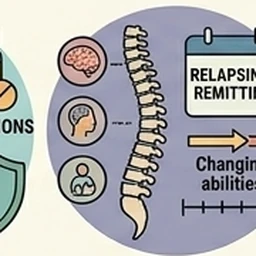
MS is the most variable of the major chronic neurologic diseases — some patients live decades with mild symptoms, others progress quickly, and the relapsing-remitting course can look stable for years before changing. The work for the family is less about a single crisis and more about adapting to a moving target. Here's the orientation.
Ano ang nagbabago para sa pamilya
Multiple sclerosis is an autoimmune attack on the protective coating of nerve fibers in the brain and spinal cord. Most patients start with relapsing-remitting MS (relapses + recovery) and a meaningful share transition to secondary-progressive MS over time. The disease affects almost every system: motor function (gait, hand use), sensory (numbness, tingling), cognitive (processing speed, memory), bladder + bowel, vision, sexual function, and fatigue — the symptom MS patients consistently rank as most disabling and that families consistently underestimate. The good news: disease-modifying therapies (DMTs) developed in the last 15 years dramatically slow progression and have changed the natural history. The harder news: those DMTs need to be matched to the patient's disease course, monitored with periodic MRIs, and adjusted as the disease evolves. The family role is often less about acute crises and more about steady accommodation as abilities shift.
Ano ang dapat ihanda nang maaga
Ang panahon pagkatapos ng diagnosis po ang yugto na pinakamaraming puwedeng gawin ng pamilya para itayo ang istrukturang sasandalan ng natitirang bahagi ng paglalakbay na ito. Habang inaantala po ninyo, lalong nagiging mahirap ang ilan sa mga bagay na ito.
- A relationship with an MS-specialist neurologist, not a general neurologist. The MS landscape has changed so fast that outcomes are measurably better with subspecialists. The National MS Society maintains a list of partners in care.
- A clear understanding of which DMT the patient is on, what it does, and what to monitor. DMT options have grown to ~20 with very different mechanisms + monitoring requirements; understanding the choice is part of being a useful caregiver.
- Baseline cognitive + neuropsych testing. Cognitive symptoms are common in MS, often subtle, and progress over years. Having a baseline makes future changes easier to recognize.
- A fatigue-management plan. MS fatigue is a unique kind of exhaustion that doesn't respond to rest the way ordinary tiredness does. Pacing, energy budgeting, and (in some cases) modafinil or amantadine help; "just push through" advice can worsen outcomes.
- Home + workplace accommodations early — handrails, raised toilet seat, a chair to sit while cooking, an FMLA conversation with the employer if energy demands are a problem. Easier to set up before they're needed.
- Connection to a local National MS Society chapter for support groups + equipment programs + family-services social work. The MS community is well-organized and generous.
Ang pinakamahihirap na sandali
Ang mga sandali pong inilalarawan ng mga pamilya bilang pinakamahirap ay madalas na yaong walang nagsabi nang maaga sa kanila. Hindi po nagiging madali ang anuman sa mga ito dahil lang alam na ninyo na malamang dumating ang mga ito — pero ang pagkakaroon po ng pangalan para sa mga ito, at ng isang workspace na nagbubuklod muli sa pamilya kapag dumating ang mga ito, ay talagang nakatutulong.
- A relapse after a period of stability. Often hits without warning — new neurologic symptoms over days to weeks. The fear that this is "the start of progression" is one of the heaviest parts of relapsing-remitting MS.
- The conversation about disability accommodation at work or stopping work entirely. MS often affects people in their 30s-50s — peak earning years — and the work decisions reshape family finances in ways most couples weren't planning for.
- The transition from relapsing-remitting to secondary-progressive MS. Often visible only in retrospect; many patients describe the recognition (or the conversation with the neurologist about it) as one of the hardest moments.
- Cognitive changes — particularly when the patient is still high-functioning enough that others don't notice but they themselves know something has shifted. Validation and accommodation matter; dismissal ("you're fine, you remembered the dinner") is corrosive.
Mga playbook na kaugnay nito
Ang mga playbook po ng Kintaria ay hakbang-hakbang na gabay para sa mga partikular na sandali na lumalabas sa daloy ng pag-aalaga na ito. Bawat isa po ay bubukas sa loob ng inyong workspace at iaayon sa mga sagot ninyo.
Mga pambansang organisasyon at helpline
Ito po ang mga organisasyong itinuturing na pamantayang panimulang punto sa larangan. Lahat po ay libre, at lahat ay tunay na helpline na sinasagot ng tao (ang AI-on-the-phone na caregiver line po ay ibang kategorya — dito po ay tao na sinanay sa partikular na kondisyong ito).
- MS Navigator · 1-800-344-4867
The largest MS-focused organization in the US. MS Navigators are case-management-style staff who help with everything from finding a neurologist to applying for disability to figuring out accessible vacation rentals. Free, real humans, deeply useful. Local chapters across the country.
- Helpline · 1-800-532-7667
Distinct from the National MS Society — runs an equipment-distribution program (cooling vests for heat-sensitive patients, mobility aids), a peer-support program, and a "My MS Manager" mobile app for symptom + medication tracking.
- Helpline · 1-888-673-6287
Direct financial assistance — emergency grants, cooling-vest program, home-care assistance, transportation grants. The financial-help organization in the MS space.
Wellness-focused MS programs — exercise, nutrition, fatigue management. Family-inclusive weekend programs (free); the closest thing to a "go to one place and learn everything" experience in MS. Patient + care partner attend together.
Federation of 9 MS organizations — the MS Coalition publishes the comprehensive treatment-decision tools the National MS Society + MSAA + others link to. Useful starting point when comparing DMT options.
Authoritative US government plain-language overview. Free, comprehensive.
Paano tumutulong ang isang Kintaria workspace
Ang Kintaria po ay isang kalmado at magkasamang workspace ng pamilya na ginawa para sa trabahong sisimulang likhain ng diagnosis na ito. Ang listahan ng gamot ay nasa iisang lugar (para hindi na po kailangang muling pag-aralan ng pangatlong kapatid na lilipad pauwi sa katapusan ng linggo kung ano ang nagbago). Ang kalendaryo ng mga appointment ay magkasama (para hindi po magdoble ang booking ng pamilya o makalimutan ang follow-up sa rheumatology). Ang activity feed ay tapat tungkol sa kung sino ang gumawa ng ano (para hindi po dahan-dahang nagdadala ng lahat ang pangunahing tagapag-alaga). At ang workspace ay bilingual po — ang pasyente ay nakababasa sa wikang mas komportable para sa kanya, ang pamilya ay nakababasa sa Ingles — at ito po ay mas mahalaga kaysa sa inaasahan ng karamihan kapag ang diagnosis mismo ay nakapagpapalito na.
Libreng 1-taong subok para sa unang 500 founding na pamilya. Walang kailangang credit card.
Isang paalala kung ano ang Kintaria (at kung ano ang hindi)
Hindi po klinikal na kasangkapan ang Kintaria, hindi po kapalit ng medikal na desisyon, at hindi po kapalit ng care team para sa multiple sclerosis. Ang nilalaman po sa pahinang ito ay para sa mga pamilyang nag-uugnay ng pangangalaga; ang mga tiyak na klinikal na desisyon ay kailangang gawin ng doktor ng pasyente. Ang mga senyales ng pag-escalate sa buong workspace ay tapat tungkol sa hangganang iyon.
Tingnan din: lahat ng kondisyon · lahat ng playbook · talasalitaan para sa tagapag-alaga · pambansang direktoryo ng mapagkukunan