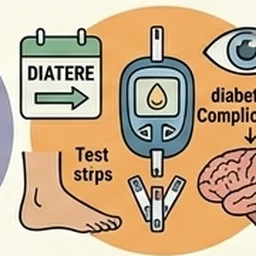
Pag-aalaga sa mahal sa buhay na may diabetes
Caring for an older adult with diabetes
Diabetes in an older adult is two stories at once: the medical management of blood sugar, and the long-tail of complications — vision, kidney function, foot care, the diabetes-dementia connection — that gradually reshape the patient's life. The work for the family is less about a single moment and more about preventing the next problem. Here's the orientation.
Ano ang nagbabago para sa pamilya
Type 2 diabetes (the most common form in older adults) is a chronic-disease management problem with consequences that compound over years. The day-to-day work — blood-sugar monitoring, medication adherence, food choices, hypoglycemia recognition — sits with the patient and a family caregiver who often quietly absorbs it. Several big patterns reshape family life: hypoglycemia (low blood sugar) episodes that come on fast, especially with insulin or sulfonylureas; the diabetes-dementia connection (poorly-controlled diabetes meaningfully raises dementia risk + makes existing cognitive symptoms worse); the diabetic complications — retinopathy, neuropathy, kidney disease, peripheral artery disease, foot ulcers that become infections that become amputations — that progress more slowly than a heart attack but are no less consequential; and the medication burden, often 5-10 drugs, that requires real coordination. The good news: most diabetic complications are preventable or delayable with steady management. The harder news: "steady management" is harder than it sounds.
Ano ang dapat ihanda nang maaga
Ang panahon pagkatapos ng diagnosis po ang yugto na pinakamaraming puwedeng gawin ng pamilya para itayo ang istrukturang sasandalan ng natitirang bahagi ng paglalakbay na ito. Habang inaantala po ninyo, lalong nagiging mahirap ang ilan sa mga bagay na ito.
- A continuous glucose monitor (CGM) if not already prescribed. CGMs (Dexcom, Libre) have transformed diabetes management — real-time glucose data, alarms for highs and lows, trend arrows. Medicare covers them for most patients on insulin. The information is useful to the family caregiver too.
- A standing-orders foot exam at every primary-care visit. Diabetic foot complications are one of the top preventable causes of hospitalization and amputation in older adults; the screen takes 60 seconds.
- Annual dilated eye exam with an ophthalmologist (not just an optometrist). Diabetic retinopathy progresses silently; early-stage treatment is dramatically more effective than late.
- Annual kidney function check (urine albumin + eGFR). Diabetes is the #1 cause of kidney disease in the US; catching the slide early opens treatment options that dramatically slow progression.
- A clear written "if blood sugar is X, do Y" plan from the patient's primary or endocrinologist. The patient needs it, the spouse needs it, the home caregiver needs it. Hypoglycemia in older adults can present as confusion (mistaken for dementia) or falls (mistaken for orthostatic issues).
- A conversation about deprescribing if the patient is on a sulfonylurea (glipizide, glyburide) or aggressive insulin regimen. Older-adult guidelines explicitly recommend LESS-tight blood-sugar targets in patients with limited life expectancy or significant comorbidities; many older diabetics are over-treated and at high risk of dangerous hypoglycemia.
Ang pinakamahihirap na sandali
Ang mga sandali pong inilalarawan ng mga pamilya bilang pinakamahirap ay madalas na yaong walang nagsabi nang maaga sa kanila. Hindi po nagiging madali ang anuman sa mga ito dahil lang alam na ninyo na malamang dumating ang mga ito — pero ang pagkakaroon po ng pangalan para sa mga ito, at ng isang workspace na nagbubuklod muli sa pamilya kapag dumating ang mga ito, ay talagang nakatutulong.
- The first serious hypoglycemia episode. Often presents as sudden confusion, sweating, weakness; can mimic stroke or cardiac event. The family's ability to recognize + treat (glucose tablets, juice, glucagon kit) determines whether it stays a kitchen incident or becomes an ER visit.
- A diabetic-foot infection or ulcer. What starts as a small sore can progress to cellulitis, osteomyelitis, and amputation faster than families expect. The decision to see a podiatrist or wound-care specialist same-day vs "wait and see" is consequential.
- The diagnosis of diabetic retinopathy or kidney disease. Both are silent until they're not, and the patient often experiences these as out-of-the-blue losses even when the progression has been visible to the clinicians for years.
- Cognitive symptoms in a patient with long-standing diabetes. The diabetes-dementia connection is real and bidirectional. Worsening cognition can make diabetes management harder, which worsens diabetes control, which worsens cognition. Breaking the cycle requires simplifying the medication regimen, often deprescribing aggressive treatments, and accepting less-tight targets.
Mga playbook na kaugnay nito
Ang mga playbook po ng Kintaria ay hakbang-hakbang na gabay para sa mga partikular na sandali na lumalabas sa daloy ng pag-aalaga na ito. Bawat isa po ay bubukas sa loob ng inyong workspace at iaayon sa mga sagot ninyo.
- Foundation · One-time setupGet the legal paperwork in order.
- Hospital · 48-hour windowYour parent was just discharged from a hospital.
- Planning · First few weeksYou're ready to bring in a home health aide.
- Parent · 72 hours + 30 daysYour parent is recovering from a surgery.
- Parent · This is real nowYour parent is in the ER for the first time.
Mga pambansang organisasyon at helpline
Ito po ang mga organisasyong itinuturing na pamantayang panimulang punto sa larangan. Lahat po ay libre, at lahat ay tunay na helpline na sinasagot ng tao (ang AI-on-the-phone na caregiver line po ay ibang kategorya — dito po ay tao na sinanay sa partikular na kondisyong ito).
- 1-800-DIABETES (1-800-342-2383)
The largest patient + family diabetes organization. Free helpline, "Living with Type 2" resources, Mediterranean + DASH diet guides, food-and-fitness planning tools, advocacy for insulin price caps + Medicare coverage.
Peer support specifically for women with diabetes (and their families). Online community, in-person meetups in many cities, a strong focus on the under-discussed reality that diabetes management interacts with hormonal + life-stage changes.
Type-1-focused (though family caregivers of type 1 adults can also benefit). Research-leading organization, peer-mentor program, and a strong policy-advocacy arm on insulin pricing + access.
For family members at risk of developing diabetes themselves (caregivers are at higher risk via stress + sleep loss). Year-long lifestyle program, covered by Medicare for eligible adults, can prevent or delay type 2.
Find a Certified Diabetes Care + Education Specialist (CDCES) near you. Medicare covers initial + annual diabetes self-management training (DSMT); most patients qualify and don't know it.
Authoritative US government plain-language overview. Free, comprehensive, available in English + Spanish.
Paano tumutulong ang isang Kintaria workspace
Ang Kintaria po ay isang kalmado at magkasamang workspace ng pamilya na ginawa para sa trabahong sisimulang likhain ng diagnosis na ito. Ang listahan ng gamot ay nasa iisang lugar (para hindi na po kailangang muling pag-aralan ng pangatlong kapatid na lilipad pauwi sa katapusan ng linggo kung ano ang nagbago). Ang kalendaryo ng mga appointment ay magkasama (para hindi po magdoble ang booking ng pamilya o makalimutan ang follow-up sa rheumatology). Ang activity feed ay tapat tungkol sa kung sino ang gumawa ng ano (para hindi po dahan-dahang nagdadala ng lahat ang pangunahing tagapag-alaga). At ang workspace ay bilingual po — ang pasyente ay nakababasa sa wikang mas komportable para sa kanya, ang pamilya ay nakababasa sa Ingles — at ito po ay mas mahalaga kaysa sa inaasahan ng karamihan kapag ang diagnosis mismo ay nakapagpapalito na.
Libreng 1-taong subok para sa unang 500 founding na pamilya. Walang kailangang credit card.
Isang paalala kung ano ang Kintaria (at kung ano ang hindi)
Hindi po klinikal na kasangkapan ang Kintaria, hindi po kapalit ng medikal na desisyon, at hindi po kapalit ng care team para sa diabetes. Ang nilalaman po sa pahinang ito ay para sa mga pamilyang nag-uugnay ng pangangalaga; ang mga tiyak na klinikal na desisyon ay kailangang gawin ng doktor ng pasyente. Ang mga senyales ng pag-escalate sa buong workspace ay tapat tungkol sa hangganang iyon.
Mga termino sa pangangalaga na lumalabas sa pahinang ito
Mga salitang baka po gusto ninyong malaman ang kahulugan habang binabasa ito. Bawat isa po ay bubukas sa sariling pahina na may simpleng paliwanag ng kahulugan at kung paano ito lumalabas sa pangangalaga.
- eGFR — A calculated estimate of how well the kidneys are filtering, based on serum creatinine, age, and sex.
Tingnan din: lahat ng kondisyon · lahat ng playbook · talasalitaan para sa tagapag-alaga · pambansang direktoryo ng mapagkukunan