Pag-aalaga sa mahal sa buhay na may chronic pain
Caring for someone with chronic pain
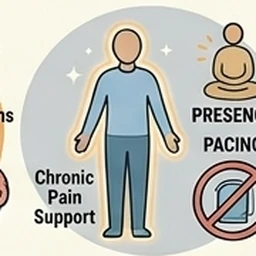
Chronic pain is the most prevalent and most invisible chronic condition in the US — ~50 million adults, no scan that confirms it, no clean treatment arc. The work for the family is mostly about presence and pacing, with periodic flares that reshape the week. Here's the orientation.
Ano ang nagbabago para sa pamilya
Chronic pain (pain that persists more than three months) reshapes a family without producing the visible markers other chronic diseases come with. The patient is often dismissed by clinicians, friends, and sometimes the family — the "but you look fine" comment is the most common refrain. The work for the family is paced support: helping with tasks during flares, accommodating reduced energy on bad days, and protecting the routines that keep pain manageable. The treatment landscape is unusually fragmented (primary care, pain medicine specialists, physical therapy, psychology, complementary medicine, sometimes interventional procedures); the family often becomes the de facto care coordinator. The opioid landscape adds a layer most families weren't prepared for: patients on long-term opioids face stigma at every appointment, prescription delays that can trigger withdrawal, and the rare-but-real risk of dependence. And depression is so common with chronic pain (~50% lifetime prevalence) that screening + treatment is structural, not optional.
Ano ang dapat ihanda nang maaga
Ang panahon pagkatapos ng diagnosis po ang yugto na pinakamaraming puwedeng gawin ng pamilya para itayo ang istrukturang sasandalan ng natitirang bahagi ng paglalakbay na ito. Habang inaantala po ninyo, lalong nagiging mahirap ang ilan sa mga bagay na ito.
- A relationship with a pain medicine specialist (not just the PCP). Multidisciplinary pain clinics combine medical, PT, and behavioral treatment in one place and have measurably better outcomes than fragmented care.
- A pain diary or app — tracking when, where, what helps, what triggers. Three to four weeks of data is more useful than years of recall when the patient meets a new clinician.
- A physical-therapy referral, even if the patient is in too much pain to do much. Modern PT for chronic pain is graded exposure + pacing + body-awareness work, not "no pain no gain." The wrong PT can make things worse; ask for one experienced in chronic pain specifically.
- A behavioral-health referral for CBT for chronic pain or ACT (Acceptance and Commitment Therapy). These are evidence-based for chronic pain and rarely offered without asking. Different from "treating the depression" — they specifically address pain-coping strategies.
- A documented chronic-pain plan signed by the prescriber if opioids are part of the regimen. Pharmacy delays, insurance prior authorizations, and provider transitions all go more smoothly with a written record of the established treatment.
- A family conversation about pacing. The well-meaning "let me know if you need anything" rarely helps; concrete commitments ("I'll cook on Tuesdays whatever your pain level," "I'll drive you to PT every Friday") land better.
Ang pinakamahihirap na sandali
Ang mga sandali pong inilalarawan ng mga pamilya bilang pinakamahirap ay madalas na yaong walang nagsabi nang maaga sa kanila. Hindi po nagiging madali ang anuman sa mga ito dahil lang alam na ninyo na malamang dumating ang mga ito — pero ang pagkakaroon po ng pangalan para sa mga ito, at ng isang workspace na nagbubuklod muli sa pamilya kapag dumating ang mga ito, ay talagang nakatutulong.
- The first time a clinician implies the pain is in the patient's head, or is exaggerated, or is "just" depression. The damage to the patient is real; advocacy from the family caregiver — calmly, with documentation — is one of the most useful things a family member can do.
- A pain flare that lasts weeks. Most chronic pain has good and bad periods; a prolonged flare can shake the family's confidence that pacing + treatment is working. The right response is usually patience plus a check-in with the pain specialist, not panic.
- The opioid conversation — either the patient struggling with dependence, or being suddenly tapered against their will (a common late-2010s/2020s pattern that produced real harm), or being denied an established prescription by a new provider. The family's role is to advocate, to know the patient's clinical history, and to be present at difficult appointments.
- The cumulative emotional weight on the caregiver. Living with someone in chronic pain is a slow-burn caregiving role with relatively little recognition. Caregiver burnout in this cohort is real, under-supported, and often unaddressed until it becomes its own clinical issue.
Mga playbook na kaugnay nito
Ang mga playbook po ng Kintaria ay hakbang-hakbang na gabay para sa mga partikular na sandali na lumalabas sa daloy ng pag-aalaga na ito. Bawat isa po ay bubukas sa loob ng inyong workspace at iaayon sa mga sagot ninyo.
Mga pambansang organisasyon at helpline
Ito po ang mga organisasyong itinuturing na pamantayang panimulang punto sa larangan. Lahat po ay libre, at lahat ay tunay na helpline na sinasagot ng tao (ang AI-on-the-phone na caregiver line po ay ibang kategorya — dito po ay tao na sinanay sa partikular na kondisyong ito).
The largest patient-led chronic-pain advocacy organization in the US. Patient + caregiver support groups, peer mentoring, advocacy on insurance + opioid policy, the "Invisible Project" patient storytelling series.
- 1-800-533-3231
Peer support + education with a focus on self-management skills. The "From Patient to Person" framework is the foundation; chapter network across the country; family-caregiver-specific materials.
Independent journalism specifically on the chronic-pain policy + treatment landscape. Useful for staying current on opioid policy changes, insurance coverage shifts, and new treatments. Free.
- Helpline · 1-800-283-7800
For chronic pain related to arthritis (the most common cause). Free helpline, exercise programs (Walk With Ease, Tai Chi), local chapter support groups.
Condition-specific (fibromyalgia is a common subset of chronic widespread pain). Patient + family resources, support-group locator, advocacy.
NIH National Center for Complementary and Integrative Health plain-language overview, with strong coverage of evidence-based non-medication approaches.
Paano tumutulong ang isang Kintaria workspace
Ang Kintaria po ay isang kalmado at magkasamang workspace ng pamilya na ginawa para sa trabahong sisimulang likhain ng diagnosis na ito. Ang listahan ng gamot ay nasa iisang lugar (para hindi na po kailangang muling pag-aralan ng pangatlong kapatid na lilipad pauwi sa katapusan ng linggo kung ano ang nagbago). Ang kalendaryo ng mga appointment ay magkasama (para hindi po magdoble ang booking ng pamilya o makalimutan ang follow-up sa rheumatology). Ang activity feed ay tapat tungkol sa kung sino ang gumawa ng ano (para hindi po dahan-dahang nagdadala ng lahat ang pangunahing tagapag-alaga). At ang workspace ay bilingual po — ang pasyente ay nakababasa sa wikang mas komportable para sa kanya, ang pamilya ay nakababasa sa Ingles — at ito po ay mas mahalaga kaysa sa inaasahan ng karamihan kapag ang diagnosis mismo ay nakapagpapalito na.
Libreng 1-taong subok para sa unang 500 founding na pamilya. Walang kailangang credit card.
Isang paalala kung ano ang Kintaria (at kung ano ang hindi)
Hindi po klinikal na kasangkapan ang Kintaria, hindi po kapalit ng medikal na desisyon, at hindi po kapalit ng care team para sa chronic pain. Ang nilalaman po sa pahinang ito ay para sa mga pamilyang nag-uugnay ng pangangalaga; ang mga tiyak na klinikal na desisyon ay kailangang gawin ng doktor ng pasyente. Ang mga senyales ng pag-escalate sa buong workspace ay tapat tungkol sa hangganang iyon.
Mga termino sa pangangalaga na lumalabas sa pahinang ito
Mga salitang baka po gusto ninyong malaman ang kahulugan habang binabasa ito. Bawat isa po ay bubukas sa sariling pahina na may simpleng paliwanag ng kahulugan at kung paano ito lumalabas sa pangangalaga.
- Caregiver burnout — A state of physical, emotional, and mental exhaustion that develops over months or years of caregiving — characterized by chronic fatigue, irritability, isolation, anxiety, depression, sleep disturbance, and worsening physical health.
Tingnan din: lahat ng kondisyon · lahat ng playbook · talasalitaan para sa tagapag-alaga · pambansang direktoryo ng mapagkukunan