The shifts that affect families caring for a parent, spouse, adult child, or sibling.
A weekly digest and a monthly essay on the policy, research, and industry developments. Written for the family member holding it all together, the relative trying to help from a distance, and the clinician who didn't get the full picture.
The house that holds everything: how aging-in-place became a policy aspiration and a private burden at the same time
Aging-in-place is the stated goal of nearly every major eldercare policy in the United States. It is also, in practice, a cost-shifting arrangement in which the federal government's preferred outcome is quietly financed by the unpaid labor of adult children, spouses, and siblings. This essay traces how that happened, what it costs the families living it, and what an honest accounting would require.
August 1, 2026·11 min read·Thrive TeamWhat changed for caregivers this week — July 27, 2026
Medicaid deferrals creating real risk for home care families, new data on how caregivers actually think about home care, a policy gap that could force hospice patients on Medicaid to prove they're working, and new research on how palliative care makes hospice transitions go better — a week where the distance between policy decisions and kitchen-table consequences kept closing.
July 27, 2026·3 min read·The Thrive Editorial TeamWhat changed for caregivers this week — July 20, 2026
A new bill that would let hospice patients with blood conditions keep receiving transfusions, a hospice fraud arrest that raises questions families should be asking their own providers, updated CMS guidance on when home health agencies can refuse to take a patient, and a workforce report showing why home-based care turnover is a family problem as much as an industry one.
July 20, 2026·3 min read·The Thrive Editorial TeamWhat changed for caregivers this week — July 13, 2026
Senior living occupancy tightening as supply stalls, a warning about dementia's coming pressure on the home care workforce, new data on barriers to concurrent hospice and palliative care access, and a closer look at what the proposed home health payment rule actually means for families — a week where the structural constraints on care kept asserting themselves.
July 13, 2026·3 min read·The Thrive Editorial TeamWhat changed for caregivers this week — July 6, 2026
CMS proposes a new palliative care benefit and a home health payment increase, a hospice nurse strike in Minnesota raises questions about care continuity, and new research shows hurricanes can delay home health treatment by nearly two weeks.
July 6, 2026·3 min read·The Thrive Editorial TeamThe invisible labor of medication management in a multi-condition household
When a household is managing multiple chronic conditions across multiple people, medication management becomes a second job — unpaid, unrecognized, and structurally invisible to every clinician involved. This essay traces what that work actually looks like, what it costs, and what would have to change for it to be taken seriously.
July 1, 2026·11 min read·Thrive TeamWhat changed for caregivers this week — June 29, 2026
A home health enrollment freeze that could shrink the provider pool, a hospice industry calling for quality transparency it doesn't yet have, a new pre-claim review finding with real implications for home health access, and a push to make dementia care less reliant on medication — this week's caregiving news, read for families.
June 29, 2026·3 min read·The Thrive Editorial TeamWhat changed for caregivers this week — June 22, 2026
This week: the DOJ sues over New York's CDPAP transition, Medicare Advantage prior authorization denials are getting worse upstream, assisted living rent is accelerating, and hospice fraud enforcement is reshaping which providers survive in hard-hit markets.
June 22, 2026·3 min read·The Thrive Editorial TeamWhat changed for caregivers this week — June 15, 2026
This week: Medicare Advantage and Medicaid payment pressure is quietly shrinking which home care agencies will take your parent's case; CMS is tightening the rules on Medicaid 1115 waivers in ways that could reshape long-term care access; Medicaid spend-down rules are blocking palliative care for people who need it; and Benchmark is overhauling memory care programming with Montessori methods and a hard look at medication reduction.
June 15, 2026·3 min read·The Thrive Editorial Team
What changed for caregivers this week — June 8, 2026
Ohio suspends 49 home health providers, CMS holds firm on Medicaid work rules, Nevada freezes new hospice licenses, and a national DOJ-state fraud partnership takes shape — four developments with direct implications for families relying on home-based care.
June 8, 2026·3 min read·The Kintaria Editorial Team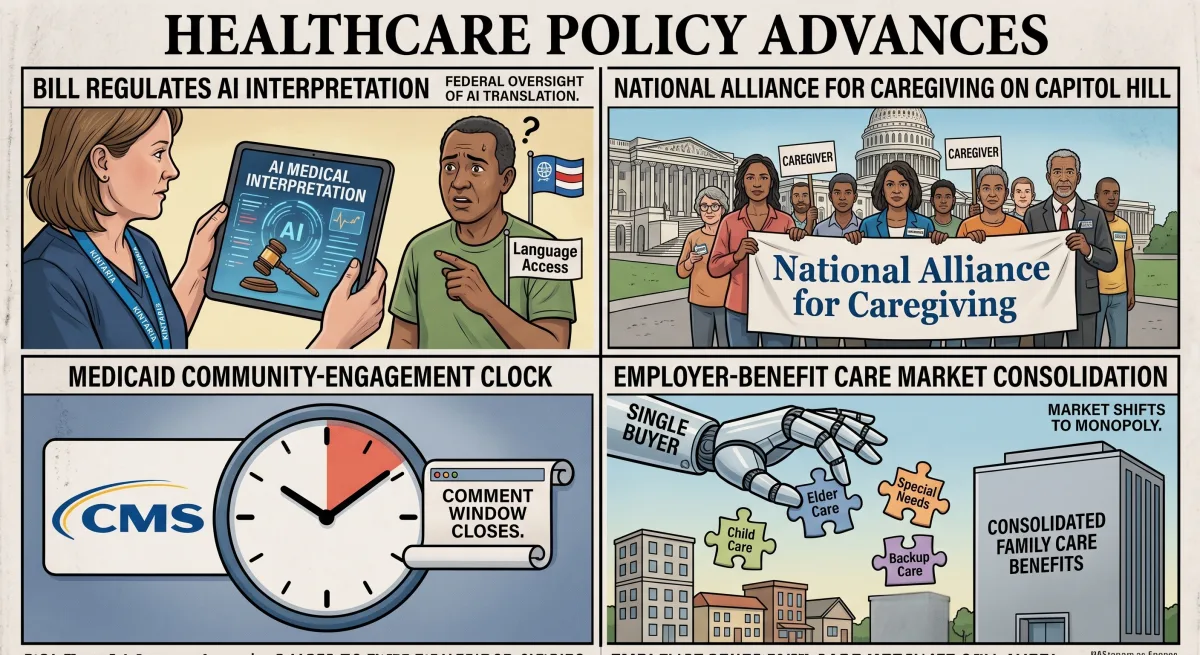
What changed for caregivers this week — June 7, 2026
A federal language-access bill puts AI medical interpretation under explicit oversight, the National Alliance for Caregiving heads to Capitol Hill, the CMS Medicaid community-engagement comment window keeps closing, and the employer-benefit family-care market is consolidating around one buyer.
June 7, 2026·3 min read·The Kintaria Editorial Team
The Language Access for All Act and what it would do to AI medical interpretation
The SPEAK Act became law in February. The Language Access for All Act of 2026 would extend the framework — bringing AI medical interpretation under explicit federal oversight for the first time. The research suggests both moves are early but correctly aimed. Here's what each bill does, why the AI piece is the substantive change, and what it means for bilingual families navigating care this year.
June 7, 2026·7 min read·Kintaria Team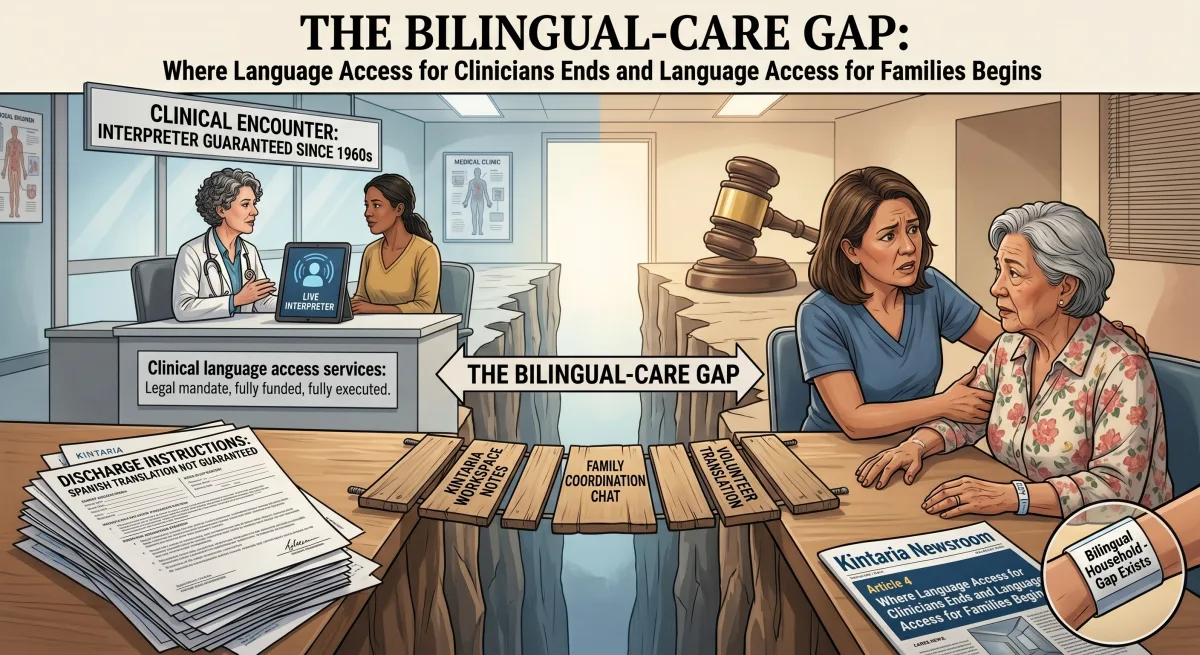
The bilingual-care gap: where language access for clinicians ends and language access for families begins
Federal law has guaranteed language-access services in clinical encounters since the 1960s. The legal framework is solid, the on-the-ground enforcement is real, the interpreters exist. What no law guarantees is language access for the family doing the caregiving — and that gap is where most bilingual American households actually live.
June 7, 2026·8 min read·Kintaria Team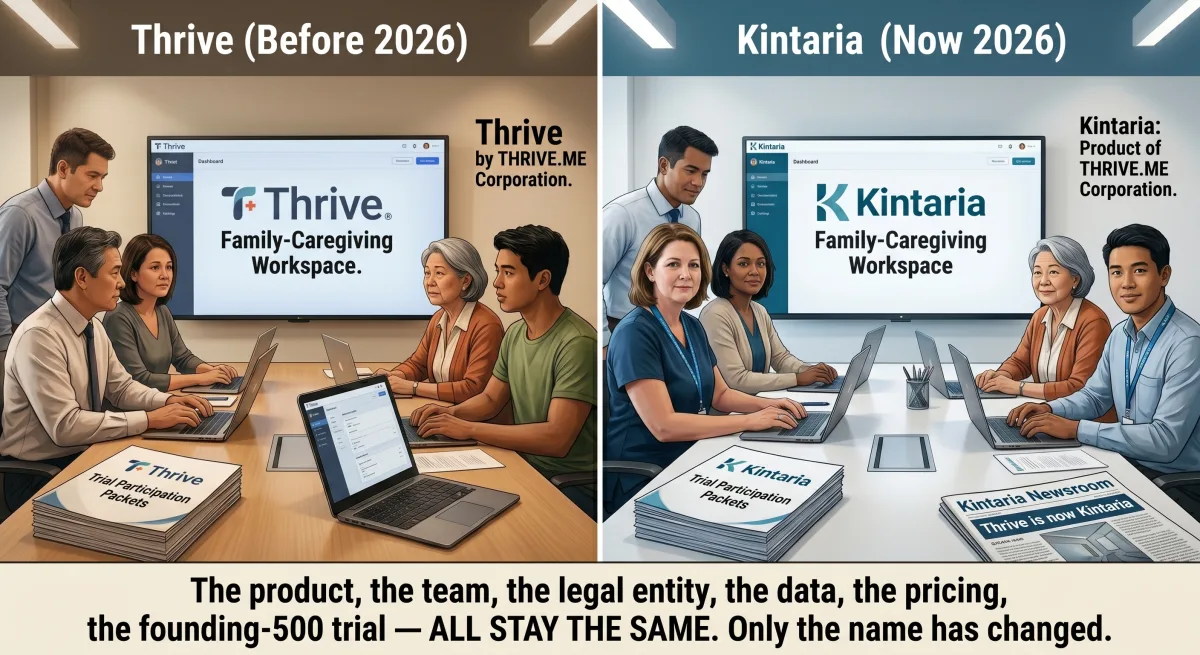
Thrive is now Kintaria
Our family-caregiving workspace has a new name. The product, the team, the legal entity, the data, the pricing, the founding-500 trial — all stay the same. This is what changed, what didn't, why we did it, and how to find us.
June 6, 2026·5 min read·Andrew Horvath
The Medicaid work-requirement rollout: a state-by-state look at what your family will actually see
The June 3 CMS rule said states must implement Medicaid community engagement by January 1, 2027. Each state is making different decisions on the verification process, the exemption application, the language access, and the appeals timeline. What your family experiences depends entirely on which state you live in.
June 6, 2026·7 min read·Kintaria Team
The 64 percent: what sandwich-generation burnout actually looks like
Sixty-four percent of sandwich-generation working women are at high burnout risk; among women 40 to 54, 46 percent are in the most severe category. The metaphor — a calm, lunch-shaped balance — is doing the data a disservice.
June 5, 2026·7 min read·Kintaria Team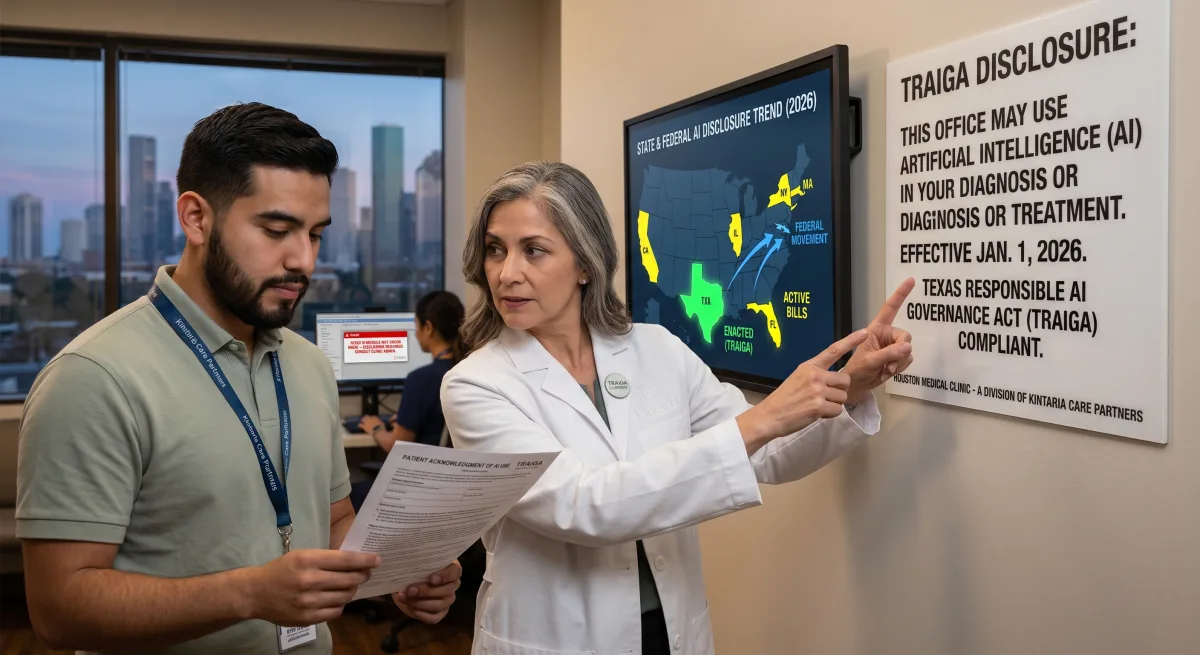
Texas changed the AI-disclosure default in healthcare. The rest of the country is next.
TRAIGA, the Texas Responsible AI Governance Act, took effect on January 1, 2026. Licensed healthcare providers in Texas now have to give patients a written, visible disclosure about any AI use in diagnosis or treatment. The rest of the country, federal and state, is moving in the same direction — and most software in the category is not ready.
June 5, 2026·7 min read·Kintaria Team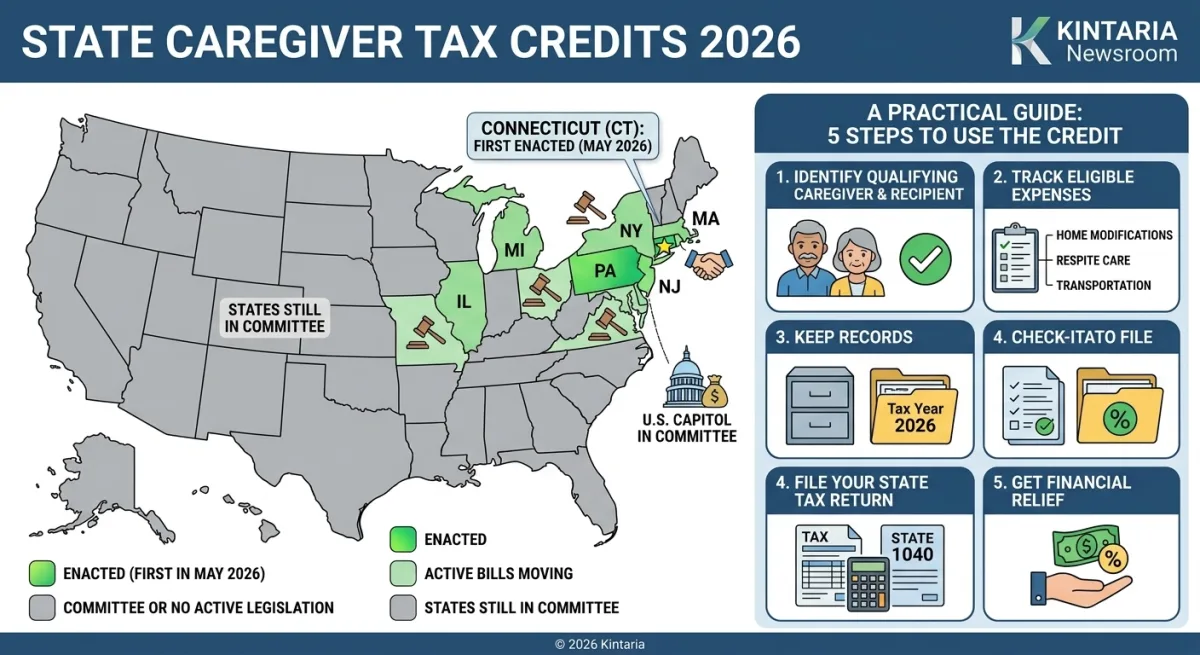
Where you can get money back for caring for an aging parent in 2026
The state-level family-caregiver tax credit movement, which has been a list of bills for years, finally has an enacted version (Connecticut, May 2026) and a clear pattern of what's coming next. A practical map of where the credits exist, where they're moving, and how to actually use them.
June 5, 2026·6 min read·Kintaria Team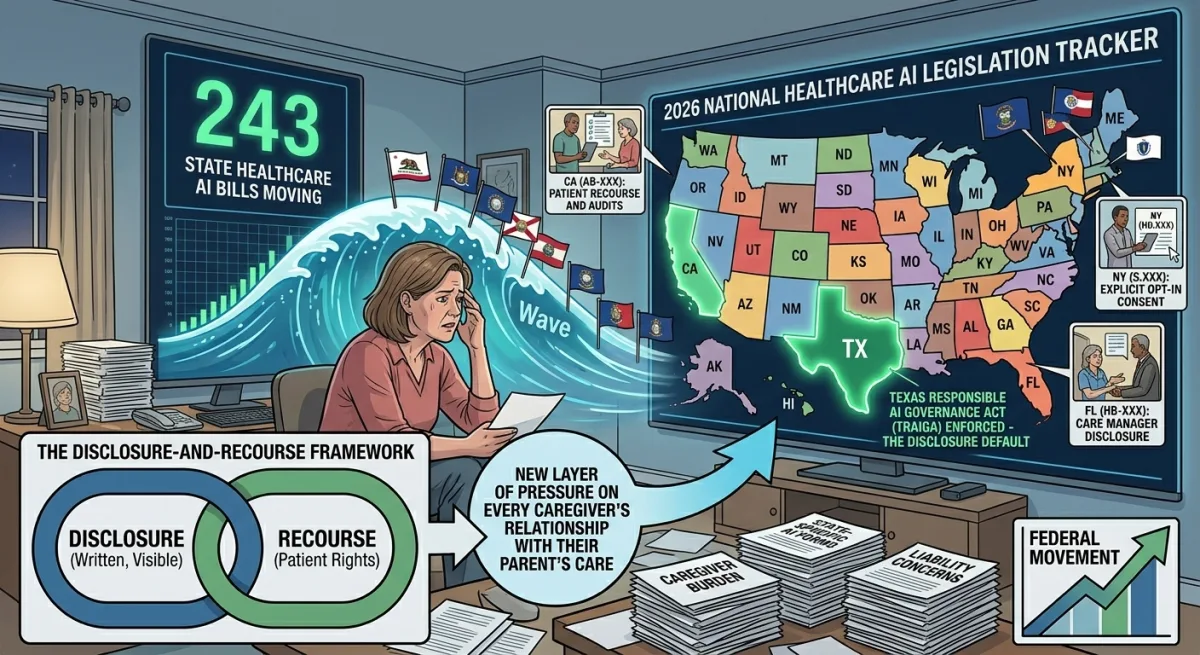
The 240-bill year: how state AI rules in healthcare are about to land on family caregivers
Texas's TRAIGA took effect January 1. By June, 240+ AI-in-healthcare bills are moving in 45 state legislatures. The thing that links them all isn't the technology — it's the disclosure-and-recourse framework, and it's about to put pressure on every family caregiver's relationship with their parent's care.
June 5, 2026·8 min read·Kintaria Team
Caregivers are ready for AI. Now the burden is on us.
A LogicMark national survey out yesterday: 90% of family caregivers show burnout symptoms, and roughly 8 in 10 say they would embrace AI support. The appetite isn't the question. What the category does with it is.
June 5, 2026·6 min read·Kintaria Team
Who counts as 'shared' in a shared caregiver workspace
The phrase 'shared caregiver workspace' has become category shorthand for any app where two siblings can both leave notes. The real test is harder: can the person being cared for participate, or only be coordinated about?
June 4, 2026·7 min read·Kintaria Team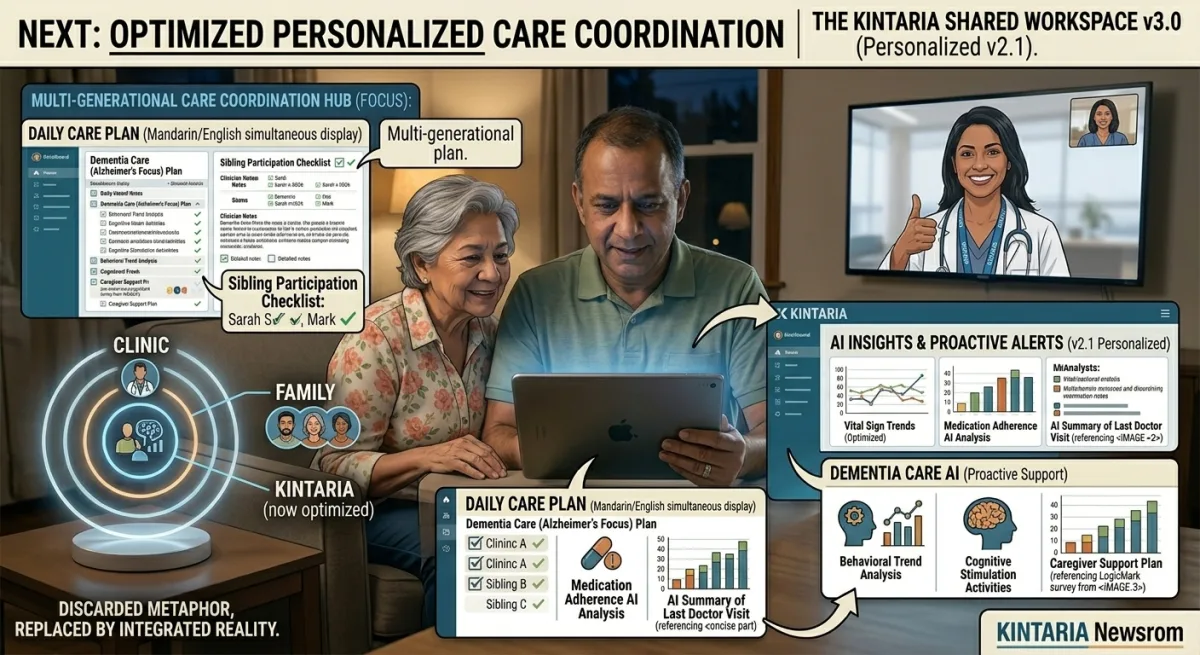
What sibling caregivers are actually asking for
The current wave of sibling-coordination apps treats family caregiving as a fairness problem to be settled with a Venmo-style ledger. The siblings who are actually doing the work are asking for something different.
June 4, 2026·7 min read·Kintaria Team
If you're a family caregiver on Medicaid, watch your mail starting June 30
On June 3, the federal government published the rule that requires most adult Medicaid enrollees to work 80 hours a month — and exempts family caregivers. Between June 30 and August 31, states will send the verification mail. Here's what to expect, what counts, and how to protect your coverage if your English is limited.
June 4, 2026·6 min read·Kintaria Team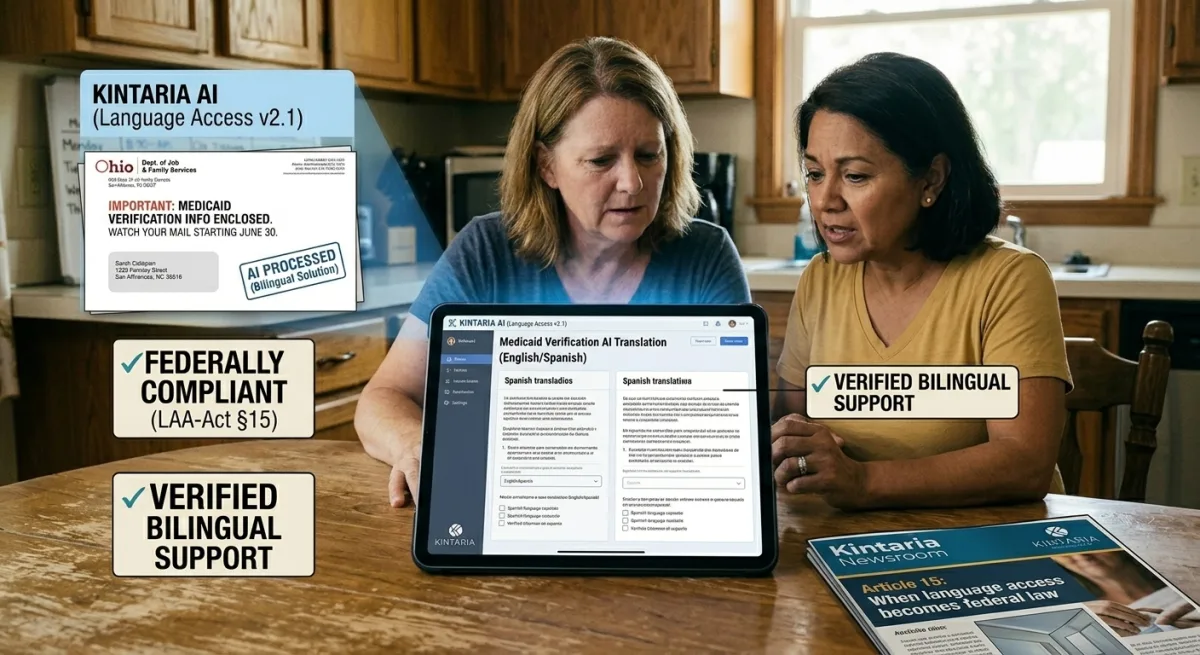
When language access becomes federal law
The Language Access for All Act would make language access a permanent federal requirement, not a courtesy. For families where the patient and the caregivers don't share a first language, the shift quietly reshapes what good software has to do.
June 4, 2026·8 min read·Kintaria Team
Five questions to ask your doctor about AI in your parent's care
AI is in your doctor's office whether you've been told or not. Here's how to ask about it — and what good answers actually sound like. A practical companion to the policy story now playing out state by state.
June 4, 2026·7 min read·Kintaria Team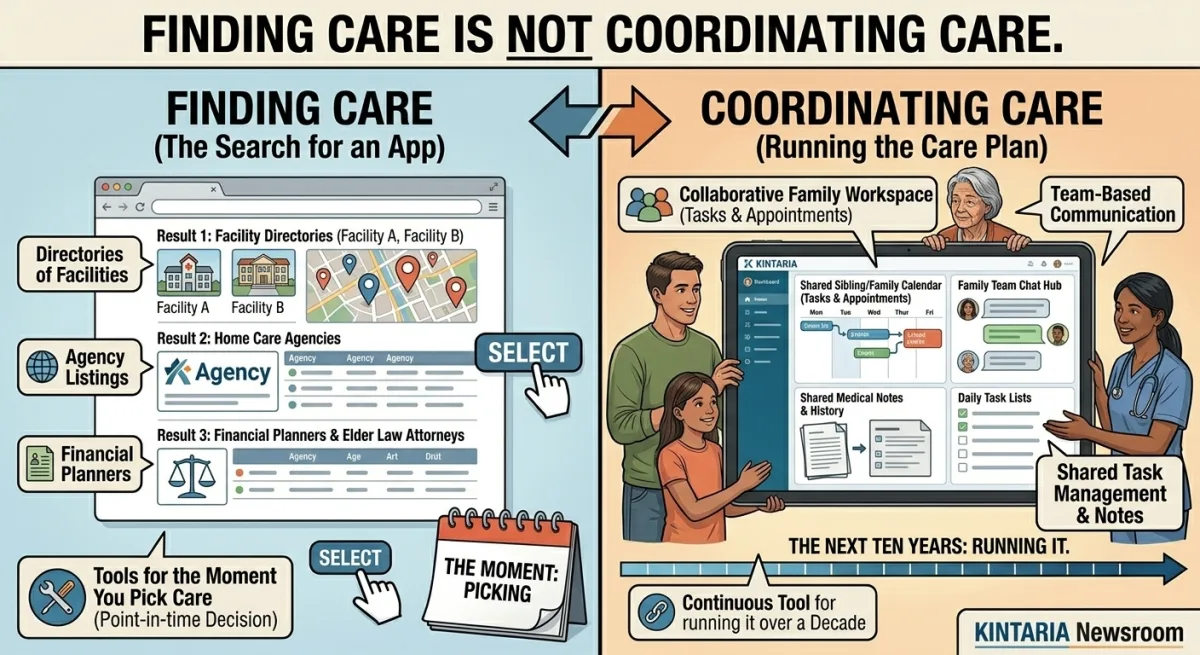
Finding care is not coordinating care
Search 'aging parent care app' and you get directories of facilities, agencies, and financial planners. Those are tools for the moment you're picking the care. They are not the tool for the next ten years of running it.
June 4, 2026·6 min read·Kintaria Team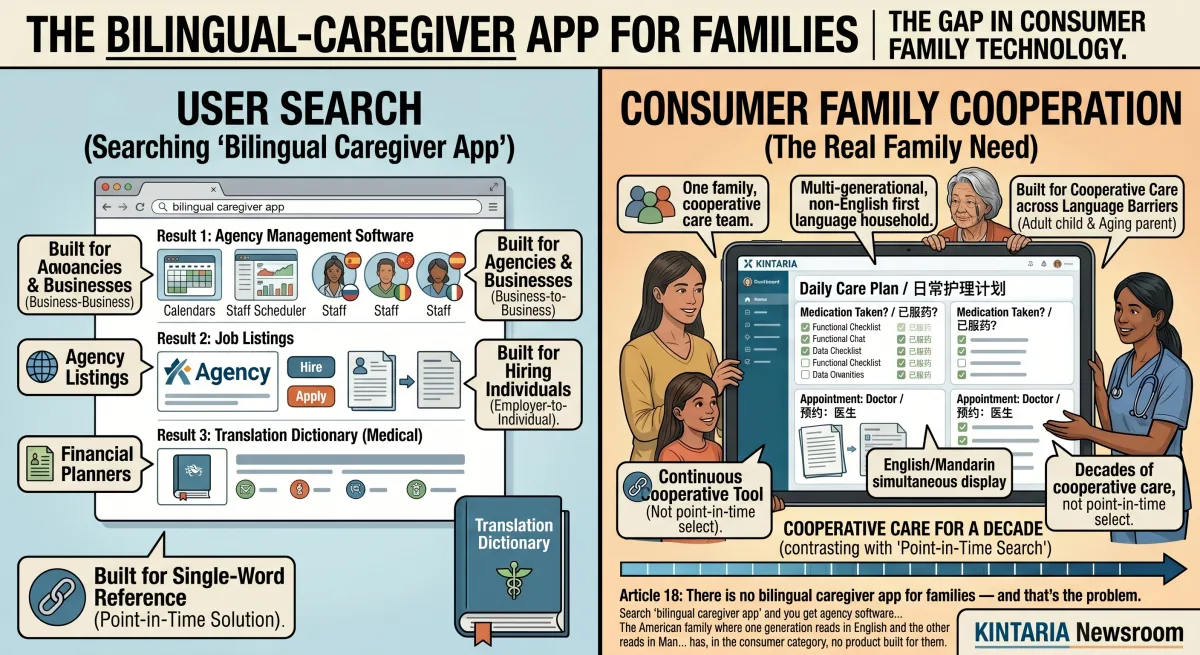
There is no bilingual caregiver app for families — and that's the problem
Search 'bilingual caregiver app' and you get agency software for managing bilingual workers, plus job listings. The American family where one generation reads in English and the other reads in Mandarin or Korean or Spanish has, in the consumer category, no product built for them.
June 4, 2026·6 min read·Kintaria Team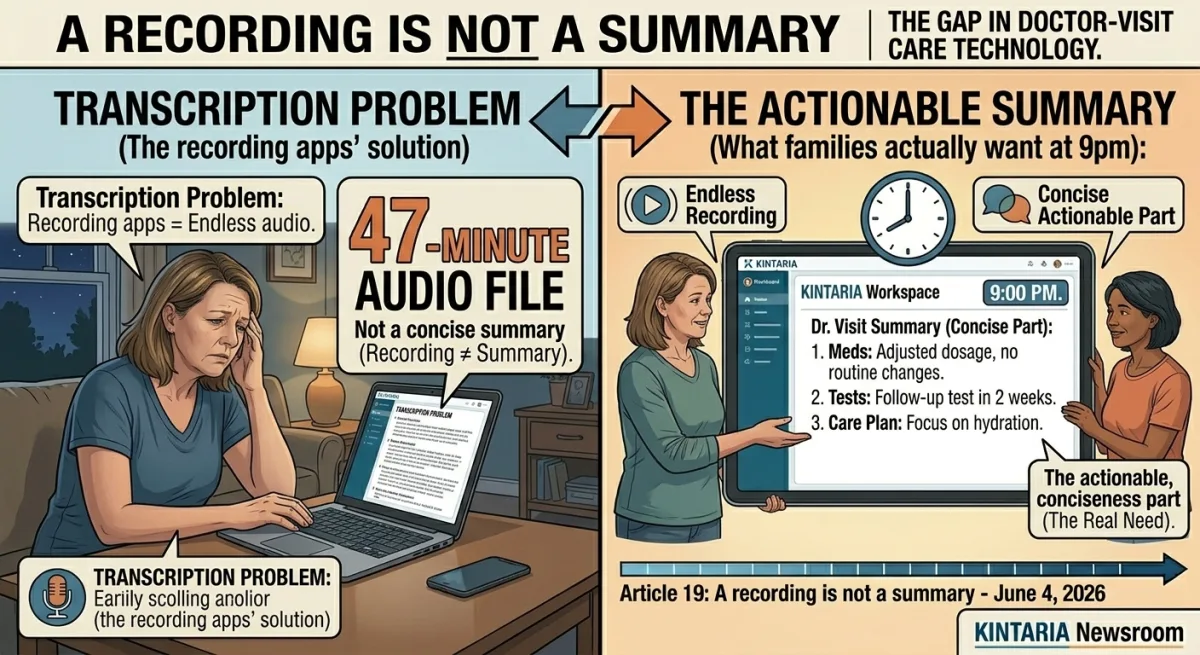
A recording is not a summary
The current wave of doctor-visit recording apps treats summarization as a transcription problem. The family member who couldn't be at the appointment doesn't want a 47-minute audio file. They want the part you can hand them at 9pm.
June 4, 2026·6 min read·Kintaria Team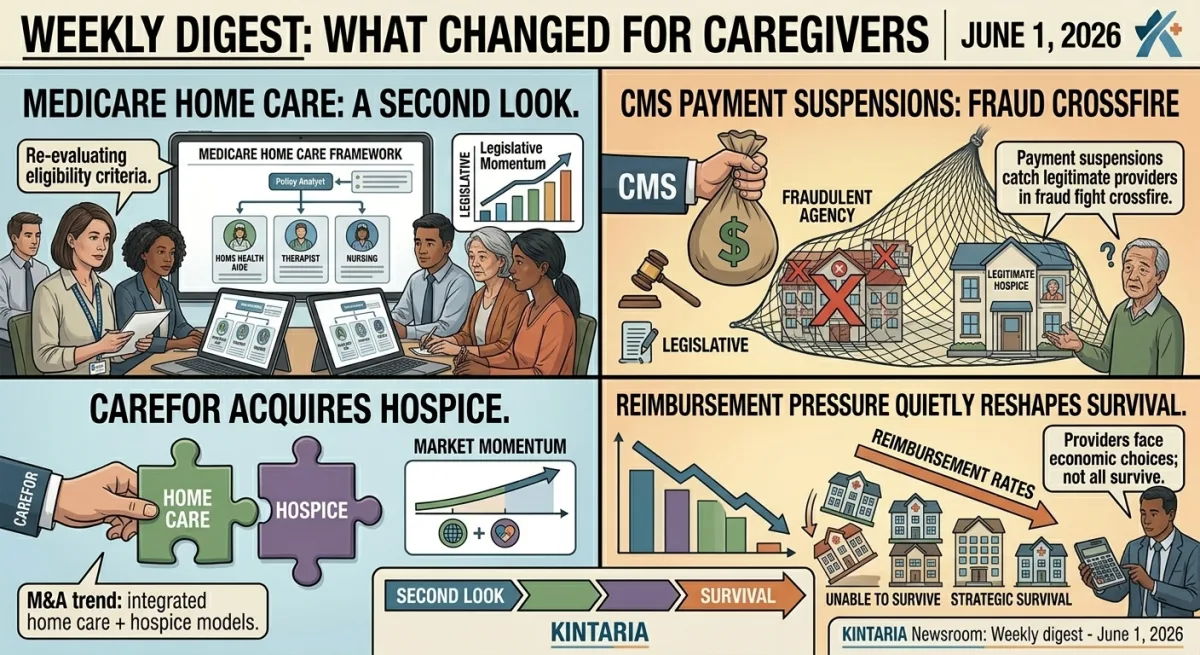
What changed for caregivers this week — June 1, 2026
The Medicare home care framework gets a second look, CMS payment suspensions are catching legitimate hospices in the crossfire, CareFor adds hospice to its home care model, and reimbursement pressure is quietly reshaping which home care providers survive.
June 1, 2026·3 min read·The Kintaria Editorial Team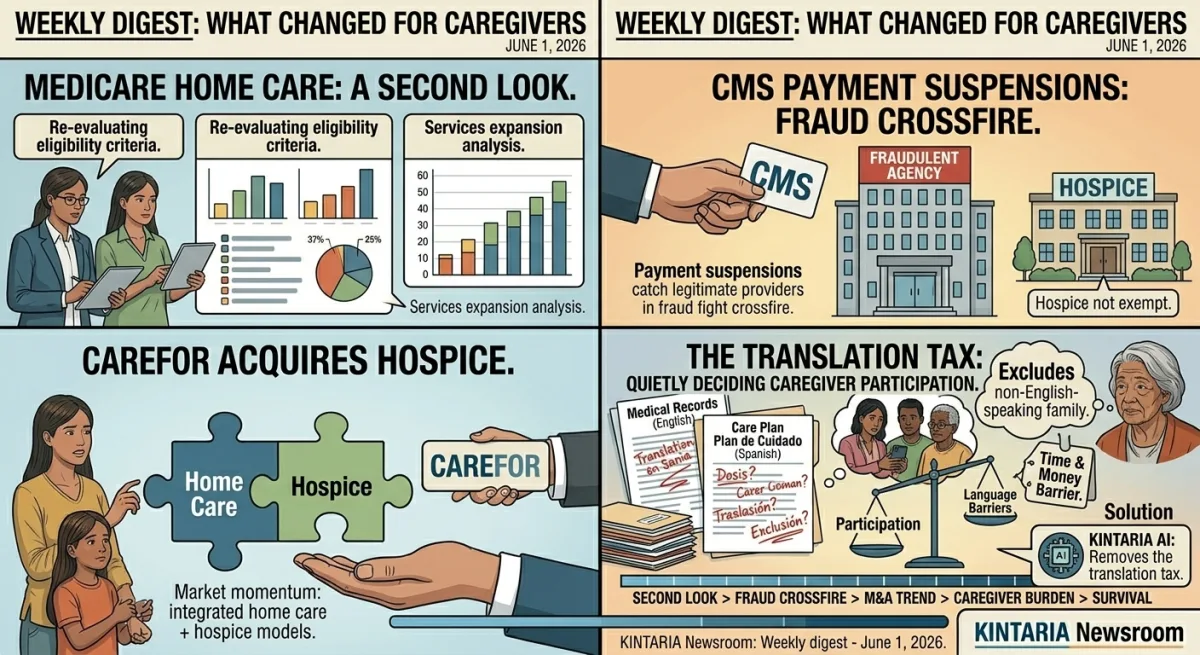
The translation tax: how language quietly decides who gets to participate in a parent's care
In millions of American families, the person providing the care and the person needing the care don't share a first language. The cost shows up in places nobody counts.
June 1, 2026·7 min read·Kintaria Team
If you're a caregiver on Medicaid, here's what the June 1 CMS rule actually means for you
About 8 million unpaid family caregivers are on Medicaid. The new federal rule defines how the family-caregiver exemption from the community-engagement requirement gets verified. Plain-English explainer of who qualifies, what to file, and what changes nothing.
June 1, 2026·6 min read·Kintaria Team
What changed for caregivers this week — May 29, 2026
Democratic senators propose adding home care to Medicare; the DOL rolls back overtime protections for home care workers; Warburg Pincus bets big on Cornerstone Caregiving; and a new community-based palliative care model moves toward federal consideration.
May 29, 2026·3 min read·The Kintaria Editorial Team
Can you legally record your parent's doctor's appointment? A state-by-state guide for family caregivers
Thirty-seven states (plus DC) let one person in a conversation record it. Thirteen require everyone to consent. Here's what that actually means inside an exam room — and how to ask the question without making it awkward.
May 28, 2026·11 min read·Kintaria Team
Protecting an aging parent from scams: a practical guide for the family doing the worrying
Older Americans reported losing $2.4 billion to fraud in 2024, and the FTC's high-end estimate is closer to $81.5 billion. Here's how the six biggest scams targeting older adults actually work — and what a family can do this week to make a parent harder to reach.
May 28, 2026·10 min read·Kintaria Team
What changed for caregivers this week — May 25, 2026
AARP's $1 trillion figure keeps reshaping the conversation, the CMS Medicaid rule lands soon, and Papa's new clinical model points to where caregiving dollars are flowing.
May 25, 2026·3 min read·The Kintaria Editorial Team
What changed for caregivers this week — May 18, 2026
CMS issues new state guidance on community engagement, the home-care M&A picture sharpens, and Trualta's caregiver training study gets a second look.
May 18, 2026·3 min read·The Kintaria Editorial Team
What changed for caregivers this week — May 11, 2026
POP Care launches into a crowded family-coordination category, the senior-housing M&A pace gets clearer, and Caring Village publishes its 2026 caregiver app review.
May 11, 2026·3 min read·The Kintaria Editorial Team
What changed for caregivers this week — May 4, 2026
Rosarium Health's seed round closes, a new round of state-level caregiver legislation reaches floor votes, and the CMS rule is five weeks out.
May 4, 2026·3 min read·The Kintaria Editorial Team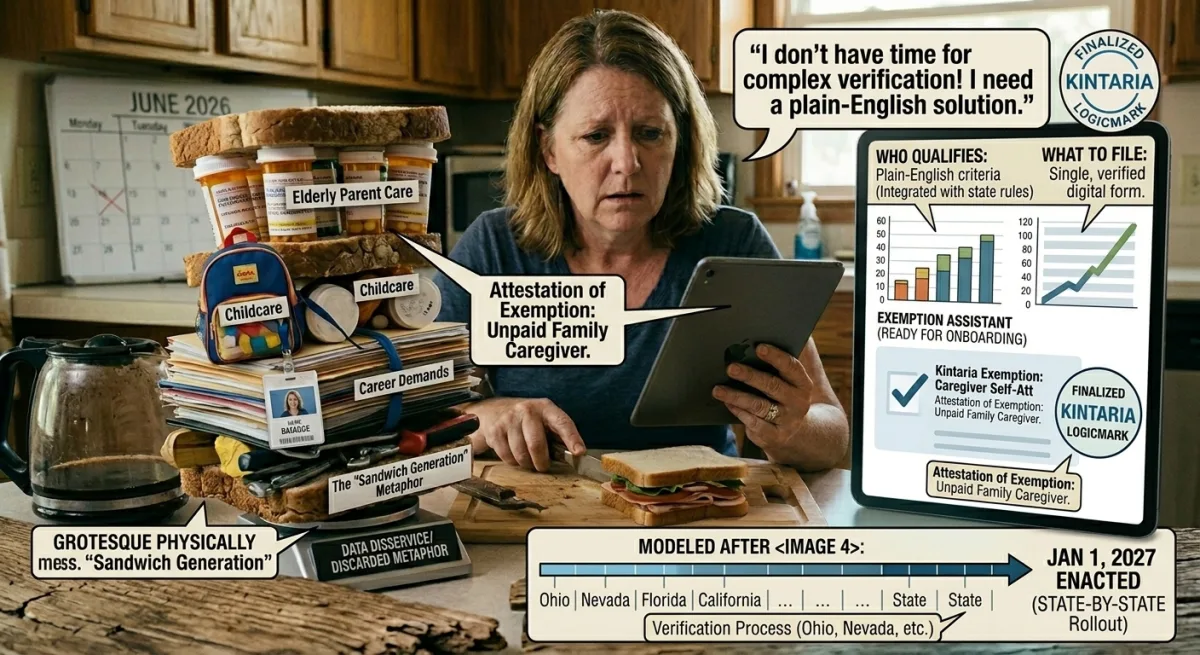
The state-by-state caregiver: how American caregiving became a map, not a system
There is no single American answer to who supports family caregivers. There are fifty answers, and the answer you get depends on where you live.
May 1, 2026·8 min read·Kintaria Team
What changed for caregivers this week — April 27, 2026
Healthcare private equity tilts toward home and aging services, a state tax credit becomes law, and the consent-for-AI-recording question reaches family medicine.
April 27, 2026·3 min read·The Kintaria Editorial Team
What changed for caregivers this week — April 20, 2026
AARP's long-term care affordability report lands, state tax credit bills cross thresholds in three legislatures, and ianacare publishes its remote-caregiving framework.
April 20, 2026·3 min read·The Kintaria Editorial Team
What changed for caregivers this week — April 13, 2026
Home health publications model the post-CMS-rate-cut industry, the Credit for Caring Act reintroduction surfaces, and state legislatures keep moving.
April 13, 2026·3 min read·The Kintaria Editorial Team
What changed for caregivers this week — April 6, 2026
Maven and Wellthy partner on a unified family-care platform for employers, the CMS interim rule heads to OMB, and the post-trillion analysis matures.
April 6, 2026·3 min read·The Kintaria Editorial Team
What a trillion dollars doesn't buy
AARP put a price on family caregiving last week. The figure is important, but it doesn't change what a Tuesday looks like for the family member holding it together.
April 1, 2026·8 min read·Kintaria Team
What changed for caregivers this week — March 30, 2026
Connecticut advances a $2,000 caregiver tax credit, the trillion-dollar conversation reaches the financial press, and CMS submits its interim rule to OMB.
March 30, 2026·3 min read·The Kintaria Editorial Team
What changed for caregivers this week — March 23, 2026
The trillion-dollar number lands. AARP's Valuing the Invaluable 2026 puts a price on what 59 million Americans give away each year — and Vermont moves on a state caregiver credit.
March 23, 2026·3 min read·The Kintaria Editorial Team
What changed for caregivers this week — March 16, 2026
A quieter news week. State tax credit bills move through committee, the OBBBA implementation timeline holds, and the trillion-dollar number is ten days out.
March 16, 2026·2 min read·The Kintaria Editorial Team
What changed for caregivers this week — March 9, 2026
Senior housing keeps consolidating, the Urban Institute models OBBBA's coverage impact, and the AARP update lands in three weeks.
March 9, 2026·3 min read·The Kintaria Editorial Team
What changed for caregivers this week — March 2, 2026
Papa pivots toward clinical outcomes, the OBBBA implementation conversation heats up, and the Fitbit co-founders enter the family-care space.
March 2, 2026·3 min read·The Kintaria Editorial Team
Before the trillion-dollar number: who 63 million American caregivers actually are
The Caregiving in the US 2025 report just put a face on the people about to be re-counted by an even bigger headline this month. It's worth pausing on who they are.
March 1, 2026·7 min read·Kintaria Team