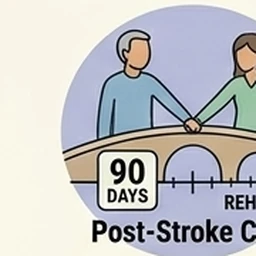
stroke을(를) 앓는 가족을 돌보기
Caring for someone after a stroke
A stroke compresses years of caregiving change into ninety days. The patient who came home from the hospital is partly the person you knew and partly someone whose abilities will take weeks or months to map out. The rehab path that gets started in the first 90 days shapes the next decade. Here's what to set up while it matters most.
가족에게 무엇이 달라지는가
Stroke is uneven in a different way than dementia is. Specific abilities are gone or impaired (speech, swallowing, the use of one side, the ability to read or write); other things are intact, sometimes startlingly so. The first 90 days are the most consequential — most recovery happens then, and the rehab decisions made in that window largely determine the long-term trajectory. The marriage or family relationship reorganizes around new tasks (the spouse who suddenly handles the bills, the daughter who manages the rehab schedule), and the patient is often dealing with their own grief at the same time. Depression after stroke is common, treatable, and under-screened.
일찍 마련해두어야 할 것들
진단 직후의 시기는 가족이 앞으로의 여정 전체가 의지하게 될 구조를 잡을 수 있는, 가장 여유가 있는 때입니다. 미룰수록 아래의 일들 가운데 일부는 점점 더 어려워집니다.
- A clear plan for the rehab path: acute inpatient rehab vs. subacute (skilled nursing facility) vs. home health PT/OT/SLP. The choice depends on the patient's tolerance for therapy hours; the discharge planner has options but the family has to choose deliberately.
- FMLA paperwork for the working spouse / adult child who needs leave. Don't wait — FMLA is paperwork-heavy and benefits are easier to access when started early.
- Power-of-attorney activation if the stroke affected speech or capacity. Many couples have these in place but never activated them; the bank doesn't honor a POA unless you formally present it.
- Medication reconciliation across the new neurology / cardiology / PT team. Stroke patients leave the hospital with new anticoagulants + blood-pressure regimens; the existing pharmacy probably needs the updated list.
- Home modifications insurance won't cover that you need anyway: grab bars, a raised toilet seat, a shower chair, removing throw rugs, securing the path from bedroom to bathroom.
- A conversation with the kids — including adult children — about what changed and what didn't. Stroke is invisible until you see it; visible changes are easier for kids to integrate than the cognitive ones that show up subtly.
가장 힘든 순간들
가족들이 가장 힘들었다고 말하는 순간들은 종종 누구도 미리 알려주지 않은 순간들입니다. 무엇이 올 가능성이 있는지 안다고 해서 이 순간들이 쉬워지지는 않습니다 — 그러나 이 순간들에 이름을 붙일 수 있고, 그 순간이 닥쳤을 때 가족을 다시 모이게 해주는 공간이 있다면 도움이 됩니다.
- The first time a familiar task is hard for the patient and they realize it. Reading the newspaper, signing a check, using the remote. The grief of those moments lives with the patient for months.
- The transition from inpatient rehab to home. The discharge feels like progress, but home is harder than the rehab unit — no 24/7 staff, no immediate equipment, fewer cues.
- Post-stroke depression at week 4-8. Hits most stroke patients to some degree, often unrecognized because the family attributes it to the stroke itself. PCP screening + treatment changes the recovery arc.
- The decision about driving. Stroke recovery often gates the return to driving; the conversation about when (and whether) is one families avoid until insurance forces it.
이 질환과 연결되는 플레이북
Kintaria의 플레이북은 이 돌봄 여정에서 실제로 나타나는 구체적인 순간들을 위한 단계별 안내입니다. 각각은 여러분의 워크스페이스에서 열리고, 여러분의 답변에 맞추어 개인화됩니다.
- Spouse · 90-day windowYour spouse just had a stroke.
- Hospital · 48-hour windowYour parent was just discharged from a hospital.
- Spouse · OngoingWhen you are the caregiver-spouse.
- Foundation · One-time setupGet the legal paperwork in order.
- Parent · 72 hours + 30 daysYour parent is recovering from a surgery.
전국 단체와 상담 전화
이 단체들은 업계에서 표준적인 출발점으로 여기는 곳들입니다. 모두 무료이며, 모두 실제 사람이 받는 상담 전화입니다(돌봄제공자용 AI 전화 상담은 별개의 범주이며, 여기에서는 해당 질환에 대해 훈련받은 사람을 의미합니다).
- Stroke Family Warmline · 1-888-478-7653
The Stroke Family Warmline connects caregivers with trained stroke specialists. Support groups (in-person + online). "Care for the Caregiver" practical guide.
For stroke survivors with aphasia (loss or impairment of language). Communication strategies, support groups, family education.
- National Brain Injury Information Center · 1-800-444-6443
For families navigating cognitive impacts of stroke or other brain injuries. State chapters, support groups, family resources.
Federal stroke prevention + recovery resources. Plain-language warning signs (FAST), recovery guides, signs of a second stroke.
Kintaria 워크스페이스가 어떻게 돕는가
Kintaria는 이 진단이 만들어낼 일들을 위해 설계된, 차분하고 공유되는 가족 워크스페이스입니다. 약 목록은 한 곳에 모여 있어, 주말에 비행기로 오는 셋째 형제자매가 무엇이 바뀌었는지 다시 처음부터 익힐 필요가 없습니다. 진료 일정은 공유되어 있어, 가족이 일정이 겹치거나 류마티스내과 추적 진료를 놓치는 일이 줄어듭니다. 활동 기록은 누가 무엇을 했는지에 대해 정직하기 때문에, 주 돌봄제공자가 모든 일을 조용히 떠안지 않게 됩니다. 그리고 워크스페이스는 이중 언어입니다 — 환자는 자신이 더 편한 언어로 읽고, 가족은 영어로 읽습니다 — 진단 자체가 이미 정신을 어지럽게 만드는 상황에서, 이 점은 사람들이 예상하는 것보다 훨씬 더 중요합니다.
처음 500가족에게 1년 무료 체험을 제공합니다. 신용카드가 필요하지 않습니다.
Kintaria가 무엇인지(그리고 아닌지)에 대한 안내
Kintaria는 임상 도구가 아니며, 의학적 의사결정을 대체하지 않고, stroke 치료팀을 대신하지도 않습니다. 이 페이지의 안내는 돌봄을 조율하는 가족을 위한 것이고, 구체적인 임상 결정은 환자의 담당의가 내려야 합니다. 워크스페이스 곳곳에서 안내되는 escalation 신호는 그 경계에 대해 정직합니다.
이 페이지에서 사용된 돌봄 용어
읽으시면서 뜻을 알고 싶을 수 있는 단어들입니다. 각 단어는 별도의 페이지로 열리며, 쉬운 말로 정의와 돌봄 현장에서 어떻게 등장하는지를 설명합니다.
- Case manager — A nurse or social worker employed by the hospital whose job is to coordinate care across the system — most importantly, discharge planning.
- Skilled nursing facility — A facility providing 24-hour skilled nursing care — primarily for short-term rehabilitation after hospitalization, but also for long-term residence.
- Home health — Skilled medical care delivered in the home by nurses, physical therapists, occupational therapists, or speech therapists — typically following hospitalization or during the management of a serious condition.
함께 보기: 모든 질환 · 모든 플레이북 · 돌봄제공자 용어집 · 전국 자원 디렉터리