sickle cell disease을(를) 앓는 가족을 돌보기
Caring for someone with sickle cell disease
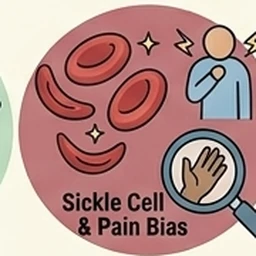
Sickle cell disease is the most common inherited blood disorder in the US, affecting ~100,000 Americans — almost all of African, Caribbean, or Latin American descent. It's also the disease where racial bias in pain management is most documented. The caregiver role often includes advocacy at every emergency room visit. Here's the orientation.
가족에게 무엇이 달라지는가
Sickle cell disease (SCD) reshapes a family along several axes that don't resemble other chronic-disease patterns. The medical work is dominated by pain — vaso-occlusive crises, in which sickle-shaped red blood cells block blood vessels, cause some of the most severe pain in medicine, requiring opioid treatment at levels that often trigger profiling at emergency rooms. The cumulative organ damage from years of micro-occlusion affects almost every organ system — chronic kidney disease, pulmonary hypertension, stroke risk, retinopathy, leg ulcers, avascular necrosis of joints — with the trajectory varying widely between patients. The treatment landscape has changed dramatically: hydroxyurea remains the foundation, voxelotor and crizanlizumab are newer options, and gene-therapy approvals in 2023-2024 (Casgevy, Lyfgenia) have made a curative path possible for some patients but at $2-3M per treatment with significant short-term toxicity. The family-caregiver role is unusually advocacy-heavy: ensuring the patient is believed at the ED, ensuring pain medication is given at the right doses, ensuring the SCD specialist (not just the hospitalist) is consulted, navigating insurance for the expensive newer therapies, often coordinating across multiple subspecialists.
일찍 마련해두어야 할 것들
진단 직후의 시기는 가족이 앞으로의 여정 전체가 의지하게 될 구조를 잡을 수 있는, 가장 여유가 있는 때입니다. 미룰수록 아래의 일들 가운데 일부는 점점 더 어려워집니다.
- Connection to a hematologist who specializes in sickle cell (not just a general hematologist). Outcomes are dramatically better with SCD-specialist care. The Sickle Cell Disease Association of America (SCDAA) maintains a clinic locator.
- A written sickle cell pain action plan from the hematologist, signed and dated. The single most useful document a family can have at the ED — it documents the patient's typical pain regimen, prior responses to medications, and the SCD specialist's recommendation. Reduces (does not eliminate) the bias problem.
- Pneumococcal + meningococcal + annual flu + COVID + RSV vaccines. Patients with SCD are functionally asplenic and at high risk for serious bacterial infections; the vaccine schedule is more intensive than for the general population. Penicillin prophylaxis through age 5 is standard for kids.
- Education about hydroxyurea + the newer therapies. Hydroxyurea reduces crises and extends life, but uptake remains too low; clinician + family advocacy for it makes a measurable difference. Voxelotor, crizanlizumab, and gene therapy are newer options each family should discuss with their specialist.
- A stroke-prevention plan for children with SCD. Transcranial Doppler ultrasound starting at age 2 identifies kids at high risk for stroke; chronic transfusion can prevent it. Often missed at non-SCD centers.
- Connection to a local Sickle Cell Disease Association chapter or community-based SCD organization. The advocacy + peer-support work in the SCD community is some of the most effective in any patient community. Strong family-mentor programs.
가장 힘든 순간들
가족들이 가장 힘들었다고 말하는 순간들은 종종 누구도 미리 알려주지 않은 순간들입니다. 무엇이 올 가능성이 있는지 안다고 해서 이 순간들이 쉬워지지는 않습니다 — 그러나 이 순간들에 이름을 붙일 수 있고, 그 순간이 닥쳤을 때 가족을 다시 모이게 해주는 공간이 있다면 도움이 됩니다.
- The first vaso-occlusive crisis admission where pain isn't adequately treated, or the patient is profiled as drug-seeking. The bias is well-documented and ongoing; the family's advocacy at the bedside is structurally important. Documentation, calm escalation to the patient's SCD specialist, and a written pain plan all help.
- The acute chest syndrome admission. ACS is the leading cause of death in adults with SCD; presents as chest pain + cough + fever, escalates fast, requires aggressive treatment including transfusion. Most families don't know to look for it specifically.
- The stroke conversation for parents of children with SCD. Stroke risk is meaningful in pediatric SCD; the prevention regimen (chronic transfusion or hydroxyurea) is intensive and the alternative is heavy. The decision is best had with a pediatric hematologist + neurologist together.
- The gene therapy decision. Casgevy + Lyfgenia offer a possible cure but cost $2-3M, involve months of treatment + isolation, carry real short-term toxicity, and the long-term outcomes are still emerging. The decision is profoundly personal; most patients + families take months to a year to make it.
이 질환과 연결되는 플레이북
Kintaria의 플레이북은 이 돌봄 여정에서 실제로 나타나는 구체적인 순간들을 위한 단계별 안내입니다. 각각은 여러분의 워크스페이스에서 열리고, 여러분의 답변에 맞추어 개인화됩니다.
- Foundation · One-time setupGet the legal paperwork in order.
- Hospital · 48-hour windowYour parent was just discharged from a hospital.
- Wellness · OngoingWhen you're burning out.
- Parent · This is real nowYour parent is in the ER for the first time.
- Parent · Financial interventionWhen your parent's bills become a problem.
전국 단체와 상담 전화
이 단체들은 업계에서 표준적인 출발점으로 여기는 곳들입니다. 모두 무료이며, 모두 실제 사람이 받는 상담 전화입니다(돌봄제공자용 AI 전화 상담은 별개의 범주이며, 여기에서는 해당 질환에 대해 훈련받은 사람을 의미합니다).
- 1-800-421-8453
The national SCD organization. Local member organizations across the country, clinic locator (SCDAA member SCD treatment centers), advocacy on insurance + policy issues. Strong patient + family resources.
Patient-led, social-media-native education + community. Plain-language resources on every aspect of SCD living. Particularly useful for newer-generation patients + caregivers.
CDC's SCD program. Authoritative information on screening, complications, treatment landscape, and emerging research. Plain-language, regularly updated.
Pediatric-focused SCD support. Family camps, scholarships, support for parents of newly-diagnosed children, advocacy for school accommodations.
Authoritative US government plain-language overview. Free, comprehensive, available in English + Spanish.
For patients + families navigating the reproductive-health side of SCD — genetic counseling, family planning, pregnancy in SCD. An under-served area; SCRED fills a real gap.
Kintaria 워크스페이스가 어떻게 돕는가
Kintaria는 이 진단이 만들어낼 일들을 위해 설계된, 차분하고 공유되는 가족 워크스페이스입니다. 약 목록은 한 곳에 모여 있어, 주말에 비행기로 오는 셋째 형제자매가 무엇이 바뀌었는지 다시 처음부터 익힐 필요가 없습니다. 진료 일정은 공유되어 있어, 가족이 일정이 겹치거나 류마티스내과 추적 진료를 놓치는 일이 줄어듭니다. 활동 기록은 누가 무엇을 했는지에 대해 정직하기 때문에, 주 돌봄제공자가 모든 일을 조용히 떠안지 않게 됩니다. 그리고 워크스페이스는 이중 언어입니다 — 환자는 자신이 더 편한 언어로 읽고, 가족은 영어로 읽습니다 — 진단 자체가 이미 정신을 어지럽게 만드는 상황에서, 이 점은 사람들이 예상하는 것보다 훨씬 더 중요합니다.
처음 500가족에게 1년 무료 체험을 제공합니다. 신용카드가 필요하지 않습니다.
Kintaria가 무엇인지(그리고 아닌지)에 대한 안내
Kintaria는 임상 도구가 아니며, 의학적 의사결정을 대체하지 않고, sickle cell disease 치료팀을 대신하지도 않습니다. 이 페이지의 안내는 돌봄을 조율하는 가족을 위한 것이고, 구체적인 임상 결정은 환자의 담당의가 내려야 합니다. 워크스페이스 곳곳에서 안내되는 escalation 신호는 그 경계에 대해 정직합니다.
이 페이지에서 사용된 돌봄 용어
읽으시면서 뜻을 알고 싶을 수 있는 단어들입니다. 각 단어는 별도의 페이지로 열리며, 쉬운 말로 정의와 돌봄 현장에서 어떻게 등장하는지를 설명합니다.
- Hospitalist — A doctor who works exclusively inside the hospital.
함께 보기: 모든 질환 · 모든 플레이북 · 돌봄제공자 용어집 · 전국 자원 디렉터리