diabetes을(를) 앓는 가족을 돌보기
Caring for an older adult with diabetes
Diabetes in an older adult is two stories at once: the medical management of blood sugar, and the long-tail of complications — vision, kidney function, foot care, the diabetes-dementia connection — that gradually reshape the patient's life. The work for the family is less about a single moment and more about preventing the next problem. Here's the orientation.
가족에게 무엇이 달라지는가
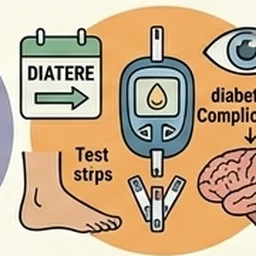
Type 2 diabetes (the most common form in older adults) is a chronic-disease management problem with consequences that compound over years. The day-to-day work — blood-sugar monitoring, medication adherence, food choices, hypoglycemia recognition — sits with the patient and a family caregiver who often quietly absorbs it. Several big patterns reshape family life: hypoglycemia (low blood sugar) episodes that come on fast, especially with insulin or sulfonylureas; the diabetes-dementia connection (poorly-controlled diabetes meaningfully raises dementia risk + makes existing cognitive symptoms worse); the diabetic complications — retinopathy, neuropathy, kidney disease, peripheral artery disease, foot ulcers that become infections that become amputations — that progress more slowly than a heart attack but are no less consequential; and the medication burden, often 5-10 drugs, that requires real coordination. The good news: most diabetic complications are preventable or delayable with steady management. The harder news: "steady management" is harder than it sounds.
일찍 마련해두어야 할 것들
진단 직후의 시기는 가족이 앞으로의 여정 전체가 의지하게 될 구조를 잡을 수 있는, 가장 여유가 있는 때입니다. 미룰수록 아래의 일들 가운데 일부는 점점 더 어려워집니다.
- A continuous glucose monitor (CGM) if not already prescribed. CGMs (Dexcom, Libre) have transformed diabetes management — real-time glucose data, alarms for highs and lows, trend arrows. Medicare covers them for most patients on insulin. The information is useful to the family caregiver too.
- A standing-orders foot exam at every primary-care visit. Diabetic foot complications are one of the top preventable causes of hospitalization and amputation in older adults; the screen takes 60 seconds.
- Annual dilated eye exam with an ophthalmologist (not just an optometrist). Diabetic retinopathy progresses silently; early-stage treatment is dramatically more effective than late.
- Annual kidney function check (urine albumin + eGFR). Diabetes is the #1 cause of kidney disease in the US; catching the slide early opens treatment options that dramatically slow progression.
- A clear written "if blood sugar is X, do Y" plan from the patient's primary or endocrinologist. The patient needs it, the spouse needs it, the home caregiver needs it. Hypoglycemia in older adults can present as confusion (mistaken for dementia) or falls (mistaken for orthostatic issues).
- A conversation about deprescribing if the patient is on a sulfonylurea (glipizide, glyburide) or aggressive insulin regimen. Older-adult guidelines explicitly recommend LESS-tight blood-sugar targets in patients with limited life expectancy or significant comorbidities; many older diabetics are over-treated and at high risk of dangerous hypoglycemia.
가장 힘든 순간들
가족들이 가장 힘들었다고 말하는 순간들은 종종 누구도 미리 알려주지 않은 순간들입니다. 무엇이 올 가능성이 있는지 안다고 해서 이 순간들이 쉬워지지는 않습니다 — 그러나 이 순간들에 이름을 붙일 수 있고, 그 순간이 닥쳤을 때 가족을 다시 모이게 해주는 공간이 있다면 도움이 됩니다.
- The first serious hypoglycemia episode. Often presents as sudden confusion, sweating, weakness; can mimic stroke or cardiac event. The family's ability to recognize + treat (glucose tablets, juice, glucagon kit) determines whether it stays a kitchen incident or becomes an ER visit.
- A diabetic-foot infection or ulcer. What starts as a small sore can progress to cellulitis, osteomyelitis, and amputation faster than families expect. The decision to see a podiatrist or wound-care specialist same-day vs "wait and see" is consequential.
- The diagnosis of diabetic retinopathy or kidney disease. Both are silent until they're not, and the patient often experiences these as out-of-the-blue losses even when the progression has been visible to the clinicians for years.
- Cognitive symptoms in a patient with long-standing diabetes. The diabetes-dementia connection is real and bidirectional. Worsening cognition can make diabetes management harder, which worsens diabetes control, which worsens cognition. Breaking the cycle requires simplifying the medication regimen, often deprescribing aggressive treatments, and accepting less-tight targets.
이 질환과 연결되는 플레이북
Kintaria의 플레이북은 이 돌봄 여정에서 실제로 나타나는 구체적인 순간들을 위한 단계별 안내입니다. 각각은 여러분의 워크스페이스에서 열리고, 여러분의 답변에 맞추어 개인화됩니다.
- Foundation · One-time setupGet the legal paperwork in order.
- Hospital · 48-hour windowYour parent was just discharged from a hospital.
- Planning · First few weeksYou're ready to bring in a home health aide.
- Parent · 72 hours + 30 daysYour parent is recovering from a surgery.
- Parent · This is real nowYour parent is in the ER for the first time.
전국 단체와 상담 전화
이 단체들은 업계에서 표준적인 출발점으로 여기는 곳들입니다. 모두 무료이며, 모두 실제 사람이 받는 상담 전화입니다(돌봄제공자용 AI 전화 상담은 별개의 범주이며, 여기에서는 해당 질환에 대해 훈련받은 사람을 의미합니다).
- 1-800-DIABETES (1-800-342-2383)
The largest patient + family diabetes organization. Free helpline, "Living with Type 2" resources, Mediterranean + DASH diet guides, food-and-fitness planning tools, advocacy for insulin price caps + Medicare coverage.
Peer support specifically for women with diabetes (and their families). Online community, in-person meetups in many cities, a strong focus on the under-discussed reality that diabetes management interacts with hormonal + life-stage changes.
Type-1-focused (though family caregivers of type 1 adults can also benefit). Research-leading organization, peer-mentor program, and a strong policy-advocacy arm on insulin pricing + access.
For family members at risk of developing diabetes themselves (caregivers are at higher risk via stress + sleep loss). Year-long lifestyle program, covered by Medicare for eligible adults, can prevent or delay type 2.
Find a Certified Diabetes Care + Education Specialist (CDCES) near you. Medicare covers initial + annual diabetes self-management training (DSMT); most patients qualify and don't know it.
Authoritative US government plain-language overview. Free, comprehensive, available in English + Spanish.
Kintaria 워크스페이스가 어떻게 돕는가
Kintaria는 이 진단이 만들어낼 일들을 위해 설계된, 차분하고 공유되는 가족 워크스페이스입니다. 약 목록은 한 곳에 모여 있어, 주말에 비행기로 오는 셋째 형제자매가 무엇이 바뀌었는지 다시 처음부터 익힐 필요가 없습니다. 진료 일정은 공유되어 있어, 가족이 일정이 겹치거나 류마티스내과 추적 진료를 놓치는 일이 줄어듭니다. 활동 기록은 누가 무엇을 했는지에 대해 정직하기 때문에, 주 돌봄제공자가 모든 일을 조용히 떠안지 않게 됩니다. 그리고 워크스페이스는 이중 언어입니다 — 환자는 자신이 더 편한 언어로 읽고, 가족은 영어로 읽습니다 — 진단 자체가 이미 정신을 어지럽게 만드는 상황에서, 이 점은 사람들이 예상하는 것보다 훨씬 더 중요합니다.
처음 500가족에게 1년 무료 체험을 제공합니다. 신용카드가 필요하지 않습니다.
Kintaria가 무엇인지(그리고 아닌지)에 대한 안내
Kintaria는 임상 도구가 아니며, 의학적 의사결정을 대체하지 않고, diabetes 치료팀을 대신하지도 않습니다. 이 페이지의 안내는 돌봄을 조율하는 가족을 위한 것이고, 구체적인 임상 결정은 환자의 담당의가 내려야 합니다. 워크스페이스 곳곳에서 안내되는 escalation 신호는 그 경계에 대해 정직합니다.
이 페이지에서 사용된 돌봄 용어
읽으시면서 뜻을 알고 싶을 수 있는 단어들입니다. 각 단어는 별도의 페이지로 열리며, 쉬운 말로 정의와 돌봄 현장에서 어떻게 등장하는지를 설명합니다.
- eGFR — A calculated estimate of how well the kidneys are filtering, based on serum creatinine, age, and sex.
함께 보기: 모든 질환 · 모든 플레이북 · 돌봄제공자 용어집 · 전국 자원 디렉터리