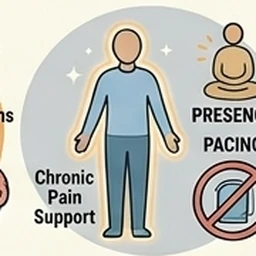
chronic pain을(를) 앓는 가족을 돌보기
Caring for someone with chronic pain
Chronic pain is the most prevalent and most invisible chronic condition in the US — ~50 million adults, no scan that confirms it, no clean treatment arc. The work for the family is mostly about presence and pacing, with periodic flares that reshape the week. Here's the orientation.
가족에게 무엇이 달라지는가
Chronic pain (pain that persists more than three months) reshapes a family without producing the visible markers other chronic diseases come with. The patient is often dismissed by clinicians, friends, and sometimes the family — the "but you look fine" comment is the most common refrain. The work for the family is paced support: helping with tasks during flares, accommodating reduced energy on bad days, and protecting the routines that keep pain manageable. The treatment landscape is unusually fragmented (primary care, pain medicine specialists, physical therapy, psychology, complementary medicine, sometimes interventional procedures); the family often becomes the de facto care coordinator. The opioid landscape adds a layer most families weren't prepared for: patients on long-term opioids face stigma at every appointment, prescription delays that can trigger withdrawal, and the rare-but-real risk of dependence. And depression is so common with chronic pain (~50% lifetime prevalence) that screening + treatment is structural, not optional.
일찍 마련해두어야 할 것들
진단 직후의 시기는 가족이 앞으로의 여정 전체가 의지하게 될 구조를 잡을 수 있는, 가장 여유가 있는 때입니다. 미룰수록 아래의 일들 가운데 일부는 점점 더 어려워집니다.
- A relationship with a pain medicine specialist (not just the PCP). Multidisciplinary pain clinics combine medical, PT, and behavioral treatment in one place and have measurably better outcomes than fragmented care.
- A pain diary or app — tracking when, where, what helps, what triggers. Three to four weeks of data is more useful than years of recall when the patient meets a new clinician.
- A physical-therapy referral, even if the patient is in too much pain to do much. Modern PT for chronic pain is graded exposure + pacing + body-awareness work, not "no pain no gain." The wrong PT can make things worse; ask for one experienced in chronic pain specifically.
- A behavioral-health referral for CBT for chronic pain or ACT (Acceptance and Commitment Therapy). These are evidence-based for chronic pain and rarely offered without asking. Different from "treating the depression" — they specifically address pain-coping strategies.
- A documented chronic-pain plan signed by the prescriber if opioids are part of the regimen. Pharmacy delays, insurance prior authorizations, and provider transitions all go more smoothly with a written record of the established treatment.
- A family conversation about pacing. The well-meaning "let me know if you need anything" rarely helps; concrete commitments ("I'll cook on Tuesdays whatever your pain level," "I'll drive you to PT every Friday") land better.
가장 힘든 순간들
가족들이 가장 힘들었다고 말하는 순간들은 종종 누구도 미리 알려주지 않은 순간들입니다. 무엇이 올 가능성이 있는지 안다고 해서 이 순간들이 쉬워지지는 않습니다 — 그러나 이 순간들에 이름을 붙일 수 있고, 그 순간이 닥쳤을 때 가족을 다시 모이게 해주는 공간이 있다면 도움이 됩니다.
- The first time a clinician implies the pain is in the patient's head, or is exaggerated, or is "just" depression. The damage to the patient is real; advocacy from the family caregiver — calmly, with documentation — is one of the most useful things a family member can do.
- A pain flare that lasts weeks. Most chronic pain has good and bad periods; a prolonged flare can shake the family's confidence that pacing + treatment is working. The right response is usually patience plus a check-in with the pain specialist, not panic.
- The opioid conversation — either the patient struggling with dependence, or being suddenly tapered against their will (a common late-2010s/2020s pattern that produced real harm), or being denied an established prescription by a new provider. The family's role is to advocate, to know the patient's clinical history, and to be present at difficult appointments.
- The cumulative emotional weight on the caregiver. Living with someone in chronic pain is a slow-burn caregiving role with relatively little recognition. Caregiver burnout in this cohort is real, under-supported, and often unaddressed until it becomes its own clinical issue.
이 질환과 연결되는 플레이북
Kintaria의 플레이북은 이 돌봄 여정에서 실제로 나타나는 구체적인 순간들을 위한 단계별 안내입니다. 각각은 여러분의 워크스페이스에서 열리고, 여러분의 답변에 맞추어 개인화됩니다.
전국 단체와 상담 전화
이 단체들은 업계에서 표준적인 출발점으로 여기는 곳들입니다. 모두 무료이며, 모두 실제 사람이 받는 상담 전화입니다(돌봄제공자용 AI 전화 상담은 별개의 범주이며, 여기에서는 해당 질환에 대해 훈련받은 사람을 의미합니다).
The largest patient-led chronic-pain advocacy organization in the US. Patient + caregiver support groups, peer mentoring, advocacy on insurance + opioid policy, the "Invisible Project" patient storytelling series.
- 1-800-533-3231
Peer support + education with a focus on self-management skills. The "From Patient to Person" framework is the foundation; chapter network across the country; family-caregiver-specific materials.
Independent journalism specifically on the chronic-pain policy + treatment landscape. Useful for staying current on opioid policy changes, insurance coverage shifts, and new treatments. Free.
- Helpline · 1-800-283-7800
For chronic pain related to arthritis (the most common cause). Free helpline, exercise programs (Walk With Ease, Tai Chi), local chapter support groups.
Condition-specific (fibromyalgia is a common subset of chronic widespread pain). Patient + family resources, support-group locator, advocacy.
NIH National Center for Complementary and Integrative Health plain-language overview, with strong coverage of evidence-based non-medication approaches.
Kintaria 워크스페이스가 어떻게 돕는가
Kintaria는 이 진단이 만들어낼 일들을 위해 설계된, 차분하고 공유되는 가족 워크스페이스입니다. 약 목록은 한 곳에 모여 있어, 주말에 비행기로 오는 셋째 형제자매가 무엇이 바뀌었는지 다시 처음부터 익힐 필요가 없습니다. 진료 일정은 공유되어 있어, 가족이 일정이 겹치거나 류마티스내과 추적 진료를 놓치는 일이 줄어듭니다. 활동 기록은 누가 무엇을 했는지에 대해 정직하기 때문에, 주 돌봄제공자가 모든 일을 조용히 떠안지 않게 됩니다. 그리고 워크스페이스는 이중 언어입니다 — 환자는 자신이 더 편한 언어로 읽고, 가족은 영어로 읽습니다 — 진단 자체가 이미 정신을 어지럽게 만드는 상황에서, 이 점은 사람들이 예상하는 것보다 훨씬 더 중요합니다.
처음 500가족에게 1년 무료 체험을 제공합니다. 신용카드가 필요하지 않습니다.
Kintaria가 무엇인지(그리고 아닌지)에 대한 안내
Kintaria는 임상 도구가 아니며, 의학적 의사결정을 대체하지 않고, chronic pain 치료팀을 대신하지도 않습니다. 이 페이지의 안내는 돌봄을 조율하는 가족을 위한 것이고, 구체적인 임상 결정은 환자의 담당의가 내려야 합니다. 워크스페이스 곳곳에서 안내되는 escalation 신호는 그 경계에 대해 정직합니다.
이 페이지에서 사용된 돌봄 용어
읽으시면서 뜻을 알고 싶을 수 있는 단어들입니다. 각 단어는 별도의 페이지로 열리며, 쉬운 말로 정의와 돌봄 현장에서 어떻게 등장하는지를 설명합니다.
- Caregiver burnout — A state of physical, emotional, and mental exhaustion that develops over months or years of caregiving — characterized by chronic fatigue, irritability, isolation, anxiety, depression, sleep disturbance, and worsening physical health.
함께 보기: 모든 질환 · 모든 플레이북 · 돌봄제공자 용어집 · 전국 자원 디렉터리